Preparing Your Dog for a New Baby: A Month-by-Month Plan
How to get your dog ready for a newborn — routine changes, sounds and smells, the first meeting, and the habits that keep everyone safe.
Bringing a baby home is one of the biggest changes a family dog will ever go through. Overnight, the house fills with new smells, strange sounds and a tiny person who takes up most of everyone's attention. Dogs that handle this well are rarely lucky — they were usually prepared. The good news is that most of the preparation is simple, and it works best when it starts months before the due date rather than days.
This guide walks through what to do before, during and after the arrival, with an emphasis on the habits that actually prevent problems.
Start with the routine, not the nursery
Dogs cope with change far better when it arrives gradually. The single most useful thing you can do in the months before the birth is to move your dog's daily routine toward what it will look like afterward.
If walks currently happen at 7 a.m. sharp, start varying the time. If one parent does all the feeding and walking, share those jobs now — after the birth, the person who recovered from delivery may not be able to walk a strong dog for several weeks. If your dog sleeps on your bed and you plan to change that, make the change early so your dog doesn't connect losing its spot with the baby's arrival.
- Vary walk and meal times by 30–60 minutes so a delayed schedule isn't stressful.
- Practise short periods where your dog is relaxed alone in another room or behind a gate.
- Book any training classes now; there will be little time later.
Brush up on the basics
A dog that reliably responds to a few cues is much easier to manage around a baby. Focus on behaviours you will actually use while your arms are full:
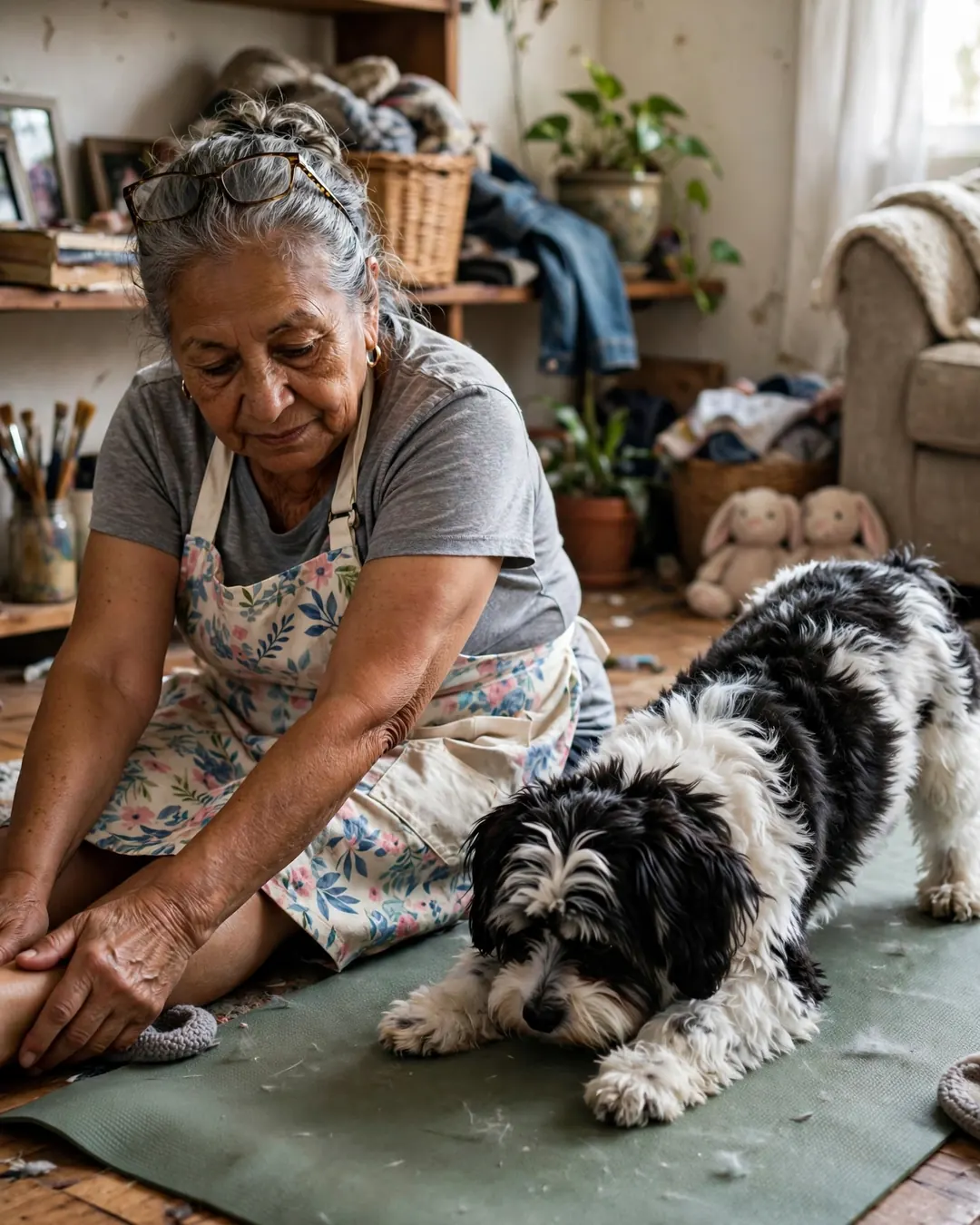
- Settle or "go to bed" — lying down on a mat and staying there.
- Leave it — for dropped pacifiers, wipes and, later, food.
- Off — four paws on the floor, no jumping up at a person holding a baby.
- Loose-lead walking — essential if you plan to walk the dog beside a pram.
Practise these with distractions, and reward calm behaviour generously. A dog that learns that lying quietly near you earns treats will choose that behaviour on its own later.
Introduce baby sounds and smells early
Newborn crying is loud, sudden and high-pitched. Many dogs find it alarming the first time. You can reduce that surprise by playing recordings of baby sounds at a low volume while doing pleasant things — feeding, playing, giving a chew — and slowly raising the volume over several weeks. If your dog becomes anxious, lower the volume and go slower.
The same idea applies to equipment. Set up the cot, bouncer and changing area early. Let your dog sniff them, then teach it which spaces are off-limits. A baby gate across the nursery doorway gives your dog a clear boundary and gives you a way to separate everyone quickly.
The first meeting
When you come home from hospital, let the parent who is not carrying the baby greet the dog first. Your dog will have missed you and may be excited; a calm hello without a baby in arms lets that energy settle. Some families send home a blanket or hat the baby has worn so the dog can sniff the new scent before the meeting.
For the introduction itself:
- Keep the dog on a lead the first time, held by a second adult.
- Sit down with the baby rather than standing over the dog.
- Allow a short, calm sniff at the feet or blanket, then praise and reward.
- End the meeting while things are still going well.
There is no need to force closeness. Many dogs are content to watch from a distance for days or weeks, and that is perfectly fine.
What the cute videos don't show
Online clips often show dogs licking babies' faces, sleeping in cots or "guarding" a sleeping infant. They are charming, but they are not a model to copy. Dogs can carry bacteria and parasites in their mouths, a startled dog can react in a fraction of a second, and any animal in or next to a cot is a safe-sleep risk. Enjoy the videos for what they are — and keep real-life interactions short, calm and supervised.
Watch for signs of stress
Dogs tell us when they are uncomfortable, usually well before they growl or snap. Learn to spot the early signals: yawning out of context, lip licking, turning the head away, showing the whites of the eyes, a tucked tail, or getting up and leaving. If you see these around the baby, calmly move the dog away and give it space. A dog that is allowed to walk away is a dog that doesn't need to escalate.
Growling should never be punished. A growl is a warning, and punishing it can teach a dog to skip the warning next time. Treat it as useful information and increase distance.
Give your dog good things when the baby is around
One common mistake is giving the dog lots of attention only when the baby is asleep or out of the room. The dog quickly learns that the baby means being ignored. Try the opposite: talk to your dog, toss treats or offer a long-lasting chew while you are feeding or holding the baby. Over time, the baby's presence predicts good things.
Keep up exercise and mental work
A tired, mentally satisfied dog is calmer. When walks get shorter in the early weeks, use puzzle feeders, snuffle mats and short training sessions to fill the gap. Ten minutes of sniffing games can take the edge off a day with less exercise. If possible, line up a trusted friend or dog walker before the birth.
When to ask for help
If your dog has a history of guarding food or toys, fear of children, or any bite history, talk to your vet and a qualified, reward-based behaviour professional well before the due date. These issues are manageable with planning, but they are not something to "wait and see" about.
Quick checklist
- Routine changes started at least two months before the due date.
- Settle, leave it and off practised daily.
- Baby sounds introduced gradually.
- Gates installed and the nursery boundary taught.
- Vet check-up, vaccinations and parasite control up to date.
- A plan for walks during the first few weeks.
With preparation, most dogs adjust well — and many become devoted, gentle companions as the baby grows into a toddler. Taking it slowly at the start is what makes that possible.