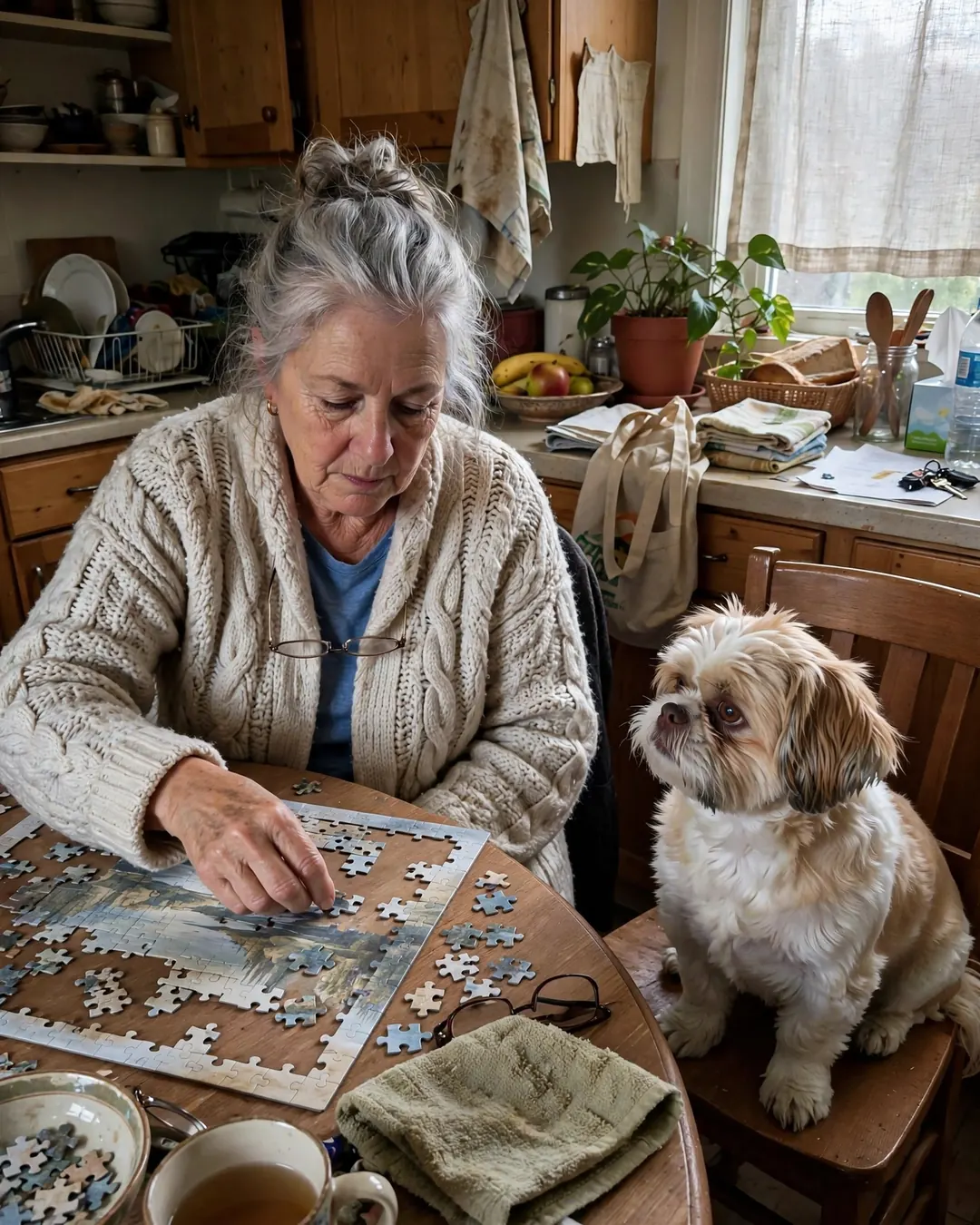
Dottie Spread Her Jigsaw Puzzle Across the Table. Teddy Took the Chair Next to Her.
A half-finished jigsaw puzzle covers the round kitchen table, its scene of trees and sky slowly taking shape. Dottie leans over it in her chunky cardigan, reading glasses hanging from her collar, pressing one piece into place with careful concentration. Teddy has taken his own seat at the table, perched upright on a wooden chair beside her with his paws together, looking off toward the window like a polite dinner guest waiting for the next course. A bowl of loose pieces, a cup of tea, a folded dish towel, and a pair of glasses are scattered across the table, and the kitchen behind them is full of plants, fruit, and cozy clutter.
Jigsaw puzzles are a favorite pastime for many older adults, and for good reason. They encourage focus, patience, and visual problem-solving, and they make a relaxing activity to share with family or friends. A dog at the table adds company, but puzzle pieces are small and made of cardboard, which some dogs like to chew. Swallowed pieces can upset a dog's stomach or cause a blockage in small breeds. It helps to work on puzzles at a table your dog cannot reach unsupervised, and to keep stray pieces off the floor. If your dog is the type to snatch things from the table, a puzzle board with a cover keeps your progress safe between sessions.
Teddy may not help find any edge pieces, but he is clearly committed to the project. Every puzzle goes better with a patient supervisor.