Flour on the Counter, Flour in the Bowl, and Flour All Over Her Face
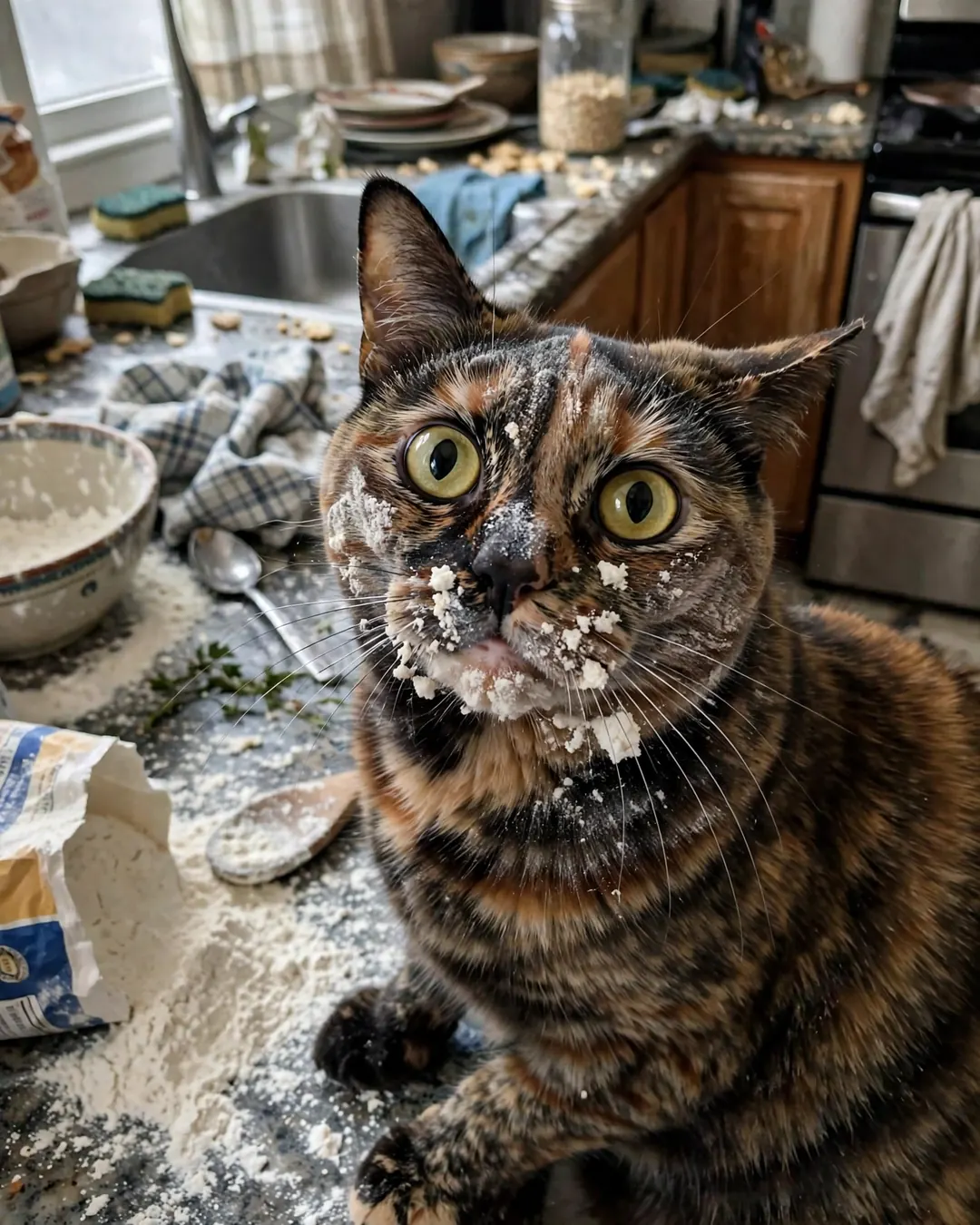
Flour everywhere. It is dusted across the dark granite countertop, spilling from a tipped-over paper bag, piled in a mixing bowl, and streaked over a pair of wooden spoons. It is also all over the face of this tortoiseshell, who has powder clinging to her nose, cheeks, and whiskers as though she has just come in from a snowstorm. Her golden eyes are wide open and fixed straight ahead. She is frozen in place, perched at the very edge of the counter, with the classic look of a cat who just heard the kitchen door open.
Torties are known for their mottled black and orange coats and, as many owners lovingly say, their big personalities. Curious cats are drawn to baking projects because of the new smells, the sounds, and the soft, diggable texture of flour. Plain flour is not toxic, but it is not food for cats either, and it can make a sticky mess when mixed with saliva in the fur. Gently brushing off as much as possible, then wiping with a slightly damp cloth, works well. Be more careful with other baking ingredients, such as raw dough, chocolate, raisins, and certain sweeteners, which can be harmful. Keeping cats out of the kitchen while baking is the simplest way to avoid trouble.
Every bakery needs a mascot, and she has clearly auditioned for the role. Her flour-covered portrait might just end up framed on the fridge, right next to the recipe she ruined.