A Ginger Cat Sits Quietly Beside What Used to Be a Box
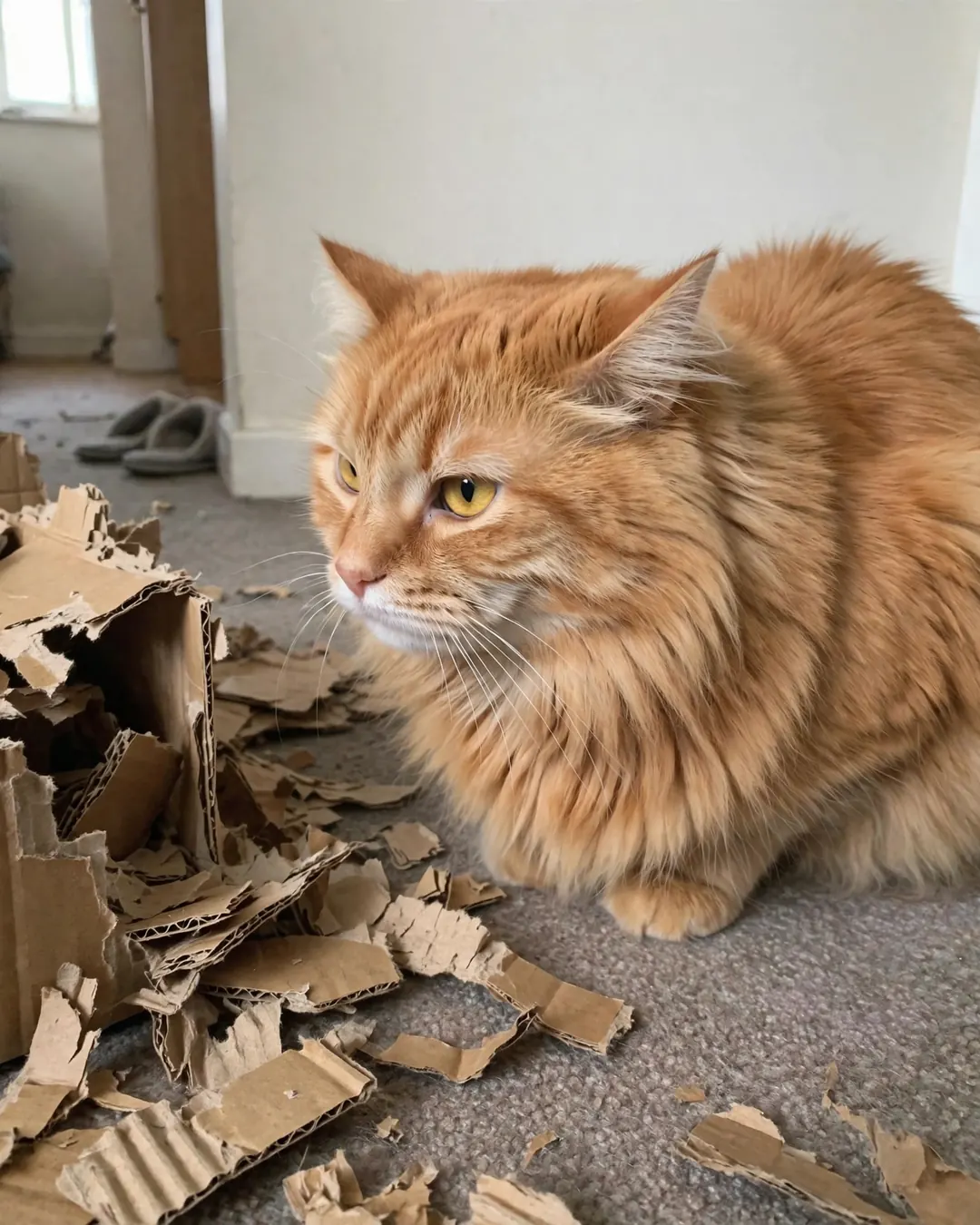
A cardboard box used to stand in this corner, and now it is a scatter of jagged brown pieces across the carpet. A fluffy orange cat crouches beside the wreckage, ears pulled back and eyes turned slightly away, with a sheepish, tucked-in posture that says he knows what happened.
The hallway behind him is plain and bright, with white baseboards, a pair of slippers by the wall, and a patch of sunlight on the paint. The scraps of cardboard are scattered in such neat strips that the whole job looks very well planned.
Cats and cardboard go together like bread and butter. A box offers a snug hiding place, a chewing surface, and a scratching post all in one. Hiding in enclosed spaces also helps cats feel safe, which is why a box on the floor can quickly become a favorite spot. If you want to keep boxes from becoming confetti, offer one or two on purpose, with a hole cut in the side, and replace them when they get worn. Pick up small scraps, since a cat that eats cardboard can have stomach upsets, and talk to your vet if it becomes a habit.
The orange cat is not quite ready to meet your eyes. He is probably already dreaming about the next box that will arrive, and the one after that.