The Duke Will See You Now. He Doesn't Look Pleased About the Delay.
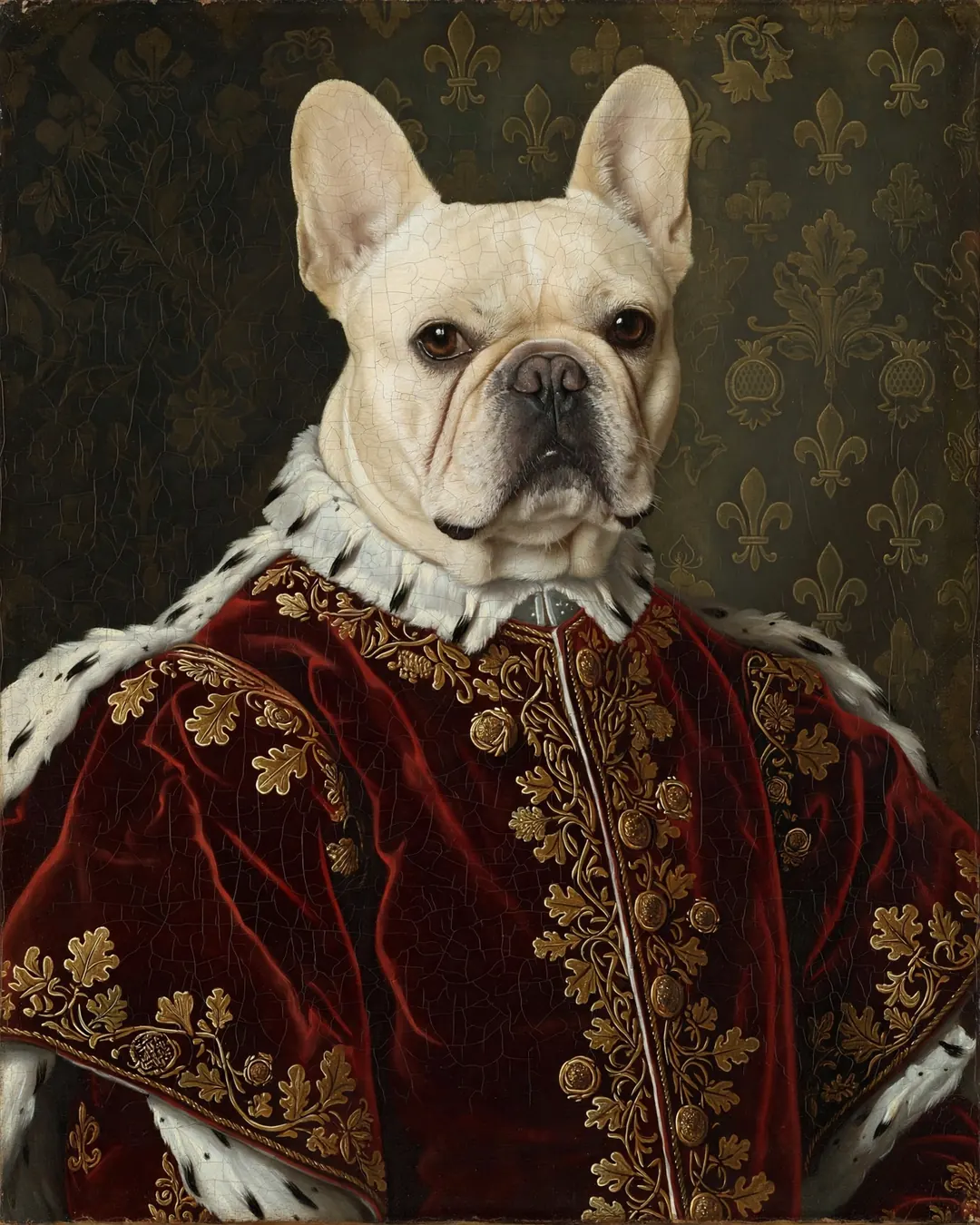
The duke will see you now, and he does not look entirely pleased about the delay. A cream French Bulldog with tall bat ears, a furrowed brow, and a deeply wrinkled muzzle gazes out with an expression of solemn authority. His coat is rich crimson velvet, glowing with gold embroidery of leaves and scrolls and fastened with a long row of round golden buttons. A spotted ermine collar rests on his shoulders and trims his sleeves. Behind him, a dark wall is patterned with gold fleur-de-lis, adding to the air of aristocratic importance.
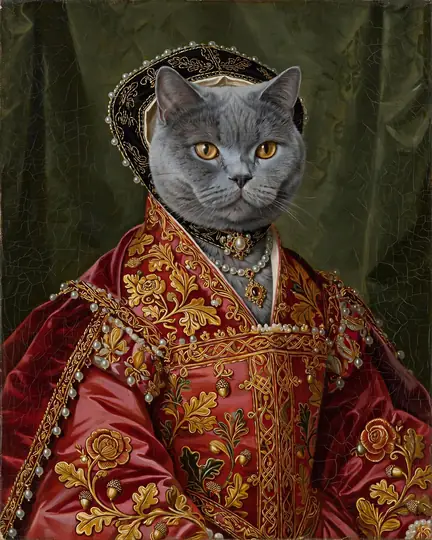
In the Tudor world, a deep, saturated red like this was a statement of wealth. Strong, lasting reds were costly to produce and were made from natural dyes such as kermes, which comes from tiny insects. During the sixteenth century, cochineal, another insect-based red dye from the Americas, began arriving in Europe through Spanish trade and became highly prized for its brilliant color. Combined with expensive velvet and real gold thread, a garment like this one would have represented a small fortune and made its wearer's rank impossible to miss.
Our ducal Frenchie, naturally, takes all this luxury in stride. With his compact frame, squished face, and air of total self-assurance, he seems perfectly suited to a life of feasts, portraits, and very long naps on embroidered cushions.