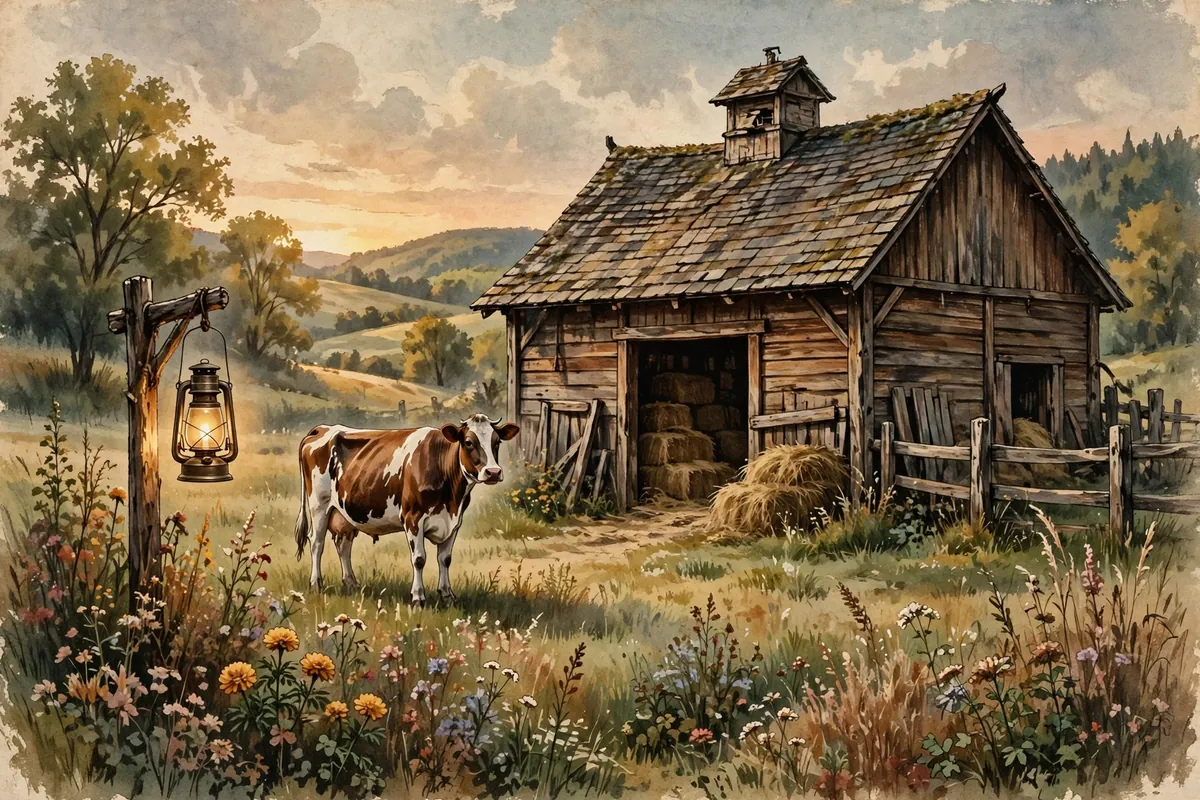
It's one of the most famous stories in American history. On an October night in 1871, Mrs. O'Leary went out to milk her cow, the cow kicked over a lantern, and the whole city of Chicago went up in flames. It's been told in schoolbooks, songs, and cartoons. There's just one problem.
The cow almost certainly didn't do it. The fire did start in or near the O'Leary family's barn, but officials never determined the actual cause. A reporter later admitted he made up the cow-and-lantern story, and in 1997 Chicago's city council officially cleared Catherine O'Leary, and her cow, of any blame.
A City Built to Burn
The Great Chicago Fire broke out on the evening of October 8, 1871, and burned for about two days. It killed approximately 300 people, destroyed 17,000 structures across roughly 3.3 square miles, and left more than 100,000 people homeless. The flames even jumped the Chicago River and tore through much of the city's center.
The real reason it got so big had nothing to do with livestock. The summer had been long and dry, strong winds blew from the southwest, and the city's water pumping system was quickly destroyed. On top of that, more than two-thirds of Chicago's buildings were made entirely of wood, and many had highly flammable tar or shingle roofs. Even the sidewalks were wood.
How the Cow Got the Blame
The cow story began circulating while the city was still burning, and it showed up in the Chicago Tribune's first issue after the fire. The O'Learys said they were already in bed when the fire started, but the tale spread anyway.
Catherine O'Leary made an easy scapegoat. She was a poor Irish Catholic immigrant at a time when anti-Irish and anti-Catholic feelings ran strong in Chicago and across the country. Blaming her fit what many people were already inclined to believe.
The Reporter's Confession
In 1893, a reporter named Michael Ahern admitted that the cow-and-lantern story had been fabricated. You might think that would end it. It didn't. The legend had already taken on a life of its own, and it stuck around for another century.
The O'Learys were never officially charged with anything. Still, the story became so rooted in local lore that in 1997, the Chicago City Council formally exonerated Mrs. O'Leary and the cow, following research by historian Richard Bales.
So Who Did Start It?
Nobody knows for sure. Bales suggested the fire may have started when Daniel "Pegleg" Sullivan, the man who first reported it, accidentally lit hay in the barn. His theory doesn't have universal agreement. Another account came from a man named Louis M. Cohn, who claimed he and some boys were gambling in the barn and knocked over a lantern while running away. That claim isn't universally accepted either.
Some have also pointed out that the same hot, dry, windy day brought other major fires around Lake Michigan. About 250 miles north, the Peshtigo Fire in Wisconsin killed between 1,200 and 2,500 people, making it the deadliest fire in American history.
Today, the spot where the Chicago fire began is home to the city's fire department training academy. It's a fitting tribute, and a quiet reminder that sometimes the most famous version of a story isn't the true one. Poor Mrs. O'Leary, and her cow, waited a long time for that.