History is full of strange coincidences, but this one is hard to top. Not long before President Abraham Lincoln was assassinated, his oldest son nearly lost his life in an accident on a train platform. The man who saved him was the brother of the man who would later kill his father.
The rescuer was Edwin Booth, one of the most celebrated actors in America and the older brother of John Wilkes Booth. On a platform in Jersey City, New Jersey, he grabbed Robert Todd Lincoln by the coat collar and pulled him to safety. The exact date isn't known, but it's believed to have been in late 1863 or early 1864.
What Happened That Night
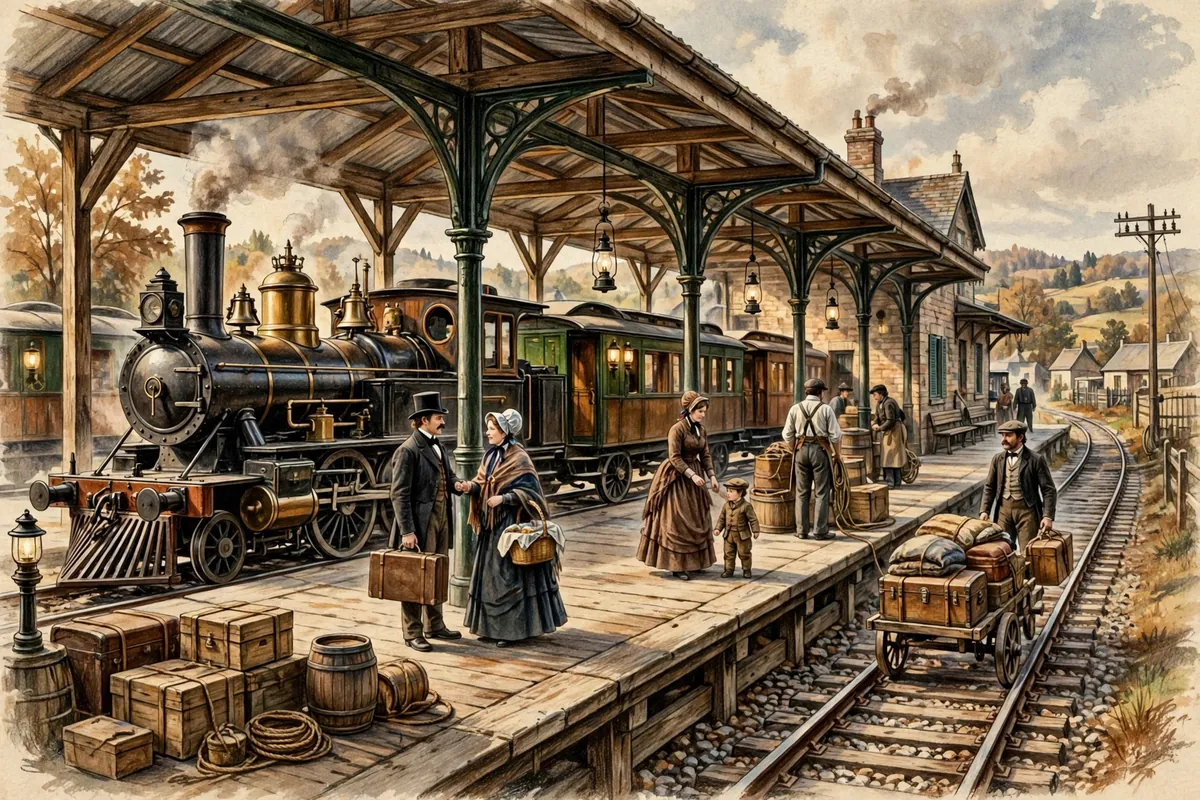
Robert Lincoln described the scene himself in a 1909 letter to the editor of The Century Magazine. It was late at night, and a crowd of passengers was buying sleeping car places from a conductor standing on the platform. The platform was about level with the train car's floor, with a narrow gap between them.
In the crush, Robert was pressed against the side of the car. Then the train started to move. He was twisted off his feet and dropped into the open space, feet first, and he was helpless. Suddenly someone seized his coat collar and pulled him up onto solid ground.
When he turned to thank his rescuer, he recognized him right away. Edwin Booth's face was well known, and Robert thanked him by name.
The Rescuer Didn't Know Who He'd Saved
Here's the part that gives the story its weight. Edwin Booth had no idea whose life he had just saved. He found out only months later.
By then, Robert had joined the Union Army and was serving on the staff of General Ulysses S. Grant. He told the story to a fellow officer, Colonel Adam Badeau, who happened to be a friend of Booth's. Badeau wrote to Booth to compliment him on his heroism, and that's how Booth learned he had rescued the president's son. Grant also sent Booth a letter of thanks.
Two Brothers, Two Very Different Paths
Edwin and John Wilkes Booth came from a famous acting family. Their father, Junius Brutus Booth, was a well-known English-born actor, and his sons followed him onto the stage. Politically, though, the brothers were opposites. Edwin supported the Union, while John supported the Confederacy, and the two had been feuding.
In 1864, the three Booth brothers appeared together on stage just once, in a benefit performance of Julius Caesar that helped pay for the statue of Shakespeare that still stands in New York's Central Park.
After John Wilkes Booth shot President Lincoln in April 1865, the shame attached to the family name forced Edwin off the stage for many months. He disowned his brother and refused to let his name be spoken in his house. Knowing that he had once saved the president's son was said to have given Edwin some comfort.
Robert Lincoln's Unlucky Streak
Robert Lincoln's brushes with tragedy didn't end there. In 1881, as Secretary of War, he witnessed the shooting of President James Garfield at a Washington train station. Twenty years later, he was at the Pan-American Exposition in Buffalo when President William McKinley was shot. He wasn't an eyewitness that time, but he was just outside the building.
It's a remarkable chain of events. Still, the moment on that dark platform stands out. In a single quick motion, one Booth brother spared a Lincoln, long before anyone knew how tangled those two families would become.