Step outside on a frosty morning and your body gets to work right away. You might shiver, your skin might tingle, and you'll probably wish you'd grabbed a heavier coat. But behind the scenes, your body fat is quietly helping you hold on to heat.
Fat keeps you warm in two very different ways. Ordinary body fat sits under your skin and acts like insulation, slowing the loss of heat. And a special kind called brown fat goes further: it actually burns fuel to produce heat, without any shivering at all.
The Body's Insulating Blanket
Most of your body fat is the regular kind, known as white fat. Its main job is to store energy, but it also cushions and insulates the body. Much of it builds up in the deepest layer of the skin, called the subcutaneous layer, where it helps protect you from both heat and cold.
Some animals take this idea to the extreme. Whales and seals have blubber, a type of fat that's extra thick and works as an efficient insulator. Blubber is so important for staying warm in icy water that it's considered essential for these animals to control their body temperature.
Meet Brown Fat, the Furnace
Brown fat is a different animal altogether. Its main purpose is controlling body temperature. Instead of just storing energy, it turns energy into heat, a process scientists call non-shivering thermogenesis.
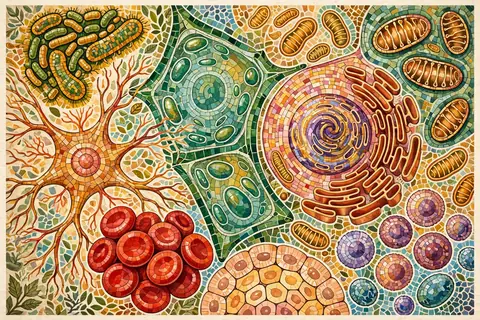
The secret is in its cells. White fat cells hold a single large droplet of fat. Brown fat cells hold many smaller droplets and are packed with far more mitochondria, the tiny power plants inside cells. Those iron-containing mitochondria are what give brown fat its color.
Normally, mitochondria turn fuel into a chemical form of energy the body can use. But brown fat contains a special protein called thermogenin, found only in this tissue. It opens a kind of shortcut that lets that energy escape as heat instead. Brown fat also has more tiny blood vessels than white fat, which helps carry the warmth around the body.
Why Babies Have So Much
Brown fat is especially plentiful in newborns. In a newborn baby, it makes up about 5% of body weight and is found on the back, along the upper spine and toward the shoulders.
That matters, because babies are more vulnerable to the cold than adults. They can't move away from a chilly draft on their own, and their nervous systems aren't yet fully developed to respond quickly to cold. Dangerous chilling is a major risk for babies born early, which is why staying warm is so important for them.
Hibernating mammals also have lots of brown fat, which fits its role as the body's built-in heater.
A Discovery in Grown-Ups
For a long time, brown fat was mostly associated with babies and hibernating animals. Then, in 2003, doctors using PET scans to look for cancer noticed something unexpected: active brown fat in adults.
Adults do have brown fat, often just above the collarbone and along the spine, though the amount tends to decrease with age. Scientists have also found beige fat, sometimes called brite fat, which develops within white fat and behaves somewhat like brown fat. Researchers are actively studying whether brown fat could someday help treat obesity, but that work is still underway. If you have questions about your own weight or health, talk to your doctor.
So the next time you're shivering at the bus stop, remember that your body has more than one trick up its sleeve. Along with that cozy coat, you've got a built-in blanket and a tiny furnace working hard to keep you warm.