Today, the Mona Lisa is probably the most famous painting on Earth. Crowds squeeze into a room at the Louvre in Paris just to glimpse her small smile. But it wasn't always this way. Back in 1911, she was respected by art lovers but not especially popular with the general public.
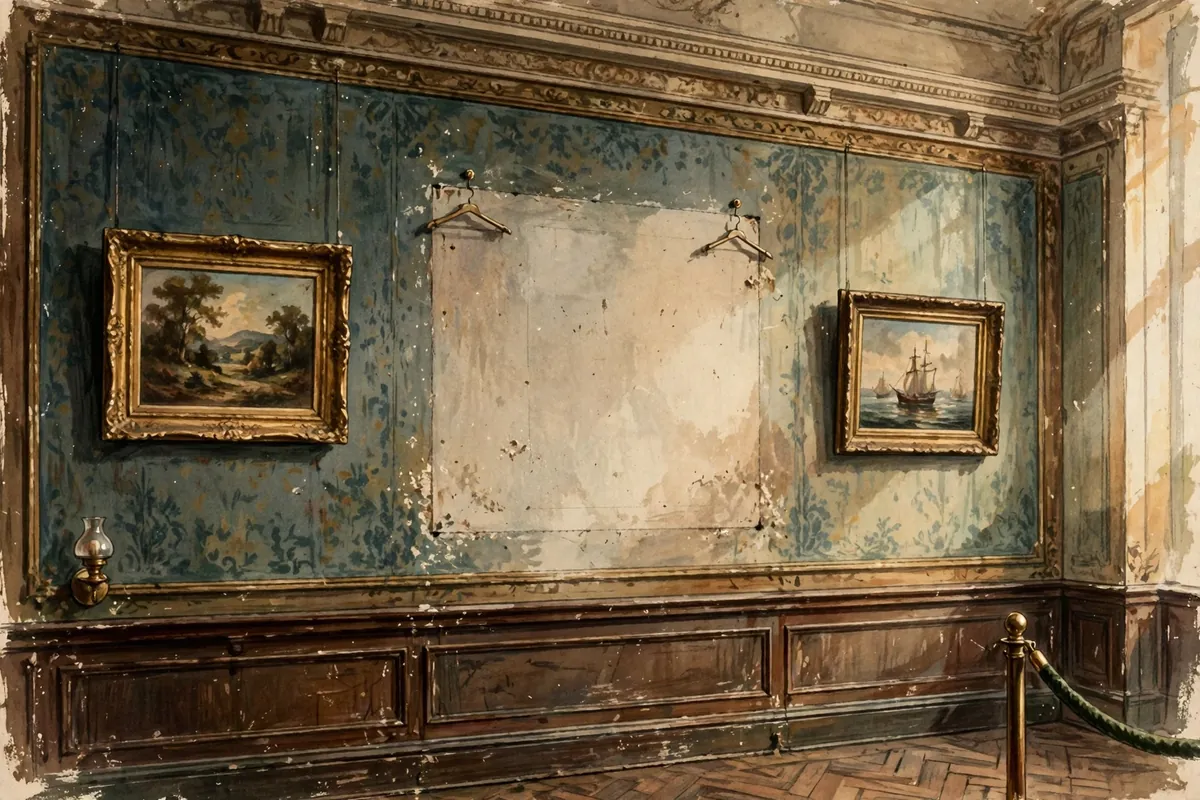
What changed? A theft. On August 21, 1911, the painting was stolen from the Louvre, and it stayed missing for more than two years. The crime, the hunt, and the dramatic recovery created unprecedented publicity for an art theft, and that worldwide attention is a big part of why the Mona Lisa became a household name.
An Inside Job
The thief was Vincenzo Peruggia, a Louvre worker who had helped build the painting's protective glass case. According to his later account, he walked into the museum around 7 a.m. on a Monday, wearing the same white smock the other workers wore.
Monday was the museum's weekly closing day during the summer holidays, so the building was nearly empty. Peruggia took the painting and left. Nobody even noticed it was missing until the next day, when a painter named Louis Béroud reported it.
Suspects, Including Picasso
At first, there was confusion. Some thought the painting had simply been taken away to be photographed. Once it was clear it was really gone, the Louvre closed for a week while police investigated.
The search took some strange turns. The French poet Guillaume Apollinaire was arrested and jailed, and he pointed to his friend Pablo Picasso, who was brought in for questioning. Both men were later cleared.
Meanwhile, the Mona Lisa was hidden in a trunk in Peruggia's Paris apartment, where it stayed for two years. At one point he even went to London to try to sell it, and a well-known art dealer there, Joseph Duveen, reportedly just laughed at him.
Caught in Florence
Peruggia was an Italian patriot who believed the painting by Leonardo da Vinci belonged in Italy. Eventually he took it there by train and contacted an art dealer in Florence named Alfredo Geri, using the name “Leonardo V.”
Geri brought in Giovanni Poggi, director of the Uffizi Gallery, who confirmed the painting was genuine. They took it for safekeeping and called the police, who arrested Peruggia at his hotel in December 1913. He served six months in prison and was hailed as a patriot by many in Italy.
Before going home, the painting toured Italy to huge excitement. The New York Times reported a crowd of 30,000 in Florence sweeping police aside to see it. The Mona Lisa was back in the Louvre in early January 1914.
From Stolen to Superstar
The newspaper headlines and the massive police investigation made the painting famous with ordinary people around the world. The story inspired a 1915 opera, early 1930s films, and eventually the song “Mona Lisa,” which Nat King Cole turned into one of the biggest hits of the 1950s.
There's a juicy side theory, too. A 1932 magazine article claimed a con man named Eduardo de Valfierno masterminded the theft so he could sell forged copies as the missing original. There's no outside confirmation of that story, though.
Peruggia never made a penny from his crime. But in a strange way, he gave the Mona Lisa a gift: the kind of fame no museum could have bought.