Today, a big building project can take years of planning, permits, and delays. So it's hard to believe that one of the most famous skyscrapers on Earth went up in about the time it takes some families to remodel a kitchen.
It's true. Construction on the Empire State Building started on March 17, 1930. The building was structurally completed on April 11, 1931, twelve days ahead of schedule and 410 days after construction began. It opened on May 1, 1931. The secret was ruthless organization: materials arriving like clockwork, steel going up at record speed, and thousands of workers on site.
The Race to the Sky
The Empire State Building was born in a race for height. Its backers worried the nearby Chrysler Building might sneak in a taller spire at the last minute. So the plans kept changing, about fifteen times in all, until the design was sure to be the tallest in the world.
The final version added a mooring mast meant for airships, bringing the roof to 1,250 feet. That made it the world's tallest building by far, even without an antenna. Excavation began in January 1930, before the old Waldorf-Astoria Hotel on the site had even been completely torn down.
A Floor a Day
The builders, Starrett Brothers and Eken, aimed to build one floor a day. They reached a pace of four and a half stories per week. Before that, the fastest pace for a building of similar height had been three and a half.
By June 1930, the steel frame had reached the 26th floor. The steel was topped out at 1,048 feet on September 19, just 23 weeks after the start of construction, and workers raised a flag atop the 86th floor to celebrate. The project's steel order, about 57,480 short tons, was the largest single order of steel ever placed at the time.
Clockwork Deliveries
Speed depended on getting materials in fast without jamming city streets. Builders created a temporary driveway for trucks and stored materials in the building's first floor and basements. At one point, more than 200 trucks made deliveries every day.
Inside, a small railway carried carts of materials from the basement to elevators, which lifted them to the right floors. There were even cafes and snack stands on five of the unfinished floors, so workers didn't lose time going down to the street for lunch. Temporary water taps saved them from buying water on the ground.
The People Who Built It
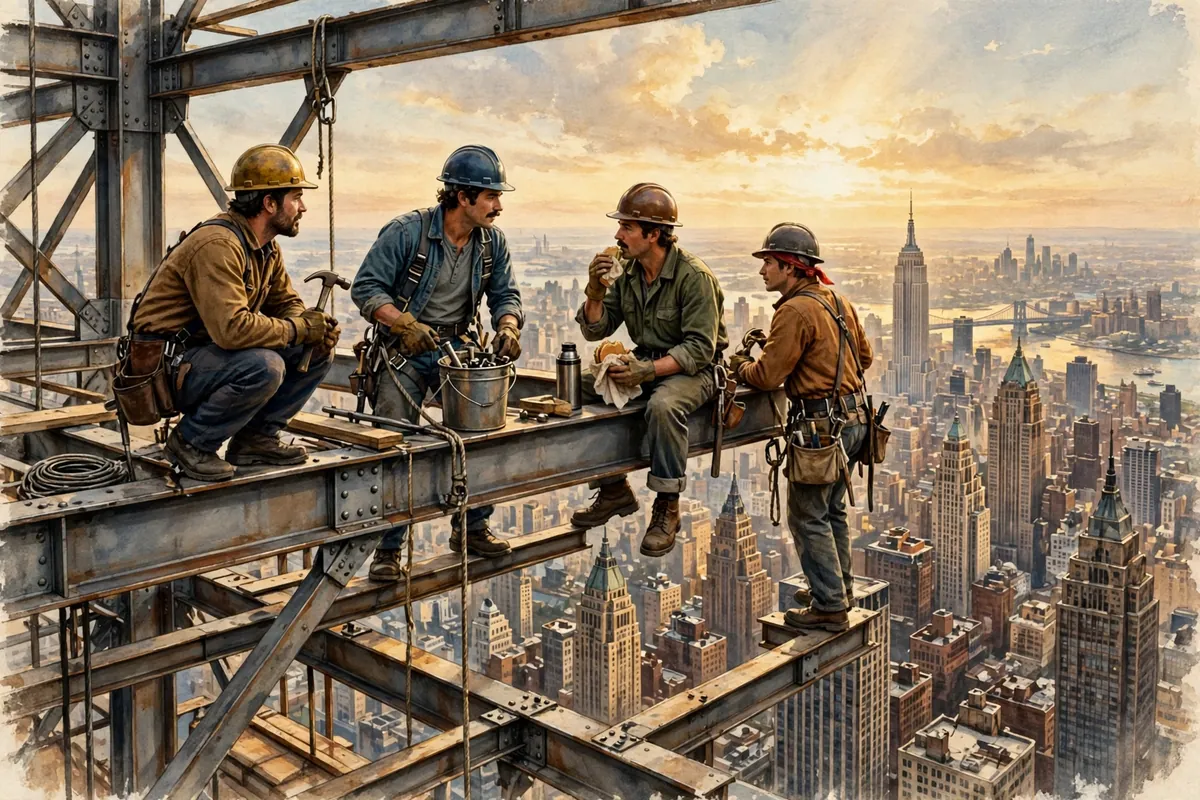
At its peak, the project employed more than 3,500 workers, including 3,439 on a single day in August 1930. Many were Irish and Italian immigrants, and a sizable group were Mohawk ironworkers from the Kahnawake reserve near Montreal. According to official accounts, five workers died during construction.
Photographer Lewis Hine captured many images of the work, showing not just the building but the daily lives of the people up on the beams. When the frame was finished, former New York governor Al Smith drove the final rivet, which was made of solid gold.
On opening day, President Herbert Hoover pressed a button in Washington, D.C., to turn on the building's lights. Because of the Great Depression, its owners didn't turn a profit until the early 1950s. But the building itself became a lasting symbol of what people can do when everyone pulls together.