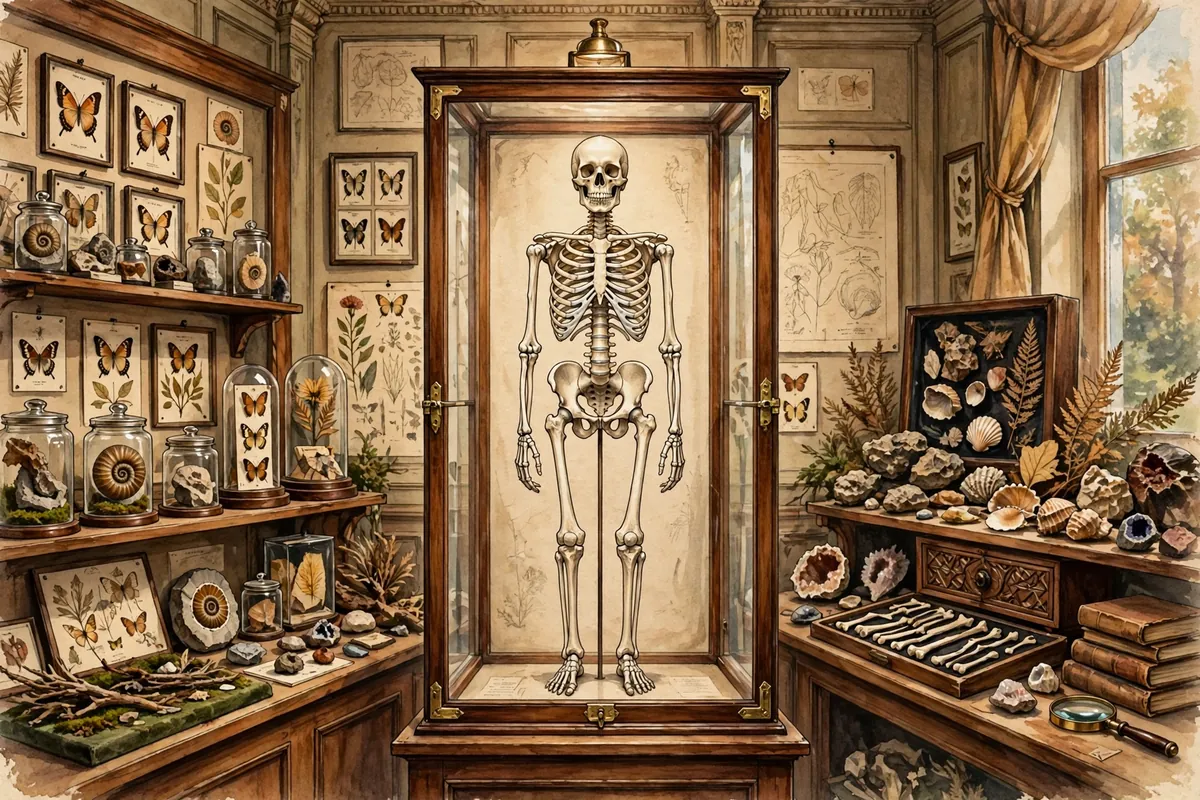
A skeleton in a museum looks like the most permanent thing in the world: hard, dry, and unchanging. It's easy to imagine our own bones the same way, as a fixed frame we're born with and carry around for life. But living bone is nothing like that.
Your bones are being rebuilt all the time. In a lifelong process called bone remodeling, old bone tissue is broken down and new bone is laid down in its place. In adults, about 10 percent of the skeleton is replaced each year, and in the first year of life, almost the entire skeleton is replaced.
Meet the Demolition and Building Crews
Two kinds of cells do most of the work. Osteoclasts are the demolition crew. These very large cells, each with several nuclei, settle on the bone surface and dissolve old bone, leaving tiny pits behind.
Then the builders arrive. Osteoblasts lay down a framework of collagen fibers and then deposit calcium phosphate, which hardens into new bone. Here's the odd part: once an osteoblast finishes its job, it often ends up trapped inside the bone it built. At that point it becomes a different kind of cell, called an osteocyte.
Working together, these cells form small teams that scientists call basic multicellular units. Hormones such as parathyroid hormone and vitamin D help coordinate them.
Why Bother Rebuilding?
Remodeling isn't just for repairing big breaks. It also fixes the tiny bits of damage that happen during everyday activity, and it reshapes bone after injuries like fractures.
It also helps run your body's chemistry. Bones are a storehouse for minerals, especially calcium and phosphorus. When osteoclasts break down bone, they release stored calcium into the blood. When osteoblasts build bone, they pull calcium back out. This constant give and take helps keep calcium at the right levels for the rest of your body.
Bones Respond to How You Use Them
In the 1800s, German surgeon Julius Wolff described an idea now known as Wolff's law. It says healthy bone adapts to the loads placed on it. If a bone is regularly stressed, it remodels over time to become stronger. If the load goes away, the bone becomes less dense and weaker.
Tennis players offer a striking example. The bones in a player's racquet arm become stronger than the bones in the other arm, because that arm takes so much more force, especially during the serve.
The opposite can happen too. After a hip replacement, the implant carries some of the stress the bone used to handle. Without that everyday load, the nearby bone can become less dense, a problem known as stress shielding.
When the Balance Tips
Healthy bone depends on the demolition and building crews staying in balance. When breakdown gets ahead of rebuilding, problems like osteoporosis can develop. Osteoporosis means lower bone density, which makes fractures more likely, and it often has no symptoms until a bone breaks.
Most people reach their peak bone mass somewhere in their 20s. Diet and exercise during childhood can make a real difference in how high that peak ends up. If you have questions about your own bone health, talk to your doctor.
It's a nice thought to carry around. The bones holding you up right now aren't relics. They're busy, living tissue that's been quietly renovating itself since the day you were born.