In September 1777, Philadelphia was in trouble. George Washington's army had just lost the Battle of Brandywine, and the city, then the revolutionary capital, was left defenseless. The British were coming. And city leaders worried about something you might not expect: the bells.
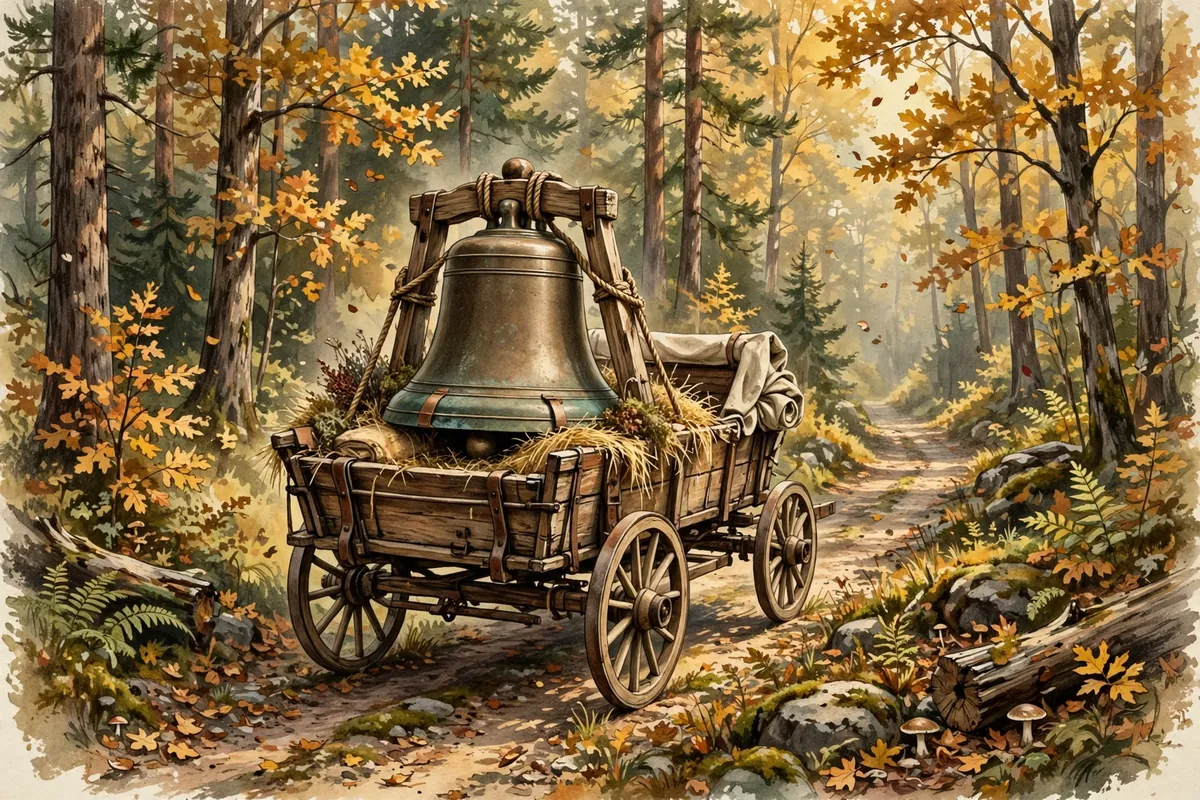
They feared the British would melt down the city's bells to make munitions. So the bells were taken down and smuggled out of town in a huge wagon train, hidden under manure and hay. The most famous of them, the State House Bell we now call the Liberty Bell, rode in the wagon of a farmer and militia private named John Jacob Mickley. After his wagon broke down, another farmer, Frederick Leaser, carried it the rest of the way to Allentown, where it was hidden under a church floor.
A Great Escape
On September 14, 1777, Pennsylvania's Supreme Executive Council ordered the city's tower bells removed. Eleven bells were taken, including the State House Bell and ten others from Christ Church and St. Peter's Church.
A train of more than 700 wagons set out for Bethlehem, guarded by 200 cavalry from North Carolina and Virginia under Colonel Thomas Polk. The bells were buried under manure and hay, which helped keep them out of sight.
On September 18, the convoy and its armed escort reached Richland Township, in what is now Quakertown. A few days later, a Moravian bishop in Bethlehem reported that the wagons had arrived and that every bell except the State House Bell had already gone on to Allentown.
The Two Farmers
John Jacob Mickley was a farmer from Whitehall Township, north of Philadelphia, and a private in the Northampton County militia. The Liberty Bell was secured on his wagon for the long trip north.
But on September 23, his wagon broke down in Bethlehem. That's where Frederick Leaser stepped in. Leaser was a Pennsylvania German farmer who had come from Switzerland as a boy and had served in the French and Indian War. The bell was moved to his wagon, and on September 24 he delivered it to the Zion Reformed Church in Allentown, then known as Northampton Towne.
The timing was close. On September 26, British forces marched into Philadelphia unopposed. By then, the bell was already safely hidden away.
Nine Months Under the Floor
At Zion Reformed Church, the Liberty Bell was hidden beneath the floorboards along with the other bells. It stayed there for about nine months, until the British left Philadelphia in June 1778. Then it was returned to the city.
The church later housed the Liberty Bell Museum, which opened in 1962 in the basement where the bell had been hidden. It featured a full-size replica that visitors could ring. The museum closed in 2023 after the church was sold.
A Bell With a New Name
Back in 1777, nobody called it the Liberty Bell. It was the State House Bell, hanging in the steeple of the Pennsylvania State House, now Independence Hall. The name Liberty Bell came later, from members of the American abolitionist movement, who adopted it as a symbol.
Its inscription made it a natural fit. It quotes the Bible: "Proclaim Liberty thro' all the Land to all the Inhabitants thereof." Today the bell sits in the Liberty Bell Center, across the street from Independence Hall.
So the next time you see a photo of that famous cracked bell, remember the two farmers and the long, smelly wagon train that kept it out of British hands. Not every hero rides a horse into battle. Some just drive a very important wagon.