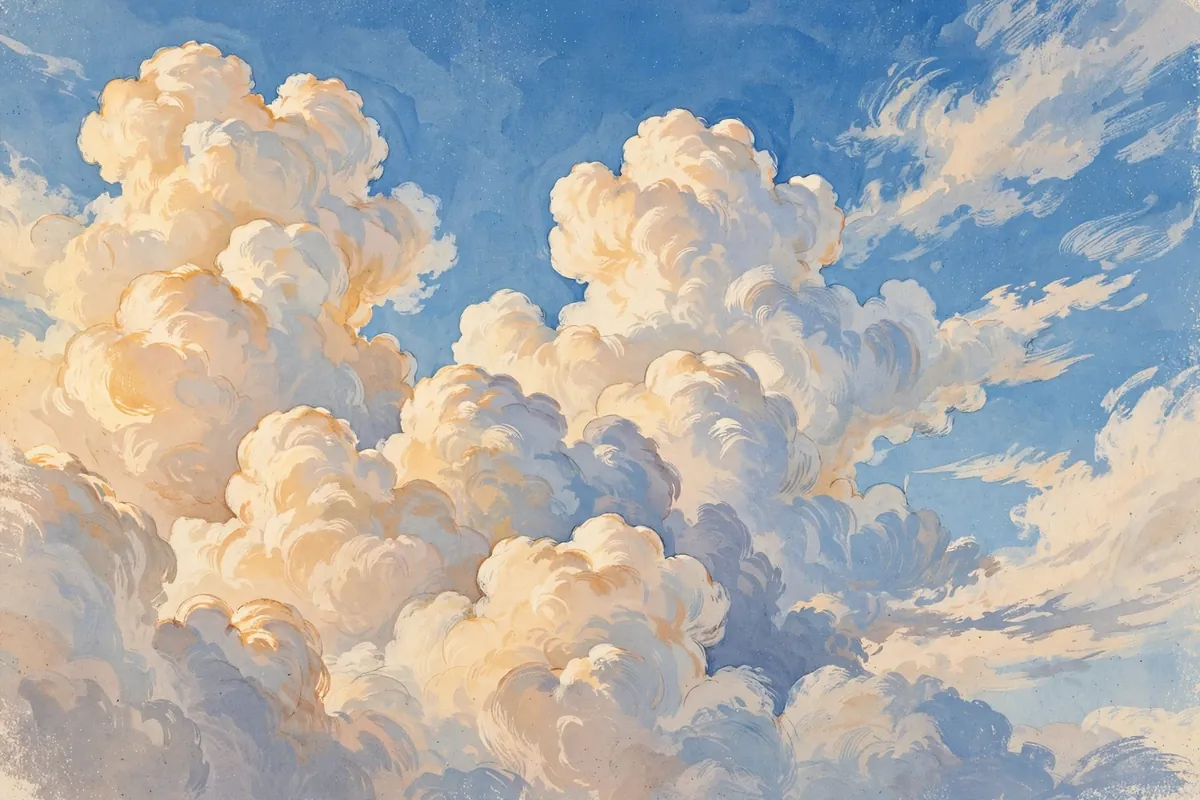
The grandkids visit, the sun is shining, and the coffee is just right. You might say you're on cloud nine. We all know it means floating with happiness. But it's a strange phrase when you think about it. Why a cloud, and why number nine?
The honest answer is that nobody knows for certain. To be on cloud nine simply means to be in a state of complete bliss, and the phrase is so common that Cloud Nine has become a nickname for euphoria itself. You'll find several confident-sounding origin stories, but none has been proven. What we can explore is why clouds and numbers make such natural symbols for joy.
Why a Cloud Feels So Happy
Clouds have long stood for being up high, light, and carefree. When we're happy, we talk about walking on air or being over the moon. A cloud fits right in: soft, floating, and far above everyday worries.
Some clouds really do climb to dizzying heights. The towering cumulonimbus, the thunderhead that brings summer storms, normally reaches as high as 39,000 feet. Unusually tall ones can top out around 66,000 feet. That's well above the height where airliners cruise.
For something that looks so fluffy, these clouds are surprisingly heavy. An average cumulonimbus weighs around 500,000 kilograms, about 1.1 million pounds. So being on cloud nine may feel weightless, but the real thing is anything but.
The Science of Naming Clouds
Scientists started organizing clouds into an official system more than a century ago. The International Cloud Atlas was first published in 1896 to help train weather forecasters and to get everyone using the same words for clouds. Its first edition featured color photographs, then a new and expensive technology.
One reviewer at the time said the atlas was worth owning for the beauty of its pictures alone. It has stayed in print ever since, with new editions as recently as 2017. Whether it had anything to do with our happy phrase, though, remains unproven.
A Cousin Called Seventh Heaven
On cloud nine has a close relative: being in seventh heaven. That idea has deep roots. Jewish traditions such as the Talmud describe seven heavens, and the Quran and Hadith also mention seven heavens, with the seventh marking the farthest reach of heavenly knowledge.
So whenever we describe the highest happiness, we reach for the highest level we can imagine, whether it's the top heaven or a lofty cloud.
Nine Shows Up Everywhere
Nine is a popular number in everyday English. To be dressed to the nines is to look as sharp as possible. To go the whole nine yards is to do something completely, no matter how hard. Cats are said to have nine lives because they seem to survive so many close calls.
The number is special in many other cultures, too. In India, Navaratri is a nine-day festival honoring the nine forms of the goddess Durga.
Cloud Nine has also floated through pop culture. The Temptations released an album called Cloud Nine in 1969, and George Harrison of the Beatles released his own Cloud Nine album in 1987.
So the exact origin may well stay a mystery forever. But maybe that's fitting. Pure happiness doesn't always come with an explanation. Sometimes you're just up there on cloud nine, and that's enough.