You know the face: white hair, a goatee, a top hat with stars, and a finger pointing straight at you. Uncle Sam has stood for the United States government for about two centuries. But where did the name come from, and was there ever an actual Sam?
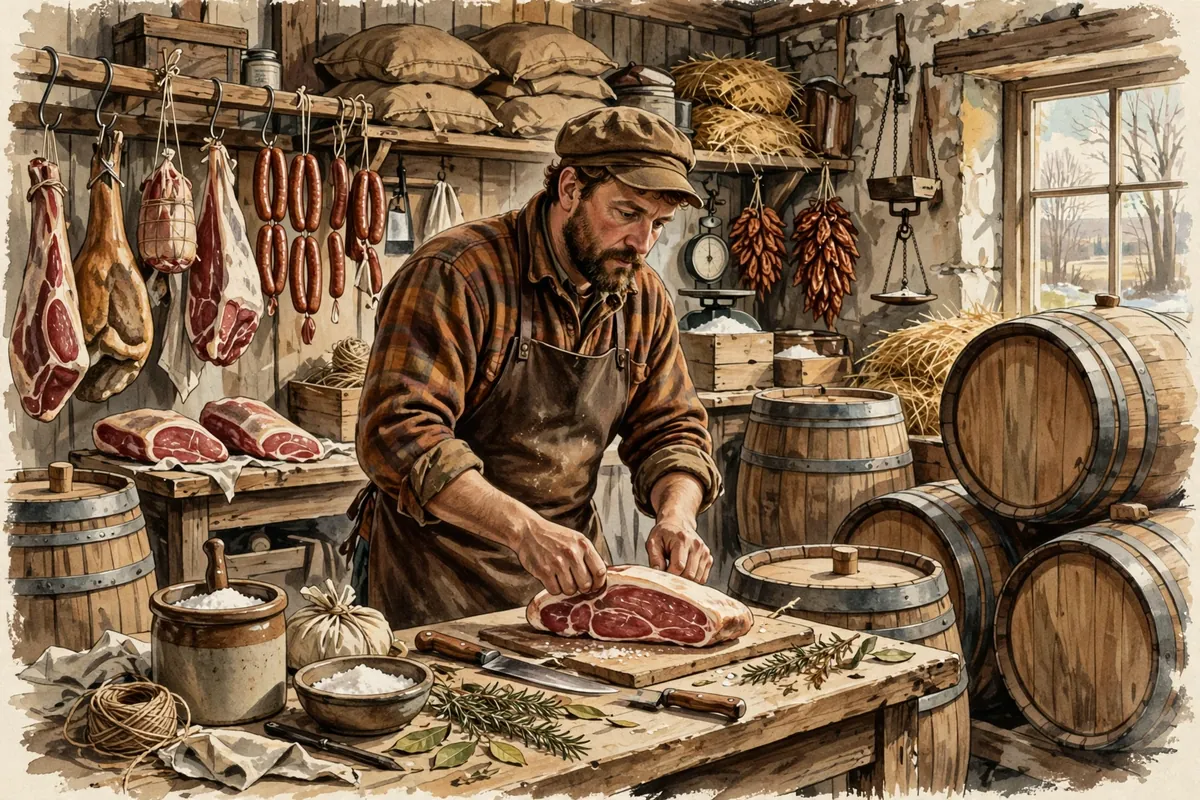
There may well have been. Uncle Sam is widely traced to Samuel Wilson, a meatpacker from Troy, New York, who supplied barrels of meat to the Army during the War of 1812. Soldiers who knew him by his nickname, Uncle Sam, linked him to the “U.S.” stamped on those barrels. Some historians doubt the story, though, so it comes with an asterisk.
A Soldier at Fourteen
Samuel Wilson was born in 1766 in what is now Arlington, Massachusetts, and grew up in Mason, New Hampshire. At just 14, he joined the Continental Army in 1781. His duties included guarding and caring for cattle, mending fences, and slaughtering and packing meat.
In 1789, at age 22, he and his older brother Ebeneezer walked to Troy, New York, where they were among the first settlers. Samuel started making bricks from the local clay, and his were the first bricks made in Troy. Many historic buildings there include them.
In 1793, the brothers started a meat business, E & S Wilson. A dock on the Hudson River helped the company prosper.
The Barrels That Started It All
When the War of 1812 came, the Army needed huge amounts of food. A New York City contractor named Elbert Anderson Jr. was hired to supply rations for troops in New York and New Jersey, and the Wilson brothers won a contract for 2,000 barrels of pork and 3,000 barrels of beef.
Samuel was appointed a meat inspector for the Army. He checked freshness and made sure the barrels were built and packed to specifications. Each barrel was marked “E.A.-U.S.,” for Elbert Anderson, United States.
Much of the meat went to a camp of 6,000 soldiers in Greenbush, New York. Soldiers from Troy who knew Wilson and his nickname connected “Uncle Sam” with the “U.S.” stamp. Over time, any Army property marked U.S. became linked with his name, and Uncle Sam turned into a nickname for the country itself.
Why Some Historians Have Doubts
It's a great story, but not everyone is convinced. The claim didn't appear in print until 1842, decades later. And the earliest known mention that definitely refers to a symbolic Uncle Sam dates from 1810, before Wilson's government contract.
Some scholars think Wilson may not have invented the phrase but played a big part in spreading it. Even so, in 1961 Congress passed a resolution saluting “Uncle Sam Wilson of Troy, New York, as the progenitor of America's National symbol of Uncle Sam.”
From Meatpacker to Poster Star
The man in the top hat came much later. Uncle Sam didn't have a standard look until artist James Montgomery Flagg drew his famous recruiting image during World War I, inspired by a British poster of Lord Kitchener. More than four million copies were printed in 1917 and 1918.
Wilson himself died in 1854 at age 87. He's buried in Oakwood Cemetery in Troy, and monuments mark both his birthplace and his grave.
So the next time Uncle Sam points your way, picture a hardworking meat inspector checking barrels by the Hudson River. He probably never wore striped pants, but his nickname ended up standing for a whole nation.