Many small towns built around a single industry share the same fear. If the mill or the mine closes, what happens to everyone? In the early 1980s, the little town of Chemainus on Vancouver Island in British Columbia, Canada, faced exactly that question.
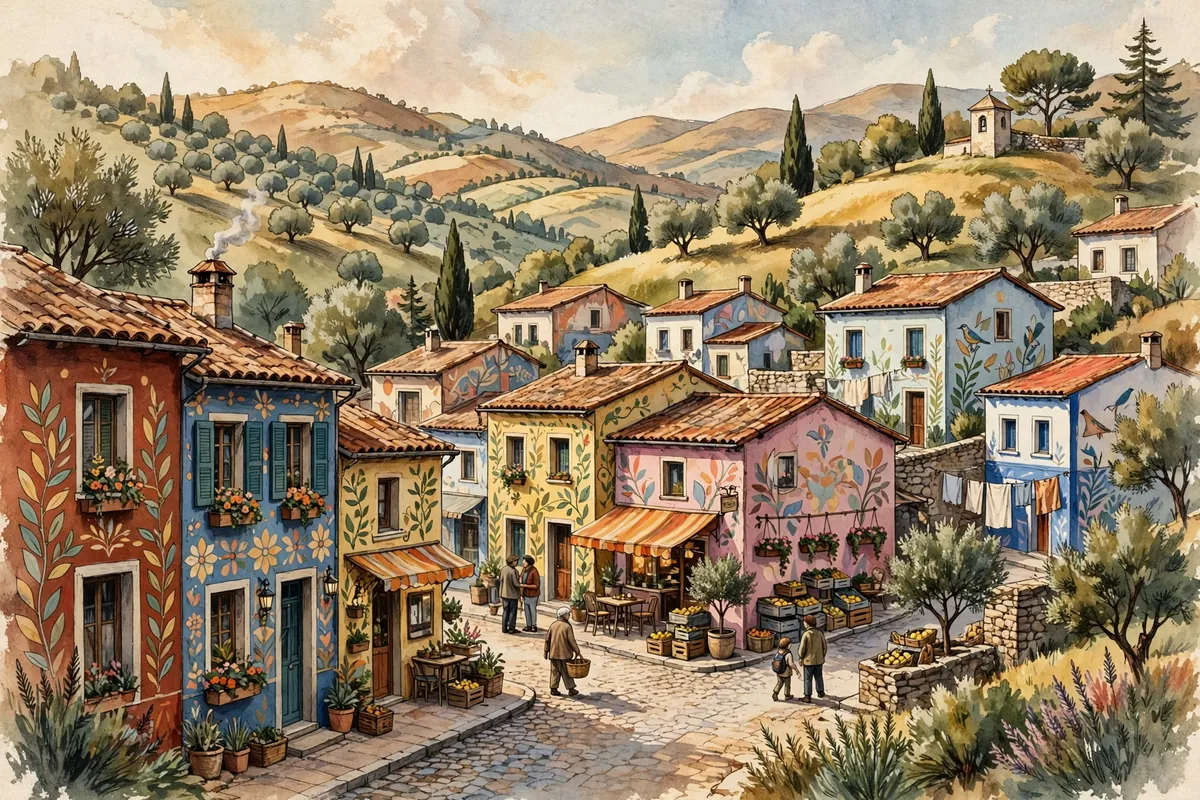
Its answer was paint. As the local sawmill shrank, residents revitalized the main street by covering walls with huge outdoor murals. Today Chemainus is famous for 53 of them. The murals drew tourists, tourists brought new businesses, and the town's story inspired other communities as far away as Australia and Oregon.
A Logging Town in Trouble
Chemainus was founded as a logging town in 1858. The railway arrived in the 1880s, and by the early 1920s the population had grown to about 600. The forest industry shaped life there for generations.
In the 1980s, British Columbia's forest industry went through a deep slump, hit by falling demand and prices, global competition, and tariffs on wood sent to the United States. In Chemainus, the big sawmill was replaced by a smaller, highly automated mill. The number of workers needed dropped from about 600 to 145.
Turning Walls Into an Outdoor Gallery
Local residents decided the town needed something new. One key project was revitalizing the main street by painting a series of large outdoor murals. The project drew on government funding in its early days, along with plenty of local initiative.
It worked. The murals turned Chemainus into an outdoor gallery and a destination. New businesses followed, including a theater, antique dealers, and restaurants. Horse-drawn tours have carried visitors past the murals since the early 1980s.
Location helped too. Chemainus sits between Victoria and Nanaimo, the largest cities on Vancouver Island, close to ferry terminals and the island highway. Forestry is still the town's largest industry, and the rebuilt mill is profitable, but tourism gave the community a second leg to stand on.
An Idea That Traveled the World
Other towns took notice. In Sheffield, on the Australian island of Tasmania, a small group of residents inspired by the Chemainus story set out to save their own town with mural art. The first mural went up in December 1986.
Sheffield now calls itself the Town of Murals, with more than 60 paintings showing local history and scenery. The murals draw an estimated 200,000 visitors a year, and since 2003 the town has hosted an annual mural competition.
In the United States, Silverton, Oregon, followed the same path. Its Mural Society, founded in 1992 and inspired by Chemainus, has supported about 30 murals celebrating local people and history, including a famous local dog known as Bobbie the Wonder Dog. In 1994, the town even reproduced Norman Rockwell's Four Freedoms paintings.
Small Town, Big Canvas
Chemainus has a few other surprises. Its name comes from a legendary shaman and chief called Tsa-meeun-is, meaning broken chest, who is said to have survived an arrow wound to the chest. His people took his name for their community, now known as the Stz'uminus First Nation. And in 2006, a Boeing 737 was sunk off the coast to create an artificial reef for divers.
Not every struggling town can paint its way back. But Chemainus showed that a little creativity and a lot of community spirit can turn an ordinary street into something people travel the world to see.