Most of us never think about where the air we breathe has been. In a city, it may have just passed over highways, factories and chimneys. But there's a wild corner of Australia where the wind arrives after crossing nothing but open ocean, and scientists treat that air like treasure.
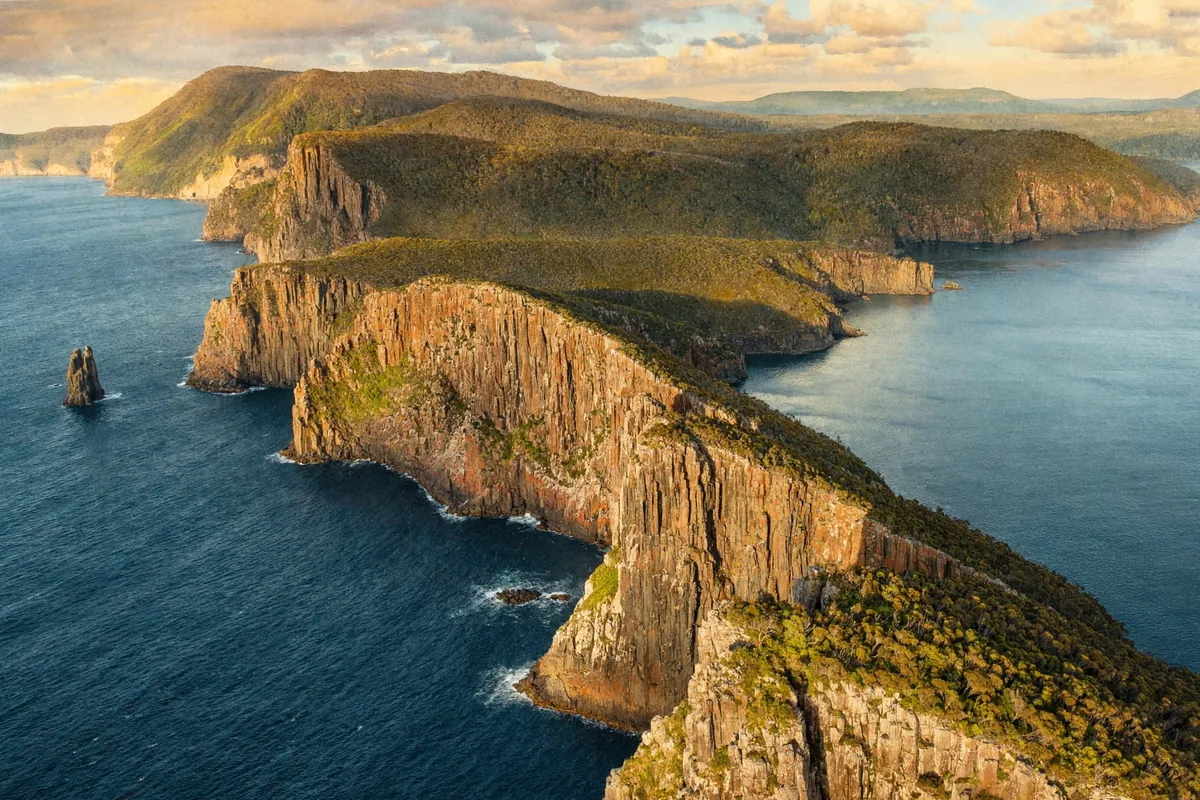
The place is Cape Grim, the northwestern tip of the island of Tasmania. Its air is so free of local pollution that it's used as a baseline for measuring the planet's atmosphere. Australia's Bureau of Meteorology has run an air pollution monitoring station there since 1976, and since 1978 researchers have been bottling samples of the air and saving them for the future.
Wind That Never Touches Land
Cape Grim's secret is its location. Head due west from the cape and the next land you'd hit isn't Africa, but the southern tip of Argentina, on the far side of the world. Winds that reach the cape from Antarctica and the Indian Ocean don't pass over any significant land along the way.
Those winds belong to the Roaring Forties, strong westerly winds that blow across the Southern Hemisphere between about 40 and 50 degrees south, where there's little land to slow them down. At Cape Grim, every month of the year has recorded a wind gust over 78 miles per hour. Those steady winds also make Tasmania a good place for wind power.
A Measuring Stick for the Whole Planet
Because the air hasn't picked up pollution from nearby cities or farms, measurements taken at Cape Grim are considered the closest representation of a global average. That makes it incredibly useful for science.
Data from Cape Grim have been used extensively in studies of climate change and of the thinning ozone layer. When researchers want to know how the atmosphere as a whole is changing, a place like this gives them a clean starting point.
An Archive of Old Air
Here's the unusual part. The Cape Grim Air Archive collects samples of air and stores them in compressed cylinders. The first sample was taken on April 26, 1978, and four to six are added each year. As of 2022, more than 170 samples were in storage.
The idea is to let future scientists study gases that hadn't been measured yet, or even discovered, when the air was collected. It's considered the most extensive resource of its kind. Bottling air directly has perks, too: samples can be collected over minutes or hours, and there's enough air in each one to analyze again and again. Oddly enough, the very first cylinders were containers once used by the U.S. military to store breathing oxygen on aircraft during World War II.
A Cape With a Long History
The cape's official name is Kennaook / Cape Grim, reflecting the Peerapper name for the place. English navigator Matthew Flinders charted and named it Cape Grim in 1798. A long swell rolling in from the southwest helped confirm for him that Tasmania was separated from mainland Australia by a strait, which he named Bass Strait.
The cape also carries a painful memory. In 1828, it was the site of the Cape Grim massacre, in which thirty Peerapper people were killed by four shepherds. Today, this remote headland plays a quiet but important role, helping the world keep track of the very air we all share.