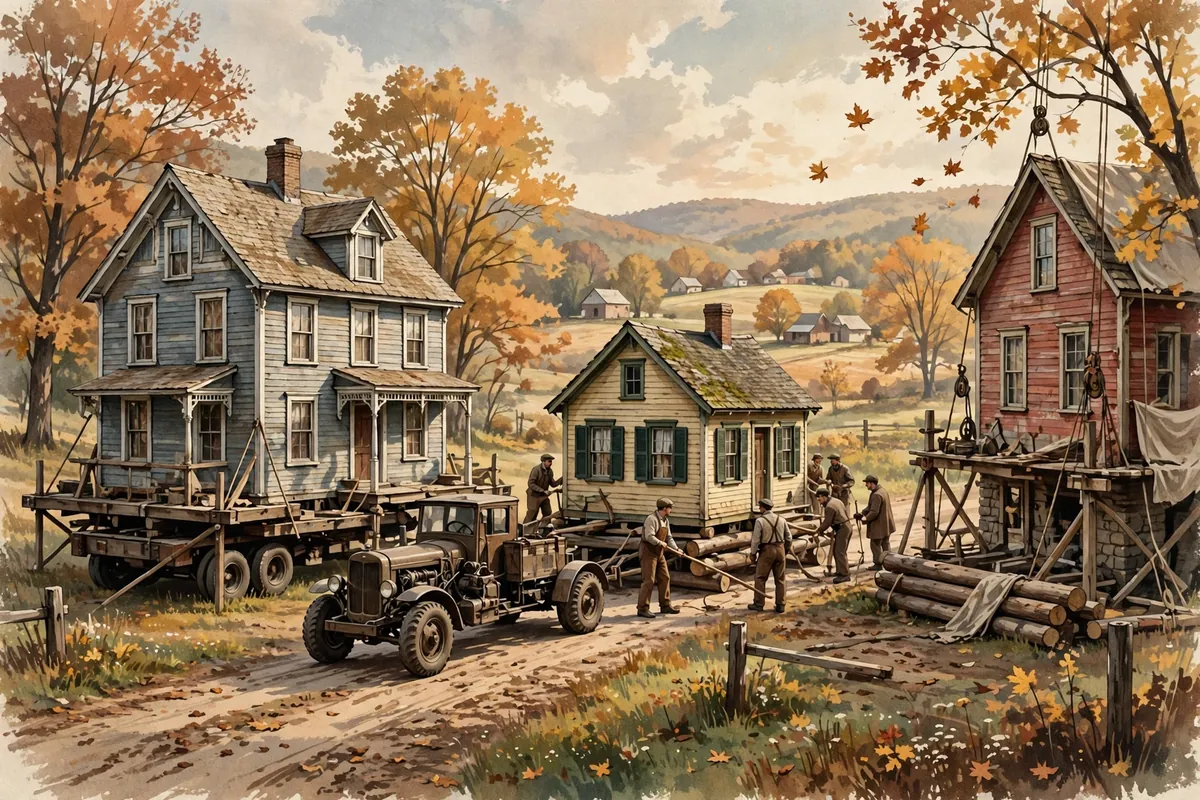
Most towns stay put. Streets get repaved and stores change hands, but the town itself doesn't go anywhere. Every so often, though, a community has to pick up and leave, buildings and all, because water is on the way.
One of the most remarkable examples is Adaminaby, in New South Wales, Australia. In the 1950s, a giant hydroelectric project built a dam that created Lake Eucumbene right over the old town. Residents voted on a new site, and from 1956 to 1957, more than 100 buildings were hauled away, most of them to a brand-new Adaminaby on higher ground.
A Century-Old Town in the Way
Old Adaminaby had grown up over about a century. It began as a stopping place for travelers during a gold rush around 1860 and became a typical country town, with a main street of Victorian-era shops, hotels and cottages.
Then came the Snowy Mountains Hydro-Electric Scheme. At first, the dam waters were only supposed to reach just below the town. A 1953 magazine even promised that Adaminaby would enjoy a lovely lakeside setting. Instead, the plans changed, and in January 1954 residents endorsed a new location for their town in a referendum.
Houses on the Move
The authority in charge had never relocated a whole community before, and it knew how sensitive the move was. People could sell their property at market value and move anywhere, have their buildings moved to the new town at no cost, or take a new building instead.
The first house was moved in 1956, and within 18 months the job was done. Wooden houses were slowly hauled across the countryside, sometimes through wet weather and snow, and a few had mishaps along the way. Two brick and stone churches were taken apart and rebuilt. In all, 102 buildings left Old Adaminaby.
The new town got a modern shopping center, a hotel, a theater, two schools and thousands of newly planted trees. Many old houses had never had electricity, running water or sewer service, and some older residents said they didn't want them. Some families had to borrow money for the first time in their lives to pay for bigger new homes.
What the Water Covered
Not everything moved. Four buildings high on the hill were allowed to stay, along with the cemetery overlooking the old town. An old bridge was partly torn down, but it stubbornly refused to collapse, even when workers tried to burn it. It was still standing as the water rose around it.
Today, the remains of Old Adaminaby lie on the floor of Lake Eucumbene, and the site is heritage-listed. The new lake became popular for boating and trout fishing. One surprise was that kangaroos and snakes got stranded on islands as the water rose.
A Rising Lake in North Dakota
Australia isn't the only place where a lake pushed people out. In North Dakota, Devils Lake began rising in the early 1990s. More than 400 homes around it have since been moved or destroyed, including much of the tiny community of Churchs Ferry, which was bought out by government agencies. By 2020, its population was just nine.
It's a striking reminder that a town is really its people. Even when the buildings must move, a community can carry its story along to higher ground.