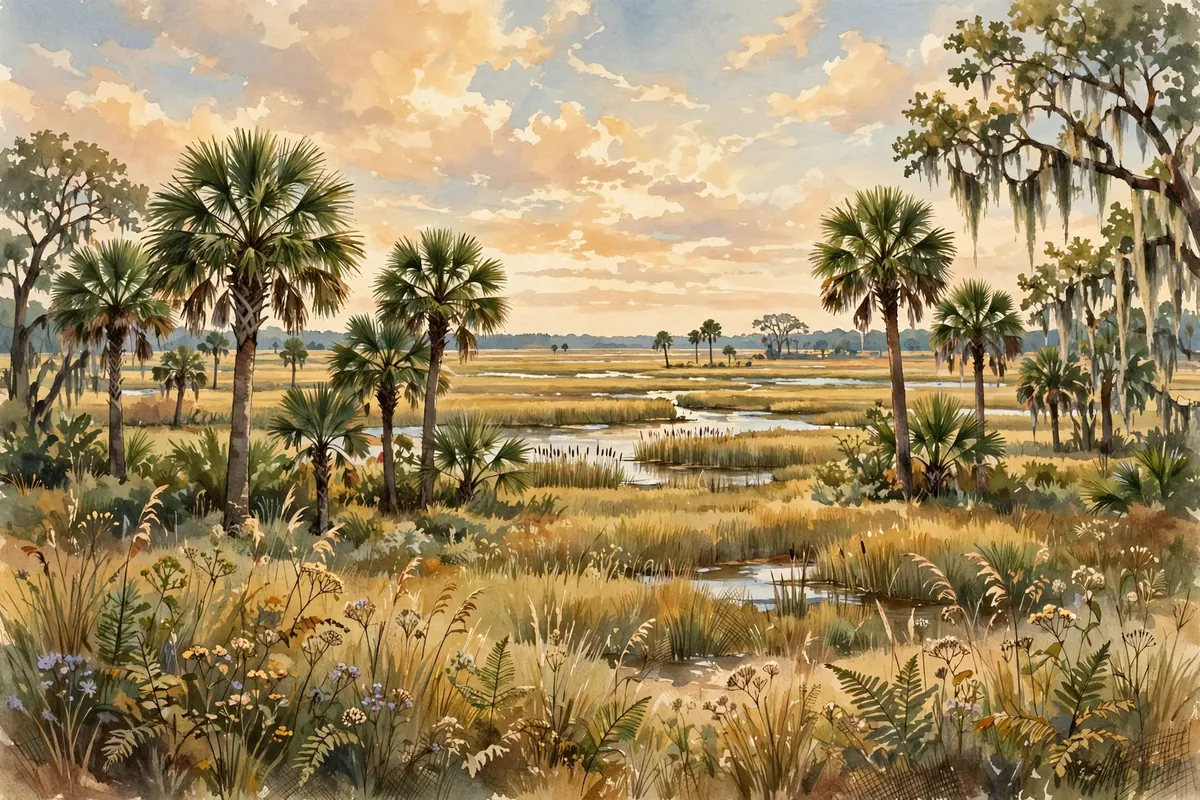
Florida has a lot going for it: sunshine, beaches, oranges, and theme parks. One thing it doesn't have is mountains. You can drive for hours and barely notice a hill. So why is the Sunshine State so remarkably flat?
Here's the short answer. Mountains usually form when the Earth's crust gets pushed, folded, or forced up by moving tectonic plates or volcanoes. Florida sits on a geologically quiet slab of rock called the Florida Platform, which hasn't seen that kind of activity for a very long time. On top of that, much of Florida spent ages under shallow seas, which built up flat layers of limestone and sand instead of peaks.
The Lowest High Point in America
Florida's highest natural point is Britton Hill, in Walton County in the Panhandle. It stands just 345 feet above sea level, making it the lowest known high point of any U.S. state.
On the peninsula, the tallest spot is Sugarloaf Mountain in Lake County, at 312 feet. Despite the name, it's really the top of a long sand ridge. Much of Florida sits less than 12 feet above sea level, including coastal cities like Miami. All of Florida lies within the Coastal Plain of the eastern United States. Being so low has a downside, too: Miami and other parts of South Florida are among the places in the world most vulnerable to rising seas.
How Mountains Usually Form
Most mountains are made by big movements of Earth's crust. Folding, faulting, and volcanic activity can all lift land high into the sky. Volcanoes, for instance, often form along the edges of tectonic plates.
Florida's foundation did have a dramatic past. Part of the rock deep beneath it was once attached to Africa. When the supercontinent Pangaea broke apart in the early Jurassic, that piece stayed with North America. But since that rifting ended, the Florida Platform has been tectonically quiet. No major collisions, no new mountain ranges.
A State Built by the Sea
Instead of being pushed up, Florida was mostly built up layer by layer. During the earlier part of the Cenozoic Era, the region was covered by shallow water. That's the main reason there's a massive amount of limestone under Florida's surface.
On top of the limestone sit sandy soils, laid down as ancient beaches while sea levels rose and fell over millions of years. Much of that sand washed down from the southern Appalachian Mountains. Ocean currents then shaped it into long ridges, like the Lake Wales Ridge running down the middle of the peninsula. Marine forces, not mountain building, have been the main sculptors of Florida's landscape.
What Florida Has Instead
Florida's limestone gives it a different kind of scenery. Water can dissolve limestone, creating karst terrain full of underground caves, sinkholes, and springs. These systems supply most of the water Floridians use.
The state isn't perfectly pancake-flat, either. Much of Central and North Florida, away from the coast, has rolling hills between 100 and 250 feet high. And during the last Ice Age, lower seas revealed a much wider Florida peninsula, mostly covered in savanna.
So Florida may never be a skiing destination, but its flatness tells a fascinating story. Every sandy ridge and spring is a reminder that this state was shaped by ancient seas, one layer at a time.