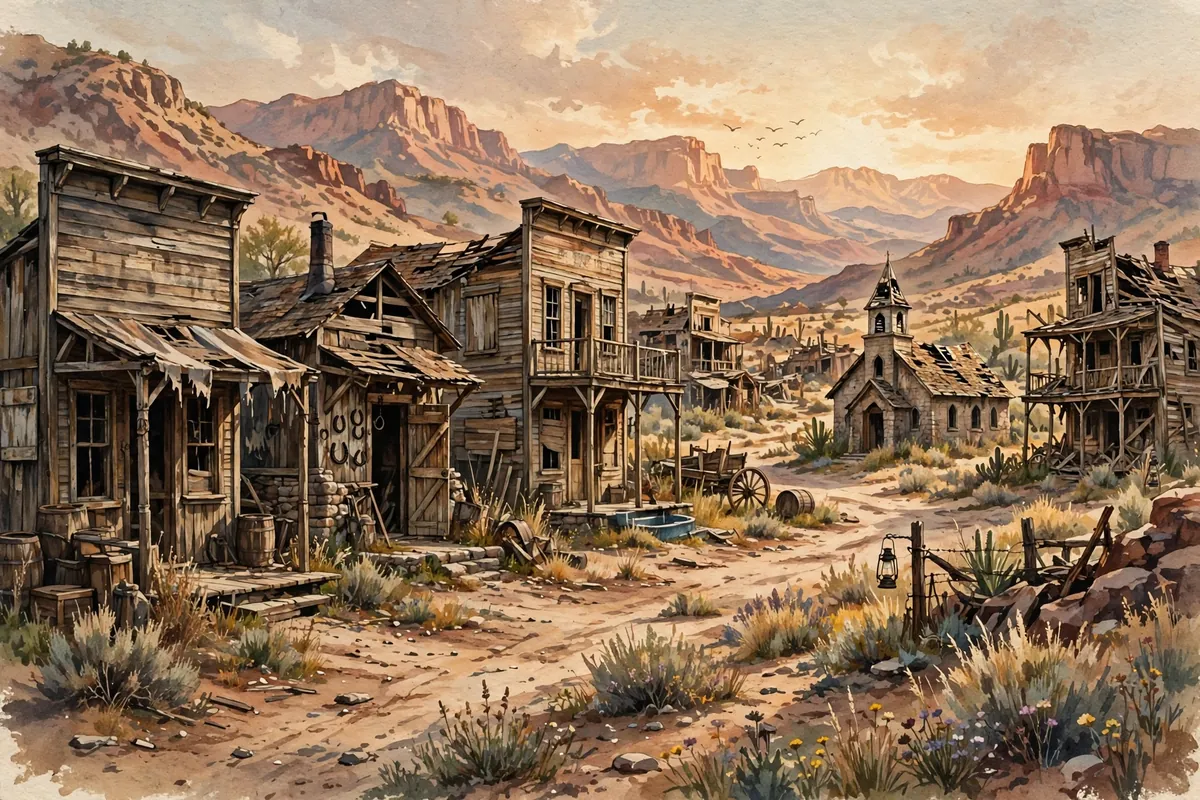
Most towns change constantly. Buildings get torn down, stores get remodeled, and new houses go up. But in the high desert of eastern California, there's a town that simply stopped. Walk its dusty streets today and it feels like everyone left one afternoon and never came back.
That town is Bodie, a former gold rush boomtown in Mono County. After its gold faded, the people drifted away, and by 1915 it was being called a ghost town. Since 1962, it has been a state historic park, preserved in what's called “arrested decay.” About 110 buildings still stand, and many interiors remain just as they were left, still stocked with goods.
From Mining Camp to Wild West Boomtown
Gold was found here in 1859 by a group of prospectors including W. S. Bodey. Sadly, Bodey died in a blizzard that November and never saw the town that would carry his name. The spelling changed to “Bodie” after a sign painter lettered “Bodie Stables.”
For years, the camp barely mattered. Then, in 1876, the Standard Company hit a rich deposit of gold ore, and Bodie exploded. By 1879, it had around 2,000 buildings and somewhere between 7,000 and 10,000 people.
A Rough and Rowdy Place
Bodie had everything a big town needed: a Wells Fargo bank, four volunteer fire companies, a brass band, a railroad, newspapers, and a jail. At its peak, 65 saloons lined a Main Street about a mile long.
It was not a quiet place. Murders, shootouts, barroom brawls, and stagecoach robberies happened regularly. Gold shipments heading to the mint usually traveled with armed guards. The town also had a Chinatown with several hundred residents and a Taoist temple.
How the Town Emptied Out
The decline started in 1880. New mining booms in Montana, Arizona, and Utah lured the get-rich-quick miners away, and Bodie became more of a family town. In 1882, residents built a Methodist church that still stands today.
But the gold kept dwindling. By 1914, mining profits had fallen to just $6,821. The railroad was abandoned in 1917, and by 1920 the census counted only 120 people. A serious fire in 1932 burned much of the business district. The post office closed in 1942.
Life there was never easy. Bodie sits at about 8,400 feet, and winds can sweep the valley at close to 100 miles per hour. The record low is a bone-chilling minus 36 degrees Fahrenheit, set in 1903. The town isn't in a forest, so lumber and firewood for those long winters had to be hauled in from other towns, and a small railroad was built in 1881 partly to bring in wood.
Visiting the Time Capsule
Today, Bodie is a National Historic Landmark and gets about 200,000 visitors a year. “Arrested decay” means the buildings aren't restored to look new. They're simply kept from falling apart, so what you see is genuinely old.
You'll spot bits of history scattered on the ground, like shards of china, square nails, and old bottles. But don't pocket any souvenirs. Removing them is illegal.
Getting there takes some effort. The last three miles of the main road in are dirt, and heavy snow usually closes the roads in winter. For anyone curious about the real Old West, though, few places feel more authentic. Bodie isn't a recreation. It's the real thing, just waiting quietly for its next visitor.