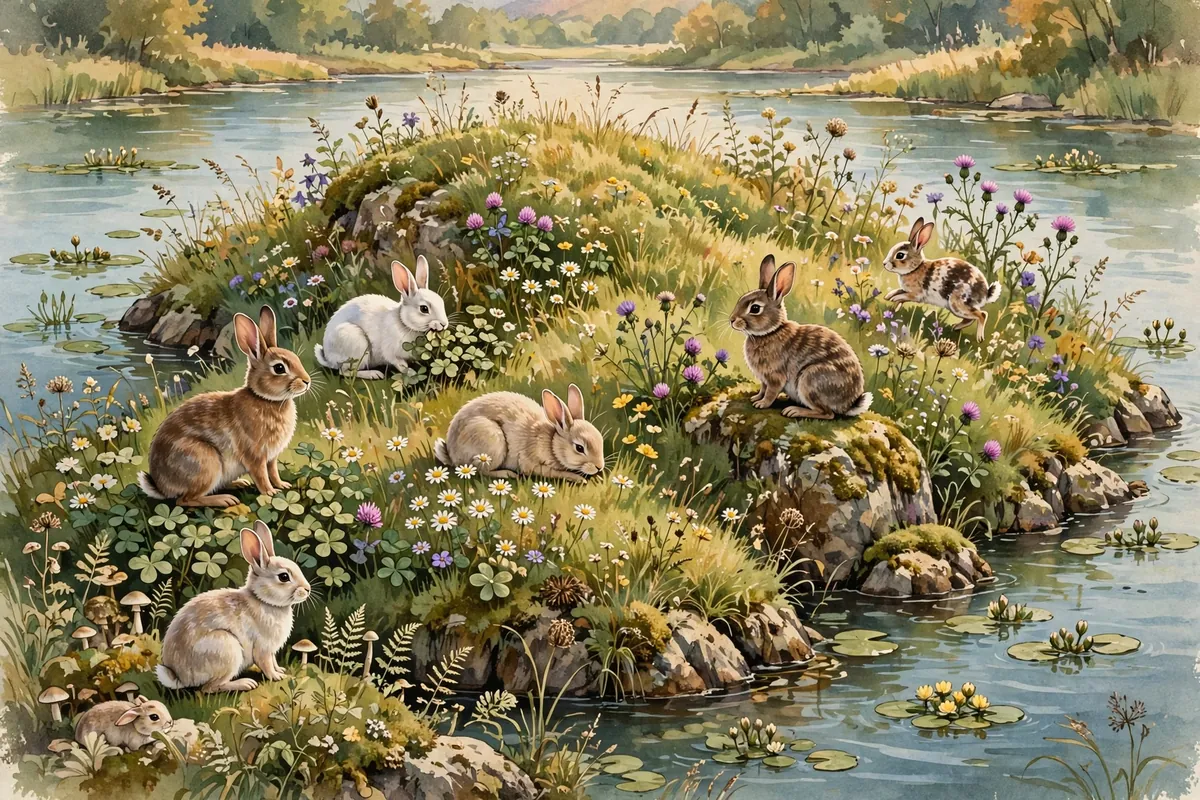
Imagine stepping off a ferry and being greeted by a crowd of rabbits. They hop out from bushes, sit at your feet, and wait hopefully for a snack. It sounds like a children's book, but it's a real place in Japan, and it draws huge crowds of visitors every year.
The island is called Ōkunoshima, and it sits in Japan's Seto Inland Sea, part of the city of Takehara in Hiroshima Prefecture. It's nicknamed Usagi Shima, which means Rabbit Island, and its rabbit population is estimated in the thousands. But the island has a surprising history. Before it became a rabbit paradise, it was home to a secret wartime factory that made poison gas.
A Secret Factory
For years, Ōkunoshima was a quiet place with farmland and just three fishing families. During the Russo-Japanese War, ten forts were built there. Then, in the 1920s, the Imperial Japanese Army began a secret program to develop chemical weapons, and a plant was built on the island between 1927 and 1929.
The island was chosen because it was isolated, easy to guard, and far from Tokyo in case of disaster. The factory went on to produce more than six kilotons of mustard gas and tear gas. Japan went to great lengths to hide it, even removing the island from some maps. Workers weren't told what they were making, and many became sick from exposure because of poor safety equipment.
After World War II, documents about the plant were burned, and Allied forces disposed of the gas. People were told to stay silent, and the full story didn't become public knowledge until the 1980s.
Where the Rabbits Came From
Rabbits were used at the factory to test the gas, but those animals were most likely killed when the plant was torn down. Scientists consider it very unlikely that today's rabbits are related to them.
Instead, the island's rabbits trace back to releases after the war, when Ōkunoshima was redeveloped as a park. In the early 1970s, a local elementary school also released a small number of rabbits, hoping to bring the island back to life. With no predators to worry about, they thrived. Rabbits breed quickly, and before long the island was hopping with them.
A Rabbit Paradise With Rules
Today the rabbits are well protected. Hunting them is forbidden, and dogs and cats aren't allowed on the island. The rabbits have grown used to people and often approach visitors looking for food. In 2024, nearly 200,000 people visited. The island is reached by ferry from Tadanoumi and Ōmishima.
Ōkunoshima is also part of Japan's Inland Sea National Park system. The ruins of the old forts and the gas factory are still scattered around the island, but going inside them is prohibited because they're considered too dangerous.
A Museum for Remembering
In 1988, the Ōkunoshima Poison Gas Museum opened to teach visitors about the island's past. It's only two rooms, but it covers how the plant was built, what conditions were like for workers, and how poison gas harms the body. Families of former workers donated many of the items on display.
The museum's curator once said he hoped visitors would see that his country had been both a victim and an aggressor in the war, and would recognize the importance of peace.
So Ōkunoshima is two places at once: a cheerful island full of fluffy rabbits, and a quiet reminder of a painful chapter in history. Perhaps that's what makes a visit there so memorable.