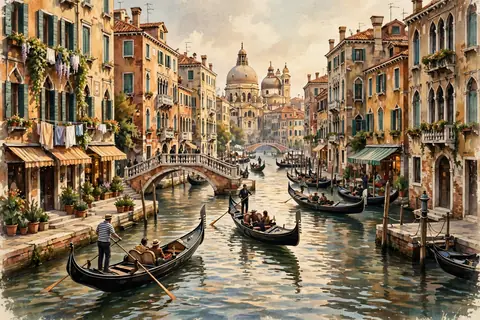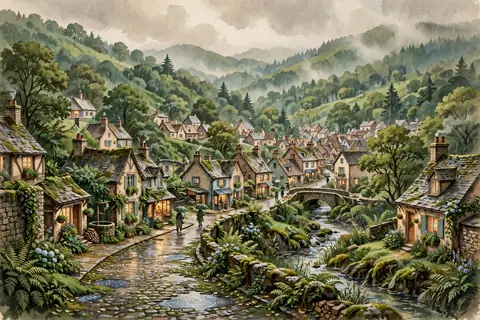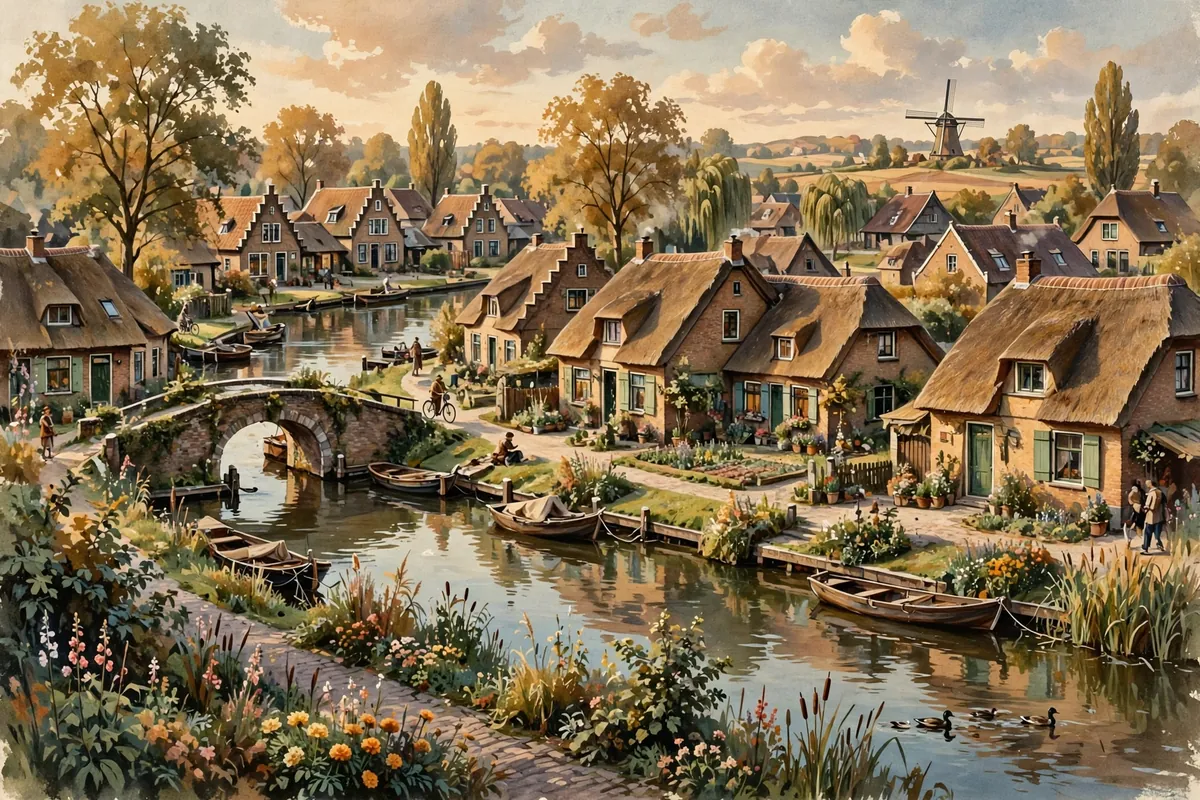
Imagine a village where your neighbor's front door faces a canal instead of a street, and the quickest way to visit a friend is by boat. No traffic lights, no honking horns, just the soft sound of water and the occasional footbridge arching overhead. It sounds like something from a storybook, but it's a real place in the Netherlands.
Here's the short answer: Giethoorn is a village in the Dutch province of Overijssel, home to about 2,800 people. In its old section, there were traditionally no roads. All transport was done by water along the village's many canals. A cycling path was eventually added, and some exceptions are made today, but water is still at the heart of village life. That's why it's often called the "Venice of the Netherlands."
A Landscape Made by Digging
Giethoorn's watery layout has a lot to do with peat, a spongy soil made from partly decayed plants. Around 2,500 years ago, much of what is now the Netherlands was covered with peat. People dug it up for fuel, and in Giethoorn, all that digging left behind holes that filled with water and became lakes.
Elsewhere in the Netherlands, people handled all that soggy ground by building dikes and windmills to create polders, land kept dry so people could live and work below sea level. The first polder probably dates to 1533, and the last was finished in 1968.
The village sits next to Weerribben-Wieden National Park, which includes the largest bog in northwestern Europe. Large parts of that area were used for peat production until World War II. Since then, some of it has been used to grow reeds for thatched roofs, and about 2,500 acres are still used for that today.
176 Bridges and Counting
With so much water, Giethoorn needs plenty of ways to cross it. The village has 176 bridges, an impressive number for a place of fewer than 3,000 people.
For a long time, the old village was a pedestrian-only area. Moving people and goods meant using the canals or going on foot. Even now, visitors can rent a boat and explore the village from the water, the way locals always have.
Famous Thanks to a Movie
Giethoorn's fame took off in 1958, when Dutch filmmaker Bert Haanstra used it as the setting for his comedy Fanfare. The film was the most visited Dutch movie of its time, and it remains one of the most popular films ever made in the Netherlands. The village became locally famous, especially after the film came out.
Today, tourism is Giethoorn's main source of income, drawing visitors from across the Netherlands and around the world. In 2015, the village even won a spot on the board of a new international edition of Monopoly, chosen from 182 contenders worldwide after an online voting campaign.
Nature Right Next Door
The surrounding national park is full of peat and water, and it's home to wildlife like the black tern, the northern pike, the sundew, and, more recently, otters. Dragonflies and butterflies such as the large copper can be found there too.
Giethoorn was its own municipality until 1973 and is now part of Steenwijkerland. But no matter which town hall it reports to, its charm hasn't changed. It's a place where life still moves at the speed of a rowboat, and that's exactly why so many people fall in love with it.