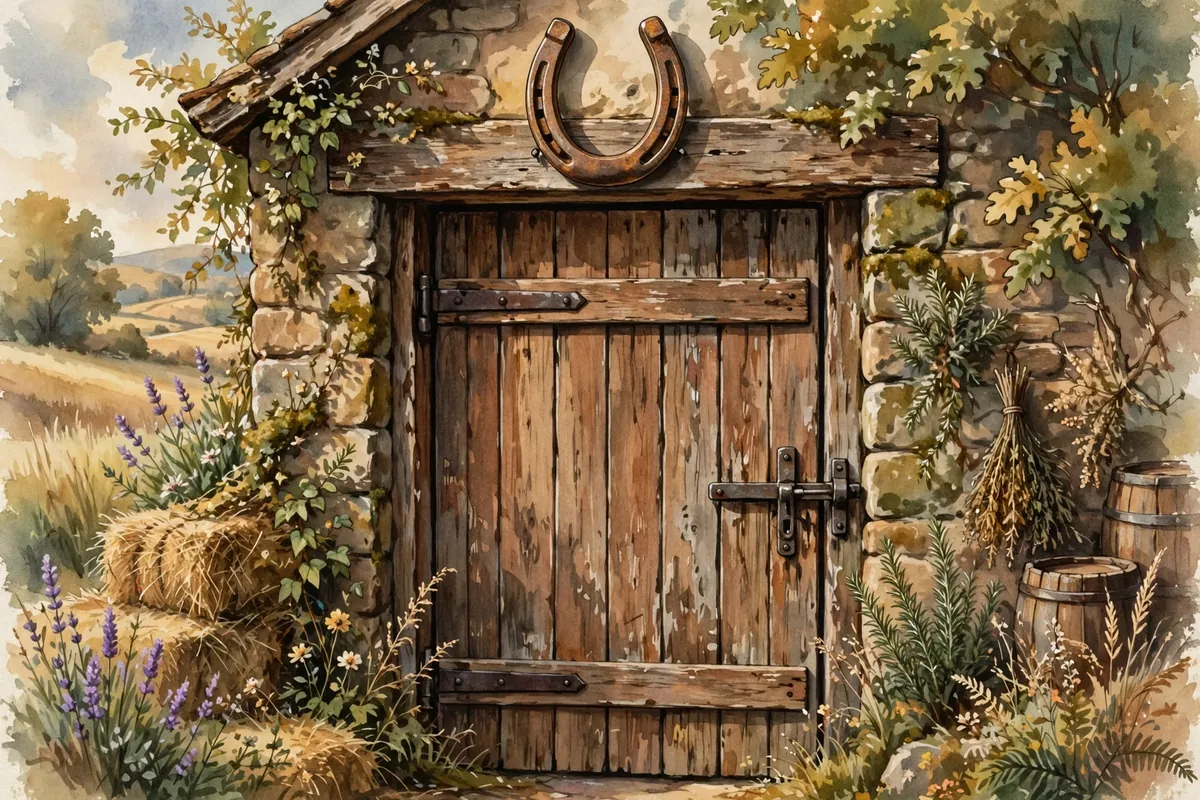
Walk past an old barn or farmhouse, and there's a good chance you'll spot a horseshoe nailed above the door. Some people hang one in the kitchen, carry a tiny charm on a keychain, or wear one as jewelry. But why would a piece of horse equipment become a symbol of good fortune?
The short answer is iron and the number seven. Horseshoes were originally made of iron, a metal people long believed could keep evil spirits away. They were also traditionally held on with seven nails, and seven has long been thought of as the luckiest number. Put those together and you have a powerful little charm. Its main job was protection, guarding a home from harm.
The Saint Who Tricked the Devil
The superstition picked up a Christian twist from a legend about Saint Dunstan, who lived in the 900s. Before becoming Archbishop of Canterbury, Dunstan worked as a blacksmith.
As the story goes, the Devil walked into his shop one day and asked him to shoe his horse. Dunstan pretended not to recognize him. But instead of nailing the shoe onto the horse's hoof, he nailed it to the Devil's own foot, causing him great pain. Dunstan only agreed to pull it off after the Devil promised never to enter a home with a horseshoe nailed to the door. A retelling of the legend published in 1871 suggests the shoe should hang with its open end facing down.
Lucky Blacksmiths
Blacksmiths themselves were once considered lucky. They worked with fire and iron, both seen as powerful and protective forces, and that reputation rubbed off on the horseshoes they made. Many blacksmiths hung horseshoes with the ends pointing down, believing blessings would pour out onto their work.
Ends Up or Ends Down?
Here's where families can disagree. In much of Europe, the Middle East, and Latin America, horseshoes are usually hung pointing downward, so good fortune pours onto everyone passing beneath. In parts of Ireland and Britain, people prefer the ends pointing up, so the horseshoe catches luck and keeps it from running out.
Immigrants brought both habits to America. Families of English and Irish heritage often hang horseshoes pointing up, while French, German, Italian, Spanish, and Balkan traditions favor pointing down. So the way your grandparents hung theirs may say something about where the family came from.
A Very Old Invention
Horses have needed hoof protection for as long as people have worked them. In ancient Asia, hooves were wrapped in rawhide or leather. The earliest clear written record of iron horseshoes dates to the year 910, describing "crescent figured irons and their nails." In China, the earliest known mention of iron horseshoes dates to 938.
Today, horseshoes are usually made of steel or aluminum, and they're fitted by a specialist called a farrier. Racehorses often wear lightweight aluminum shoes, while steel shoes are preferred in sports that need a tough, long-wearing shoe.
The horseshoe even became a backyard game. In horseshoes, players toss shoes at a stake, and a "ringer" that completely circles the stake scores three points.
So whether yours points up or down, a horseshoe over the door carries a lot of history: iron, the number seven, and a clever blacksmith saint. It may not guarantee good luck, but it sure makes a nice welcome.