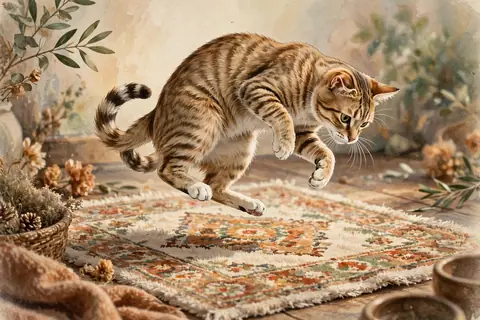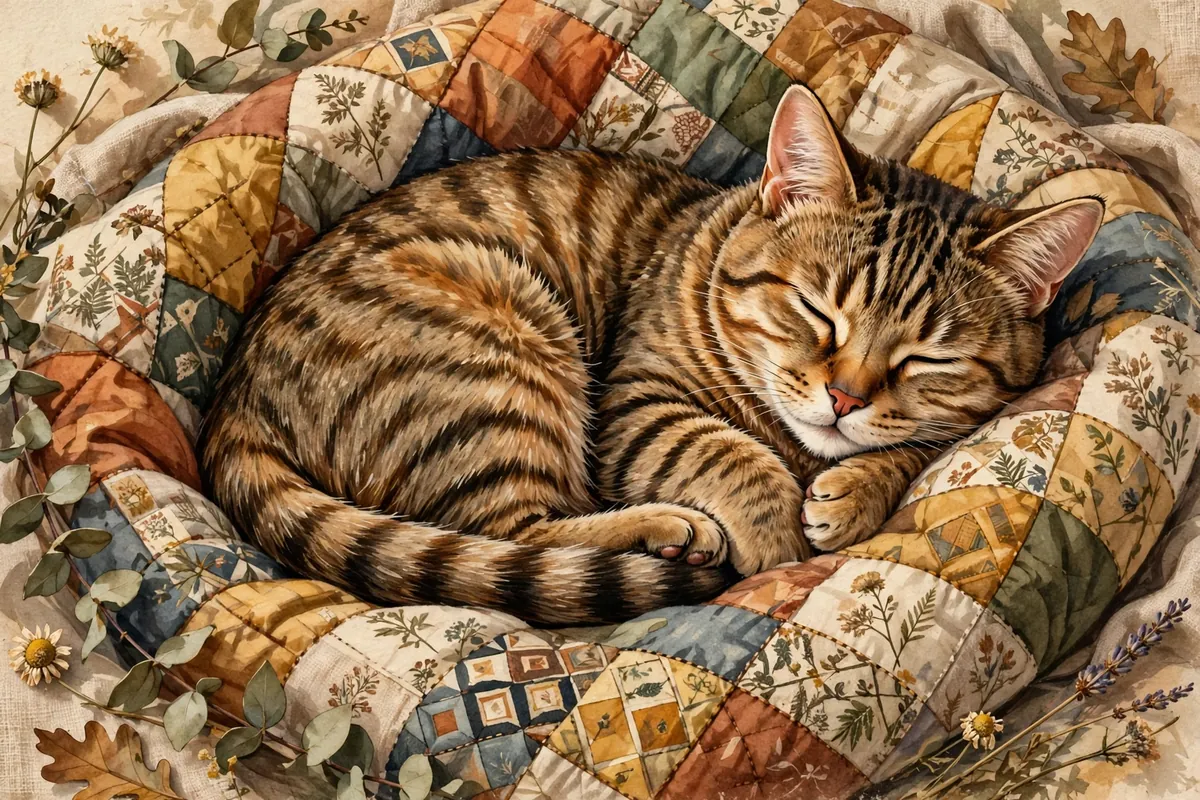
Few sounds are as comforting as a purring cat. It starts the moment you scratch behind the ears, and it can go on for what feels like forever. But have you ever wondered what that motor-like rumble actually is, and why a cat bothers to make it at all?
The short answer: cats purr mainly to show contentment, but not only that. They also purr to soothe themselves, to cope with pain, to reassure their kittens, and sometimes to ask for food. As for how they do it, the leading explanation is that the muscles of the voice box flutter rapidly with every breath in and out, though scientists admit the full mechanism still isn't completely understood.
How the Purr Machine Works
The most widely supported idea, backed by studies that recorded muscle activity, is that cats use the muscles of the larynx to rapidly open and close the gap between their vocal folds. As air rushes in and out during normal breathing, those quick little squeezes make the air vibrate. The result is that buzzing sound, a bit like a rolled 'r' in human speech.
What's really unusual is that a cat purrs on both the in-breath and the out-breath. That's why the sound seems to go on without a break. Some other animals that make purr-like noises, such as foxes, only manage it while breathing out.
Something in the brain seems to be running the show. Researchers have found a special 'neural oscillator' in the cat's brain, and stimulating a particular region of the brain can trigger purring. That points to the purr being controlled centrally, almost like a built-in rhythm. An older theory claimed the sound came from blood rushing through the chest, but it has since fallen out of favor.
Not Just a Happy Sound
Purring often begins in the first days of life. Kittens purr while nursing, and scientists think it may work as a reassuring signal between a mother cat and her litter. Many of the ways adult cats communicate with people seem to grow out of those early kitten days.
Grown cats purr when they're being petted, relaxing, or eating. But they also purr when they're hurt or stressed, which is why experts describe the purr as a way for cats to manage pain and calm themselves down. Some purring may also tell another animal, 'I'm not a threat.'
The Purr That Means 'Feed Me'
Here's a detail many cat owners will recognize. Cats seem to have a special purr for asking their humans for food. Scientists call it a solicitation purr, and it carries a higher-pitched component that ordinary contented purrs don't have.
In one study, 50 people listened to recordings of both kinds of purrs played at the same volume. Listeners consistently rated the food-seeking purrs as less pleasant and more urgent. In other words, your cat may be using a sound that's hard for you to ignore. Clever cat.
Purring Cats and Roaring Cats
Here's a curious rule from the cat family: no cat can both purr and roar. Lions, tigers, jaguars, and leopards roar, while most of the smaller cats purr. For a long time, scientists linked this to a small bone in the throat called the hyoid, which is only partly hardened in the roaring cats.
Nature likes exceptions, though. The snow leopard has the same partly hardened hyoid as the big roarers, yet it purrs. Some researchers have argued that the hyoid doesn't actually decide whether a cat can purr. Cheetahs, by the way, are firmly in the purring camp, and studies have measured their purrs at a pitch very close to a house cat's.
A Purr by the Numbers
A house cat's purr vibrates about 20 to 30 times per second, with a typical frequency around 25 hertz. That's a very low sound, which is why you often feel it through your hands as much as you hear it.
So the next time your cat settles in and starts rumbling, you'll know there's a lot going on behind that sleepy face. It might be pure contentment, a little self-soothing, or a not-so-subtle hint that dinner is late. Either way, it's a sound worth listening to.