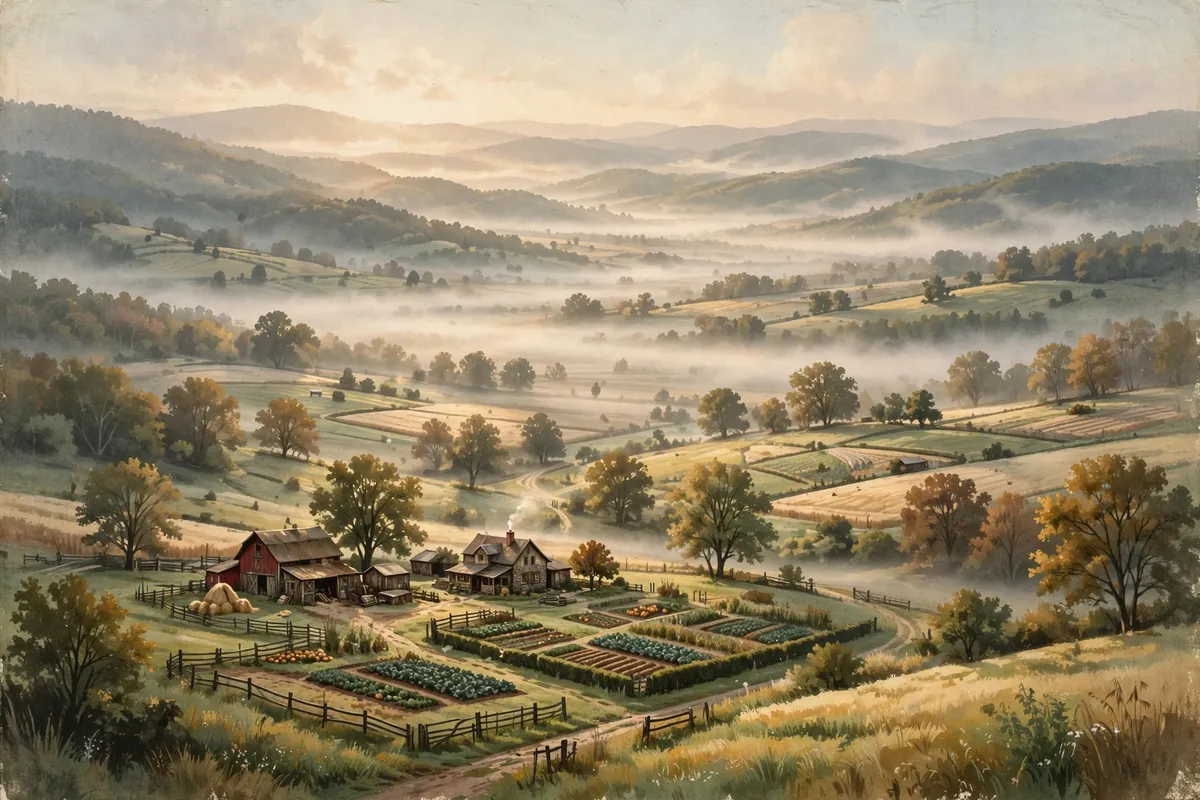
There's something magical about a foggy morning. The barn across the field fades into gray, the trees look like ghosts, and the whole world seems hushed. A few hours later, it's all gone as if it was never there. So where does fog come from, and where does it go?
Fog is essentially a cloud that forms near the ground. It appears when moist air cools down until it reaches its dew point, the temperature at which water vapor condenses into tiny droplets. Those droplets hang in the air, and when there are enough of them, they block your view. By definition, fog cuts visibility to less than about two-thirds of a mile.
Clear Nights Make Foggy Mornings
The most common kind is called radiation fog, and it's the classic misty-valley fog. On a clear, calm night, the ground gives off the heat it soaked up during the day. As the ground cools, it chills the air right above it.
If that air near the ground is humid enough, it cools to its dew point and fog forms. The result is a layer of cool, foggy air trapped beneath warmer air above. Clouds act like a blanket and slow the cooling, which is why clear nights tend to bring the foggiest mornings.
Valleys are favorite spots because cold air flows downhill and collects at the bottom. Swampy ground helps too, since moist soil adds humidity to the air just above it. Radiation fog shows up most in late autumn and winter, when nights are long and there's more time for the ground to cool.
Why It's Thickest at Sunrise
Here's a surprise. Radiation fog is often thickest shortly after sunrise. The early sun stirs up the air and thickens the fog before it's strong enough to warm the air and evaporate the droplets. That's why fog often lingers into midmorning and then seems to vanish all at once.
Wind matters too. A strong wind usually prevents this kind of fog by mixing the air. But a slight breeze can actually spread the chill and produce a fog layer several hundred feet deep.
Fog That Rolls In From the Sea
Another type, advection fog, forms when moist air moves over a cooler surface and chills. It's most common at sea, when warm, humid air drifts over cold water, as happens along the California coast. Most sea fog is this kind.
That's why the foggiest places on Earth often sit above cold ocean currents. The Grand Banks off Newfoundland, where the cold Labrador Current meets the warm Gulf Stream, average 200 or more foggy days a year. In the United States, the foggiest areas are the New England and Pacific coasts, while the deserts of Arizona, California, and Nevada see the least.
Fog That Changed History
Fog has even shaped history. During the 1776 Battle of Long Island, George Washington and his troops used fog to hide their escape from the British Army. On D-Day in 1944, Allied troops landed on the beaches of Normandy in foggy conditions.
Fog can be dangerous, especially on highways, so slow down and use low beams when it rolls in. But on a quiet morning at home with a cup of coffee, it's one of nature's prettiest shows: a cloud that came down to visit, then slipped away with the sun.