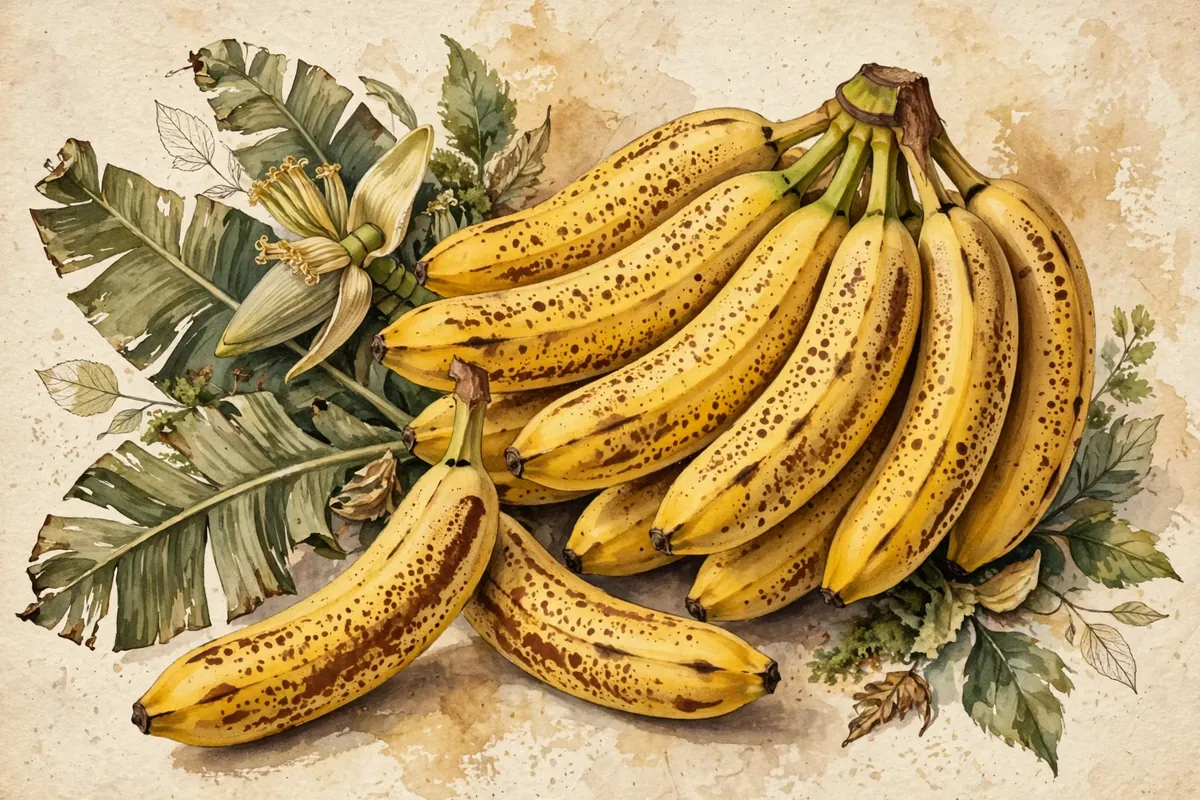
Bananas seem to have only two speeds: not ready yet, and too late. One day they're firm and pale, the next they're sweet and spotted, and soon after the peel is mostly brown. It can feel like they ripen just to spite us. So what's actually going on inside that peel?
The short answer is a gas called ethylene. Bananas produce it naturally, and it works as a ripening hormone, switching on enzymes that turn starch into sugar and soften the fruit. As ripening speeds along, the peel goes from green to yellow to speckled and finally brown. When a banana is bruised or sliced, a separate reaction called enzymatic browning darkens it, and that one needs oxygen.
The Ripening Gas
Ethylene is a plant hormone, and bananas are famous for it. It triggers the formation of amylase, an enzyme that breaks starch down into sugar, which is why ripe bananas taste so much sweeter. It also signals the production of another enzyme that breaks down pectin, the glue between the fruit's cells, which makes the banana soft.
Ethylene can also start a chain reaction. In some fruits, it causes a rise in respiration that releases even more ethylene. That's one reason ripening can seem to snowball once it gets going.
The banana's role in this discovery is part of science history. In 1934, British biologist Richard Gane found that something given off by ripe bananas could make green bananas ripen, and he showed that ethylene produced the same effect.
How Bananas Reach Your Store
Because bananas ripen so fast, the banana trade is a race against time. Export bananas are picked green, then cooled and shipped in refrigerated holds to keep them from making ethylene. That allows them to travel for three to four weeks at about 55°F.
When they arrive, they're placed in airtight ripening rooms and given a small dose of ethylene gas. After a few days, they begin to ripen and head to stores. Even the bright yellow color is partly a product of this process. Cavendish bananas ripened in tropical heat above about 81°F can stay green. So the bunch on your counter has usually followed a carefully timed schedule all the way from the tropics.
Why Slices and Bruises Go Brown
Peel a banana, slice it, and leave it out, and the pieces darken quickly. That's enzymatic browning, one of the most important chemical reactions in fruits and vegetables. Enzymes such as polyphenol oxidase react with natural compounds in the fruit, and with the help of oxygen, they produce brown pigments. Bananas, apples, potatoes, and avocados are all prone to it.
Some natural ingredients slow it down. Lemon juice may help thanks to its citric and ascorbic acids, and pineapple juice has been shown to have an anti-browning effect on apples and bananas.
Tricks From Ancient Times to Today
People have used ripening gas for thousands of years without knowing it. Ancient Egyptians cut figs to make them ripen, since wounding a fruit triggers ethylene. The ancient Chinese burned incense in closed rooms to help pears ripen.
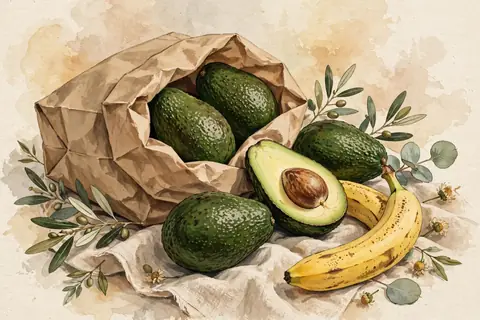
You can use the same science at home. If your bananas are too green, put them in a brown paper bag with an apple or a tomato overnight. The extra ethylene will speed things up. And if they get too brown, well, there's always banana bread.