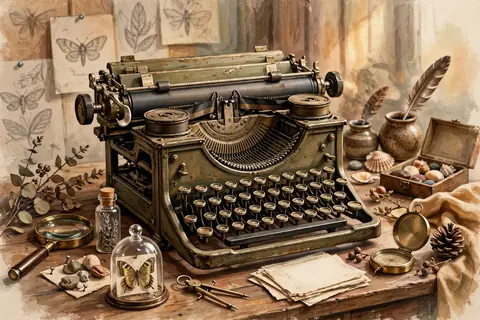
Clack, clack, clack, ding! Then the satisfying zip of the carriage sliding back. If you ever typed on a manual typewriter, that rhythm is probably burned into your memory. But have you ever wondered exactly what that little bell was for?
The ding was an early warning. On a typewriter, a small bell was struck a few characters before the right-hand margin. It told the typist that the line was almost full, so they could finish the word they were on and then push the carriage-return lever to start a new line. Without it, you'd have to keep glancing at the page to avoid running off the edge.
How the Carriage Worked
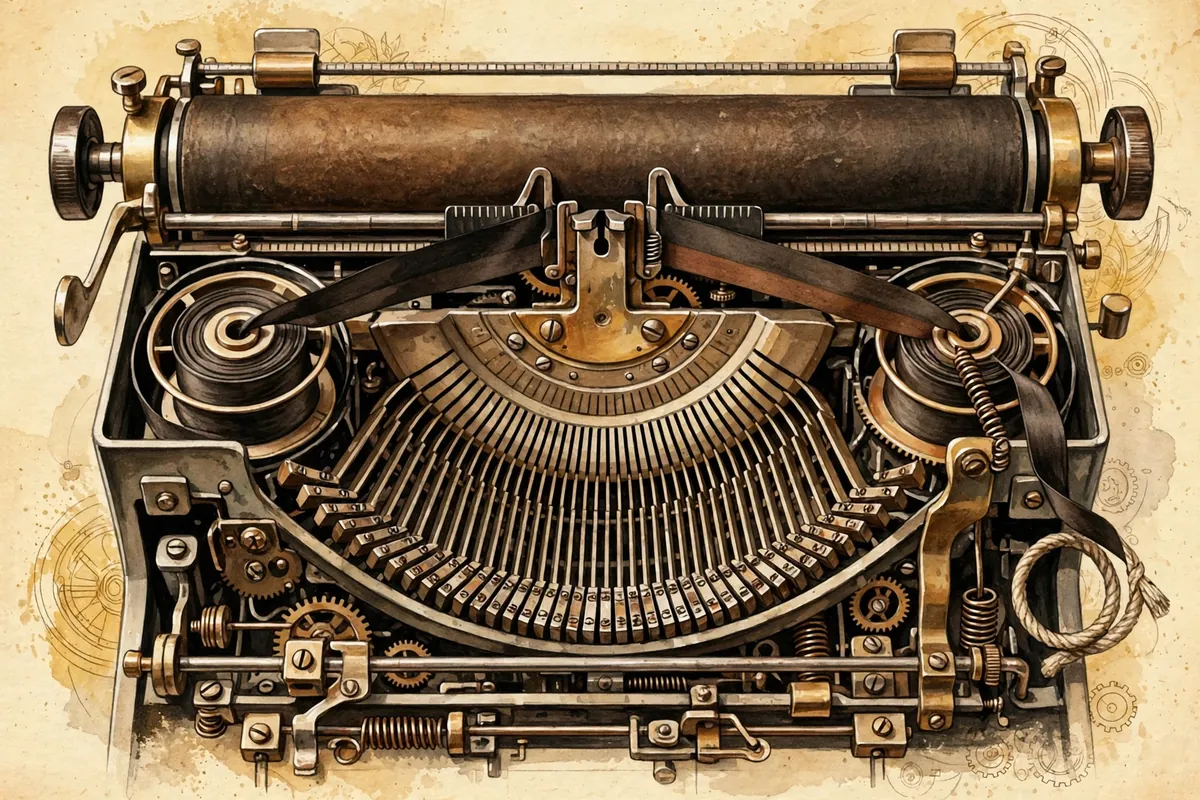
On a classic typewriter, the paper was wrapped around a roller called the platen. The platen sat on a carriage that moved a little to the left after each letter was typed, so the next letter landed in the right spot.
When you reached the end of a line, you pressed the carriage-return lever on the far left, pushing the carriage back to its starting position. The same motion turned the roller to move the paper up for the next line. That's the zip and click so many people remember.
The bell gave you just enough notice to plan ahead. If the next word was long, you might break it with a hyphen or move it to the next line. A typist who knew the machine could keep a steady rhythm without ever looking up from the notes beside them, which made long letters and reports go much faster.
Where Typewriters Came From
The first commercially successful typewriter was patented in 1868 by Americans Christopher Latham Sholes, Frank Haven Hall, Carlos Glidden, and Samuel W. Soule in Milwaukee. The rights ended up with Sholes and James Densmore, who teamed up with E. Remington and Sons, then known for making sewing machines. Their machine, the Sholes and Glidden Type-Writer, gave us the very word typewriter.
The 1874 Sholes and Glidden machines also established the QWERTY layout that's still on nearly every keyboard today. Later, a tab key was added in the late 1800s to make typing columns of numbers easier for businesses.
The Ding Lives On
Typewriters have mostly disappeared from offices, but their ideas haven't. The Enter key on your computer is still often called Return, short for carriage return. In computer code, there's even a special carriage return character that tells a printer or screen to move back to the start of the line.
Bells have a digital descendant too. Teleprinters, the typewriter-like machines that sent messages over wires, used a special "bell code" to ring a little bell and alert the operator, a practice dating back to 1870. When computer terminals replaced teleprinters, they kept a speaker or buzzer to do the same job. Even today, some computer programs play a warning sound in response to that same old bell code.
A Sound Worth Remembering
There was also a mirror-image version of all this. Typewriters for languages written from right to left, such as Hebrew or Arabic, moved in the opposite direction.
So the next time you hear an old typewriter ding in a movie, you'll know it wasn't just for show. It was a polite little heads-up, ringing out a few letters early so the typist never ran out of room.