Few things start an argument faster than barbecue. Sauce or no sauce? Pork or beef? Vinegar or tomato? Travel a few hundred miles in America and the answer can change completely. So why is barbecue so different from place to place?
The short answer is history and geography. Each region built its barbecue from the animals it raised, the woods it had on hand, and the traditions of the people who settled there. Experts usually point to four major styles: North Carolina and Memphis, which rely on pork and are the oldest, and Kansas City and Texas, which use beef as well as pork and grew out of the original Deep South barbecue.
It All Started With the Pig
In the 1700s, pigs became a basic part of Southern cooking. They needed little care and turned feed into meat far more efficiently than cattle. By 1860, hogs and other Southern livestock were worth twice as much as the region's cotton crop.
Whole hogs were roasted for big gatherings, including political rallies, church events, and harvest festivals. That's why the oldest barbecue traditions in America are built around pork.
The Carolinas: Pork and Vinegar
In the Carolinas, barbecue means pork, period. It may be a whole hog or just the shoulder, served pulled, chopped, or sliced, with a vinegar-based sauce. Carolina hog barbecue is considered the major starting point for American barbecue as it spread.
Even within the Carolinas, sauces vary. Mustard-based sauces are more common in South Carolina, a flavor that shows up in places across America where German immigrants settled. Central and western North Carolina favor a vinegar-and-ketchup style named for the town of Lexington, whose barbecue festival draws up to 200,000 visitors a year.
Memphis and Kansas City
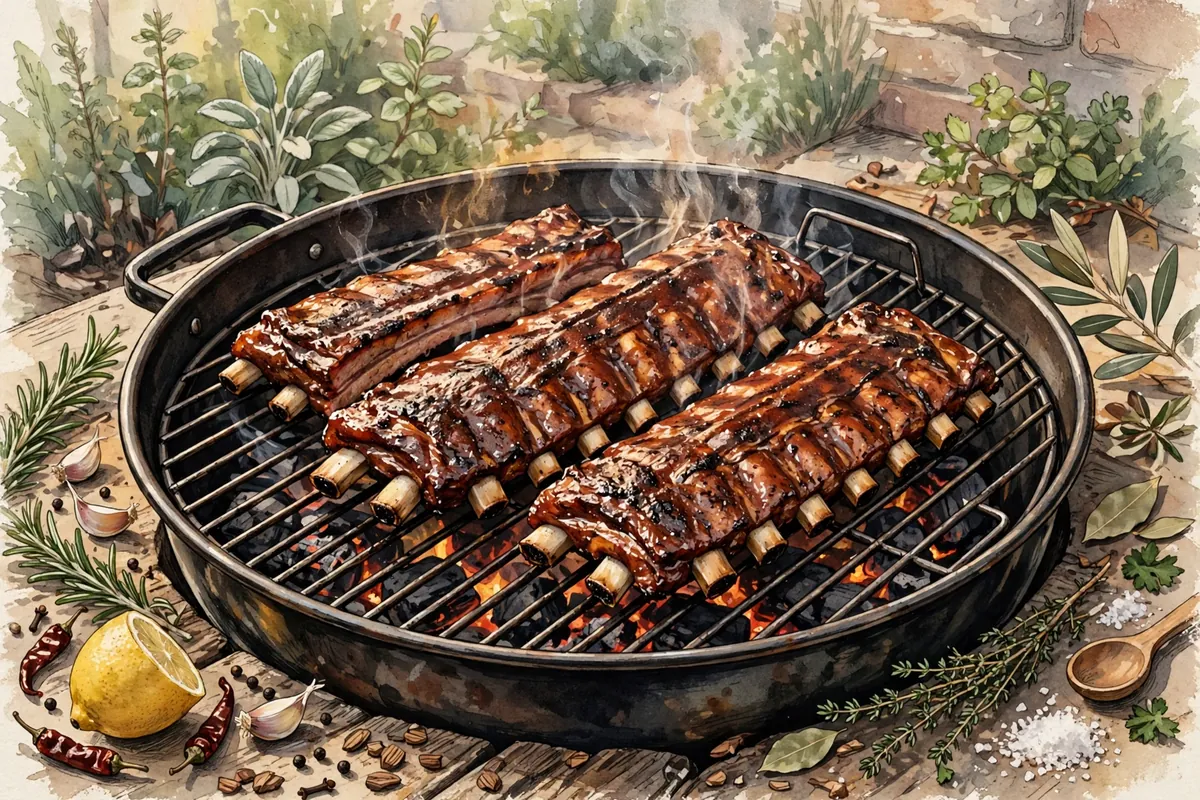
Memphis is famous for ribs, served “wet,” brushed with sauce, or “dry,” coated in a spice rub. Its pulled pork sandwiches come topped with sauce and coleslaw. Memphians even put pulled pork on spaghetti, pizza, and nachos.
Kansas City barbecue was brought there by a Memphis native named Henry Perry. The city went its own way, though, with beef, pork, and even lamb, a thick tomato-based sauce, and french fries on the side. One local favorite, Gates Bar-B-Q, is known for a spicier sauce seasoned with cumin and celery salt.
Texas, and a Few Surprises
Texas is big enough to have four barbecue styles of its own. Central Texas “meat market” barbecue began in the butcher shops of German and Czech immigrants. West Texas “cowboy style” cooks directly over mesquite and includes goat and mutton as well as beef. South Texas has barbacoa, made from a cow's head, originally cooked underground.
Other regions add their own twists. In Alabama, smoked chicken gets dunked in a white sauce made with mayonnaise and vinegar, created by Bob Gibson in Decatur in the 1920s. In California, Native Americans cooked in buried pits for thousands of years, and the big cattle ranches of the Spanish and Mexican eras later held large pit barbecues.
Outside the classic barbecue states, the lines blur. With less local tradition to follow, restaurants often mix styles, putting Carolina pulled pork and Texas brisket on the same menu. So there's no single right way to barbecue. Every style is a little edible history lesson, and the best way to settle the debate is probably to try them all.