Think back as far as you possibly can. What's the very first thing you remember? For most people, it's a blurry snapshot from around age three or four. Everything before that, the first steps, the first words, the first birthday, is simply gone. Yet those years were packed with learning.
Scientists call this childhood amnesia, or infantile amnesia. It's the normal inability of adults to recall specific events from before about age three or four. Nobody knows the single cause, but the leading ideas involve a brain that is still being built, language that hasn't developed yet, and a sense of self that is still forming.
A Mystery More Than a Century Old
Psychologist Caroline Miles first formally described the effect in 1895. A few years later, a survey found the average earliest memory was at about three years and one month, which is close to what researchers still find today.
Sigmund Freud famously coined the term infantile amnesia and claimed early memories were repressed. However, his idea wasn't based on scientific evidence, and no experiments have backed it up. Modern researchers have looked elsewhere for answers.
A Brain Under Construction
One major explanation is that the baby brain simply isn't ready to store long-lasting memories of events. Two key memory areas, the hippocampus and the prefrontal cortex, don't mature until around age three or four. Those are the same structures linked to forming memories of our own life story.
There's a twist, too. In early childhood, the hippocampus produces new brain cells at a very high rate. Some researchers propose that all this new growth may actually scramble or overwrite older memories. In studies with mice, boosting the growth of new neurons increased forgetting, while slowing it down reduced forgetting.
It's still unknown whether those early memories are truly erased or just become impossible to reach. Some animal research suggests that the right trigger can reactivate them, which hints they may not be completely lost.
Words Help Memories Stick
Language seems to play a big role. Babies don't yet have the words to describe and organize what happens to them. The age when most people's earliest memories begin, around three or four, is also a time of rapid language growth.
Talking about the past seems to help as well. Studies suggest that parents who discuss events with their children in rich detail may help them hold on to earlier memories. That means the age of our first memory isn't fixed by biology alone. Culture and family habits shape it, too.
Language can't be the whole story, though. Animals that never learn words also show a form of childhood amnesia.
Are Your Earliest Memories Real?
Here's the uncomfortable part. Very few adults have genuine memories from before about three and a half years old. People who claim them often can't tell the difference between remembering the event and simply knowing about it from family stories or photos.
Memories from early childhood are especially open to suggestion. In experiments, people shown doctored photos of themselves in a childhood event that never happened sometimes came to remember it. Simply imagining an event can make it feel more real, an effect researchers call imagination inflation.
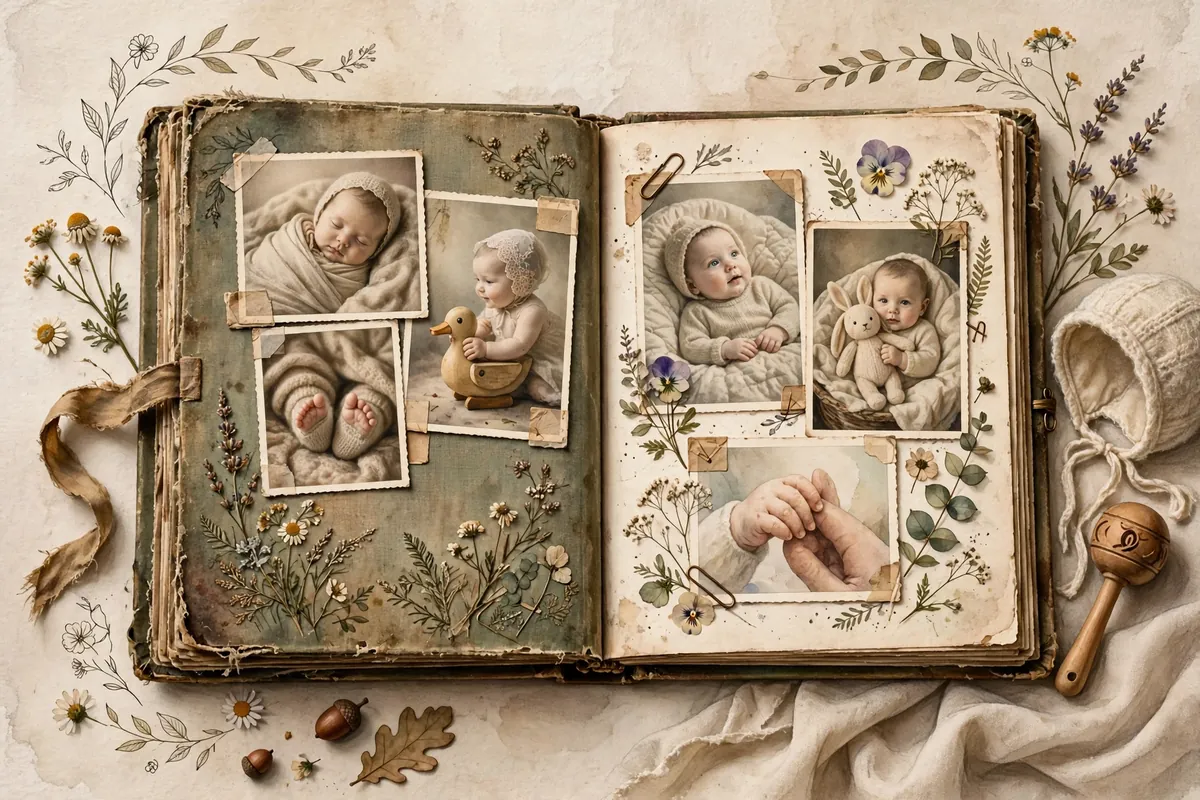
So if you treasure a memory of your crib or your second birthday, it may be a mix of real fragments and family retellings. That's no reason to put away the baby album. Those pictures and stories are how we keep our earliest years alive, even when our own brains couldn't hold on to them.