Quick, name the ninth president of the United States. If you're drawing a blank, you're not alone. His time in the White House was so short that he's often left out of presidential rankings altogether. Yet his story is one of the strangest in American history.
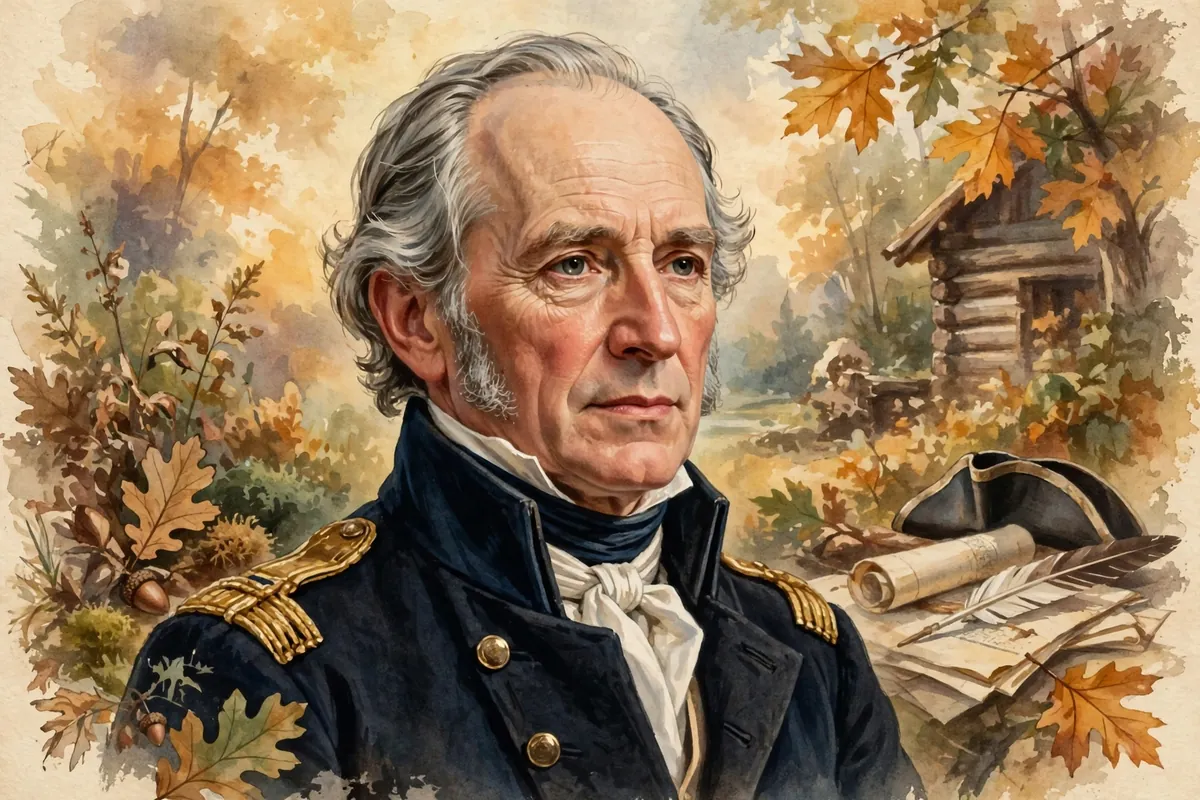
The president was William Henry Harrison, and he served just 31 days. He took office on March 4, 1841, fell ill about three weeks later, and died on April 4, exactly one month after taking the oath. He was the shortest-serving president and the first to die in office.
Old Tippecanoe Comes to Washington
Before he was president, Harrison was a famous military man. In 1811, he led troops at the Battle of Tippecanoe, which earned him the nickname Old Tippecanoe. He later became a major general during the War of 1812.
His 1840 campaign was one for the books. Opponents mocked him as an old man who'd rather sit in his log cabin drinking hard cider. Instead of fighting the insult, his campaign embraced it, putting log cabins on banners and handing out hard cider in bottles shaped like little cabins. With the catchy slogan Tippecanoe and Tyler Too, he won.
The Longest Speech in Presidential History
Harrison was 68 when he took office, the oldest president to be inaugurated until Ronald Reagan in 1981. Inauguration Day was cold and wet. Wanting to show he was still a tough war hero, he skipped the overcoat and hat and rode to the ceremony on horseback.
Then he delivered the longest inaugural address in American history, 8,445 words. It took nearly two hours to read, even after his friend Daniel Webster had trimmed it down.
What Really Killed Him?
For generations, the story went like this: the long speech in the chilly rain gave him a cold that turned into pneumonia. His doctor did diagnose pneumonia. But Harrison didn't get sick until three weeks after the inauguration, after getting caught in a rainstorm on one of his morning walks.
In 2014, two researchers took a fresh look at his doctor's notes and at records showing that the White House water supply was downstream from public sewage. They concluded that he likely died from enteric fever, a group that includes typhoid. In other words, the water may have been the real culprit, not the speech.
The treatments of the day didn't help much. His doctors tried bloodletting, heated cups on his skin, castor oil, and opium. He died nine days after falling ill.
A Short Term With Long Effects
Harrison's death created a real puzzle. No president had ever died in office, and the Constitution wasn't clear about whether the vice president actually became president or just took on the duties. Vice President John Tyler settled it by taking the presidential oath right away and claiming the full powers of the office, a move known as the Tyler Precedent. Critics nicknamed him His Accidency.
Harrison's wife, Anna, was still in Ohio packing for the move to Washington when she learned he was dying. She never lived in the White House. The family story didn't end there, though. Their grandson, Benjamin Harrison, became the 23rd president in 1889.
So the forgotten president left more of a mark than his 31 days suggest. And if you ever give a long speech on a chilly day, maybe just wear the coat.