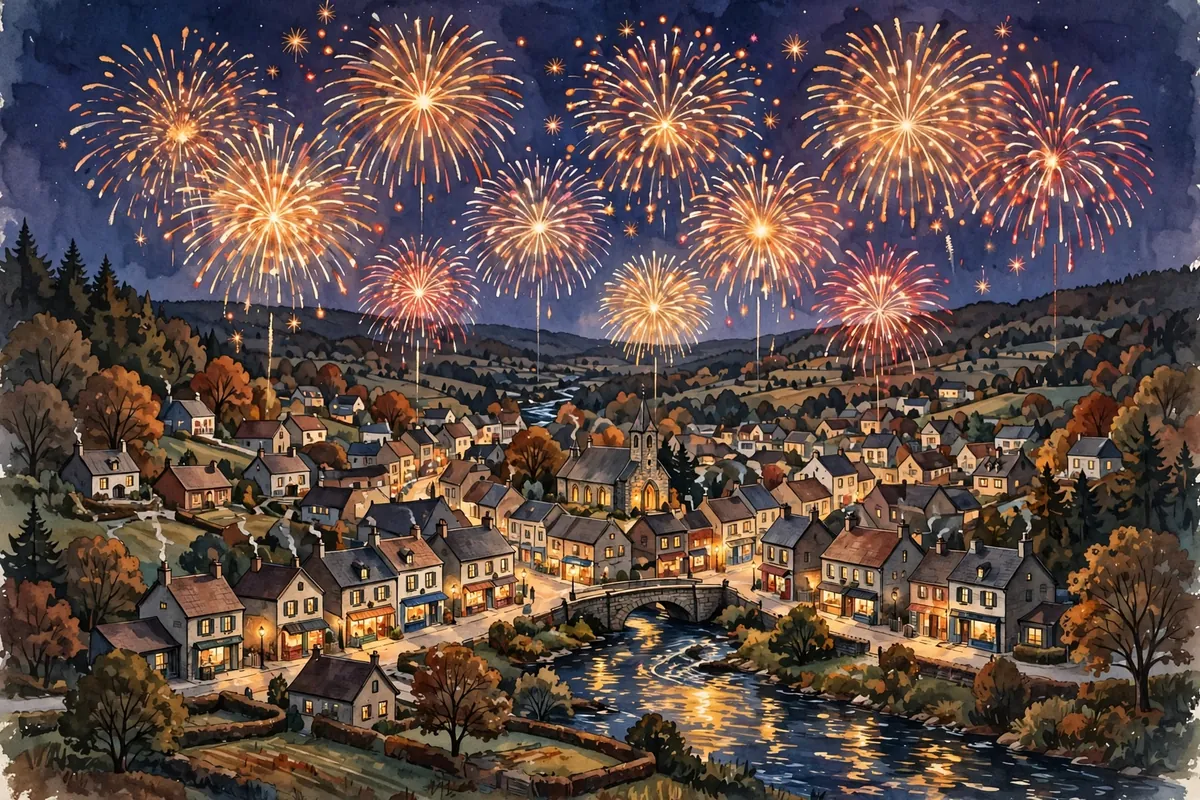
There's nothing quite like it. The sun goes down, the crowd gets quiet, and then the first rocket whistles into the sky and bursts into a shower of color. From the Fourth of July to New Year's Eve, fireworks are how we say, "This moment matters." But why did loud explosions become the way we celebrate?
The short answer: fireworks began in China, where noisy bursts were part of festivities and were believed to ward away spirits. Over centuries, the tradition spread to Europe and then to America. In the United States, fireworks were part of the very first Fourth of July celebrations in 1777, and they've lit up the holiday ever since.
It Started With Exploding Bamboo
Long before gunpowder, people in China discovered that heating bamboo could make it burst with a bang. This was used as early as 200 BC. The Chinese name for firecrackers, baozhu, literally means "exploding bamboo."
After gunpowder was invented, firecrackers were made in a shape that looked like bamboo and made a similar sound, so the old name stuck. In traditional Chinese culture, firecrackers were used to ward away spirits. The earliest true fireworks came from China during the Song dynasty, which lasted from 960 to 1279, and they accompanied many festivities.
Skilled fireworks makers in China were highly respected. Even today, China is the world's largest manufacturer and exporter of fireworks.
Fireworks Come to Europe
Fireworks were being made in Europe by the 14th century and became popular by the 17th century. Even so, Chinese displays remained the gold standard. An ambassador for Russia's Peter the Great reported from China, "They make such fireworks that no one in Europe has ever seen."
Colorful fireworks have deep roots, too. Chinese recipes for colored smoke and fire go back many centuries, and military manuals from the 1300s and 1600s describe colored signal smokes. Today's fireworks can burn red, orange, yellow, green, blue, purple, and silver.
America's Big Bang
In July 1776, John Adams wrote to his wife Abigail that independence should be celebrated by future generations "with pomp and parade, with shows, games, sports, guns, bells, bonfires, and illuminations, from one end of this continent to the other." His wish came true.
Just a year later, on July 4, 1777, Philadelphia threw a celebration that sounds very familiar: an official dinner, toasts, 13-gun salutes, music, parades, and fireworks. Ships in the harbor were decorated in red, white, and blue.
Today, Fourth of July fireworks shows light up parks, harbors, fairgrounds, and town squares across the country. They're often set to patriotic songs like "The Star-Spangled Banner" and "America the Beautiful."
Why the Bang Feels So Good
Fireworks deliver four basic effects: noise, light, smoke, and sometimes floating bits like confetti. Some stay on the ground, while aerial fireworks either fly on their own, like a skyrocket, or are launched from a tube called a mortar. Most are built from paper or pasteboard tubes packed with burning pellets called stars. Put together, they turn the whole sky into a shared experience. Everyone looks up at the same moment and reacts together.
So the next time you hear that first boom on a summer night, you're joining a tradition that started with a crackling stalk of bamboo in ancient China. Just leave the big ones to the professionals, and enjoy the show.