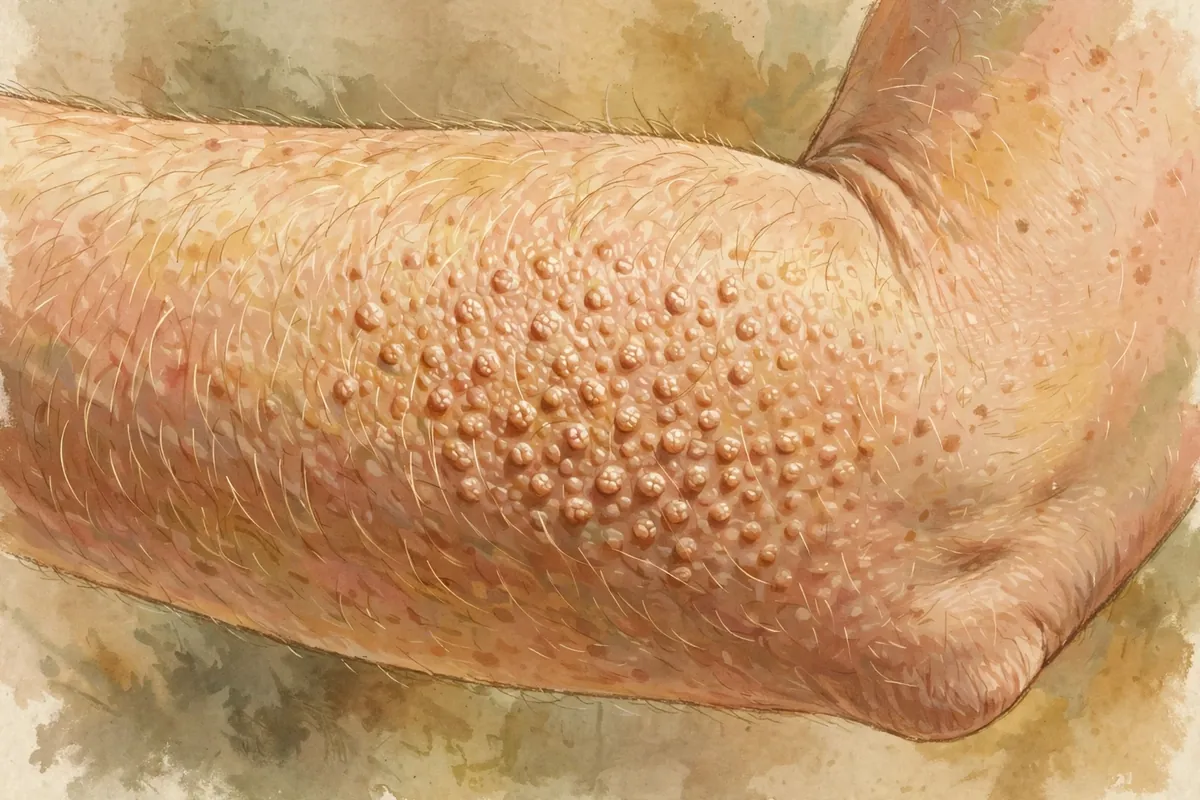
You step outside on a frosty morning and your arms prickle with tiny bumps. Later that day, a favorite song swells on the radio, and the exact same bumps appear. Cold weather and a great chorus seem to have nothing in common. So why does your skin react to both the same way?
Here's the short answer: goosebumps form when tiny muscles at the base of each hair tighten and pull the hair straight up. It's an automatic reflex run by the same part of the nervous system behind the fight-or-flight response. In furry animals, it fluffs up the coat to trap warmth or to look bigger. In people, with so little body hair, many scientists see it as a leftover reflex.
Tiny Muscles, Big Reaction
Each hair on your body sits in a follicle, and attached to many of those follicles is a tiny muscle called the arrector pili. When it contracts, it tugs the hair upright and pushes up a little bump of skin around it. Multiply that by thousands of hairs and you get the familiar goosebump texture.
Scientists call the reflex piloerection, the pilomotor reflex, or, more traditionally, horripilation. You can't usually turn it on or off on purpose. It's triggered by the sympathetic nervous system, the part of your body that gears you up for stress, danger, and big feelings.
Why It Makes Sense for Furry Animals
For an animal covered in fur, raised hairs trap a layer of air close to the skin. That air works as insulation, a bit like a puffy winter jacket. On a person, there isn't enough hair to make much of a difference, which is why many consider human goosebumps a vestigial reflex.
The reflex has a second job: looking intimidating. Frightened cats puff up, and chimpanzees and some small monkeys raise their hair during threat displays. Porcupines raise their quills when threatened, and sea otters show the reflex when they run into sharks or other predators.
Why Music and Movies Do It Too
In humans, goosebumps can come from all sorts of emotional moments: a scary movie, nails scratching on a chalkboard, or the thrill of a big win. Music is a well-known trigger, too. Some scientists think goosebumps go along with the feeling of being deeply moved.
Honestly, though, the emotional side isn't well understood. Researchers have even found that when people say they have goosebumps, their skin doesn't always show them. The feeling of chills and the actual bumps don't always go together.
And here's a strange twist: some people can give themselves goosebumps on purpose, with no cold or emotion involved. The ability seems to be something they're born with rather than something anyone can learn, and many who have it don't realize everyone else can't.
Why a Goose?
The name comes from plucked geese. When a goose's feathers are removed, its skin is left with little bumps where the feathers grew, and that's what our prickly skin resembles. Not every language picked a goose. Many, including French, Spanish, and Japanese, use a chicken instead, Hebrew uses a duck, and Russian and Ukrainian compare the feeling to ants crawling on the skin.
So the next time a cold wind or a beautiful song raises the hair on your arms, you're feeling a tiny echo of a reflex that keeps cats warm and makes porcupines look fierce. It's a small, shivery reminder that our bodies still remember a few old tricks.