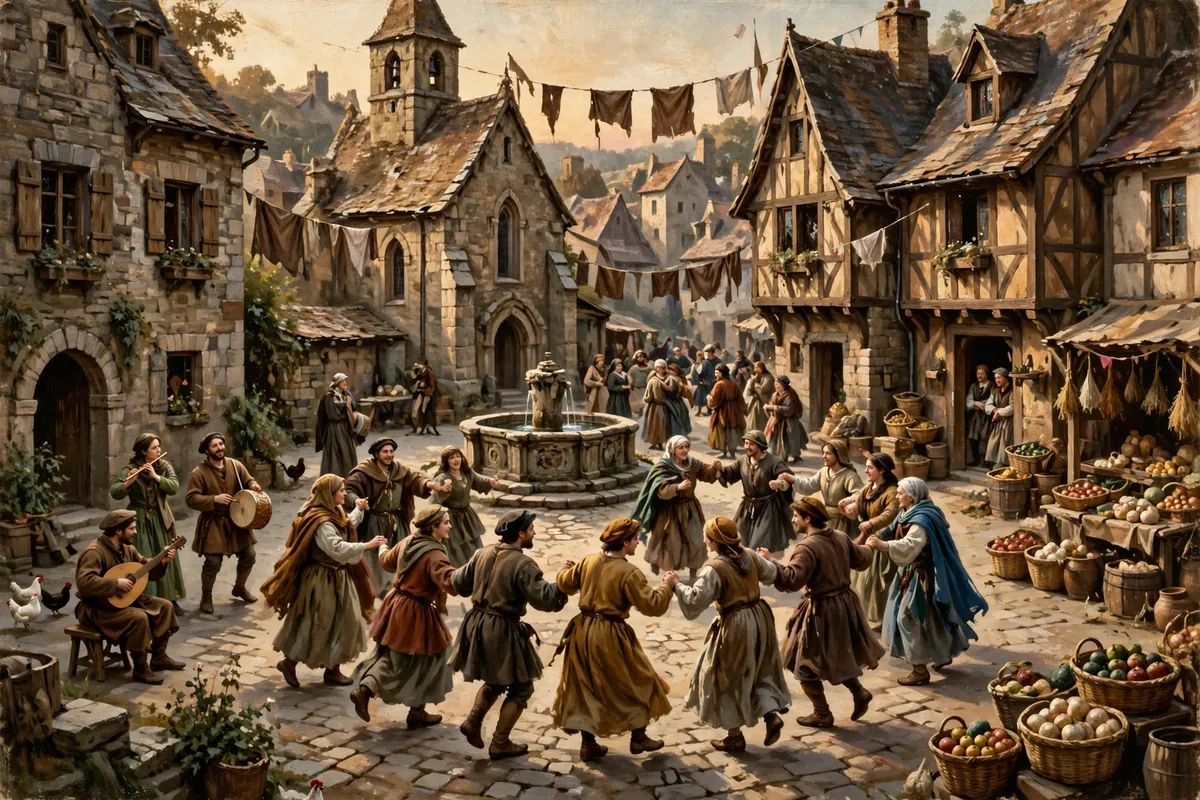
Imagine walking through your town and seeing a neighbor dancing in the street. There's no music and no party, just nonstop, frantic movement. Now imagine that a few days later, dozens of other people have joined in, and none of them can stop. That's what happened in the city of Strasbourg in the summer of 1518.
The event is known as the dancing plague of 1518. From July to September, somewhere between 50 and 400 people danced for weeks. Nobody knows for certain why. The most popular explanation today is a form of stress-induced mass hysteria, though other theories exist, and historians still argue about how many people, if any, died.
How It Started
Most accounts say it began around July 14, 1518, when a woman called Frau Troffea began dancing fervently in the street outside her home. There was apparently no music. She danced for about a week, stopping only to sleep before starting again.
People who watched began to imitate her, including her husband. Within days, more than thirty people were dancing. By August, the number had grown to somewhere between 50 and 400. Witnesses described convulsions, thrashing arms, blank stares, and bodies drenched in sweat. Some dancers' feet swelled and bled into their shoes.
The Cure That Backfired
City leaders weren't sure what to do, so they turned to physicians. At the time, one popular idea was that the dancers suffered from overheated blood, and the prescribed treatment was surprising: they should dance it out. There are claims that guild halls were set up for dancing, with musicians to keep the beat and strong helpers to hold dancers upright.
That plan backfired. More people seemed to join in, and the council eventually banned public dancing and even music. Many feared the dancing was a punishment from Saint Vitus, who was believed to make sinners dance uncontrollably. The afflicted were taken to a mountaintop shrine to the saint, given red shoes sprinkled with holy water, and prayed over. By early September, the outbreak faded.
Did People Really Dance to Death?
You'll often read that the plague killed about fifteen people a day. But Strasbourg's records from the time don't mention any number of deaths, or even whether anyone died at all. The claims of daily deaths come from later accounts. Historians agree that people danced, and danced for a long time, but the death toll is unknown.
What Could Explain It?
One theory points to ergot, a fungus that can grow on rye and other grains used for bread. Ergot produces a chemical related to LSD, and some people blame it for other historical oddities. But historian John Waller argued this doesn't fit. People poisoned by ergot probably couldn't dance for days, and they wouldn't all react the same way.
Waller's own explanation is mass psychogenic illness, triggered by extreme stress. The people of the region had endured years of hunger and disease, and many were deeply superstitious. He believed some fell into a trance-like state that spread from person to person. Interestingly, several other dancing outbreaks were reported in the same region during that era.
More than five hundred years later, the story still grips people. It has inspired a short film and even a 2022 song by Florence and the Machine. It's a reminder that history isn't just kings and battles. Sometimes it's an ordinary summer day, a quiet street, and a dance nobody could explain.