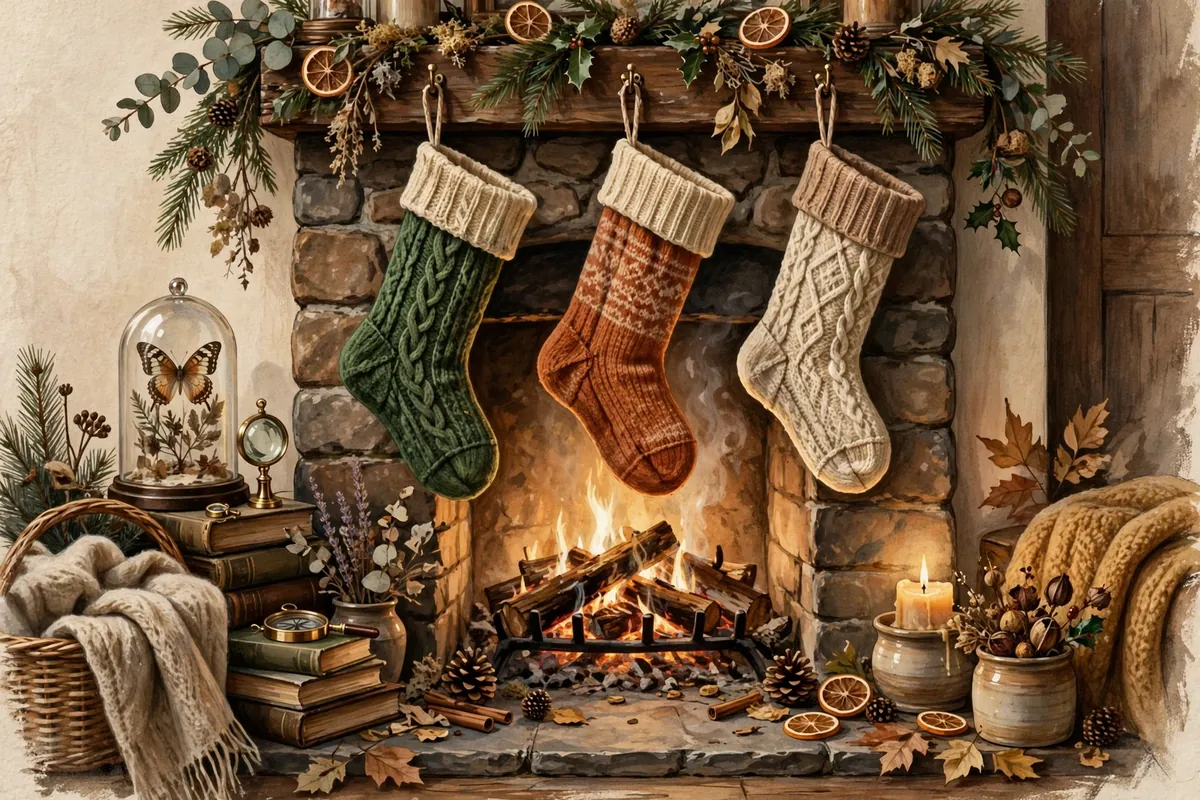
Few holiday sights are cozier than a row of stockings hanging over a crackling fire. Kids check them first thing on Christmas morning, hoping for candy, little toys, and maybe an orange tucked in the toe. But why socks, and why the fireplace?
The custom is thought to come from legends about Saint Nicholas, an early Christian bishop famous for secret gift-giving. In the most popular story, he tossed bags of gold into a poor family's home at night, and one landed in a stocking hung by the fire to dry. There are no written records of exactly how the tradition began, but that legend is the one most often told.
The Bishop Behind the Legend
Saint Nicholas was a bishop of Myra, in what is now Turkey, who traditionally lived from about 270 to 343. Very little is known about his actual life. The earliest accounts were written centuries later and likely include legendary details.
Still, his reputation for generosity spread far and wide. He became the patron saint of children, sailors, merchants, and many others. His legendary habit of secret gift-giving eventually gave rise to the folklore of Santa Claus, by way of the Dutch figure Sinterklaas.
Three Bags of Gold
The story goes that a poor father was about to give up hope for his three daughters, who had no money for a dowry. Nicholas wanted to help, but he knew the proud man would refuse charity. So he helped in secret.
After dark, he threw bags of gold through an open window. In one version, a bag landed in a stocking. In others, he dropped the gold straight into the girls' stockings, which were hanging by the fireplace to dry. The family woke to find the gifts, and the daughters were saved.
That legend also explains a surprising symbol. Three gold balls, sometimes shown as oranges, are a sign of Saint Nicholas. They're also why pawnbrokers' shops have long used three gold balls as their emblem.
From Shoes to Stockings
In parts of Europe, children put out shoes instead. In the Netherlands, on the eve of Saint Nicholas Day, children traditionally leave a shoe by the fireplace, often with a carrot or hay inside for Sinterklaas's horse. In the morning, they find candy or a small present.
At first, children simply used one of their everyday socks. Over time, special Christmas stockings were made just for the purpose. They were traditionally used on Saint Nicholas Day, December 6, but by the early 1800s, they were also hung on Christmas Eve.
How America Made It Official
Stockings appear as an American tradition in an anonymous 1821 poem, Old Santeclaus with Much Delight. Two years later, a much more famous poem sealed the deal for good.
A Visit from St. Nicholas, better known as The Night Before Christmas, was published anonymously in a Troy, New York, newspaper on December 23, 1823. In it, Santa slides down the chimney and fills the stockings hanging by the fireplace. Clement Clarke Moore later claimed he wrote it, though some think Henry Livingston Jr. did.
And the lump of coal? Western tradition warns that a child who misbehaves all year might find only coal in their stocking. So hang yours with care this year, and maybe be extra good, just in case.