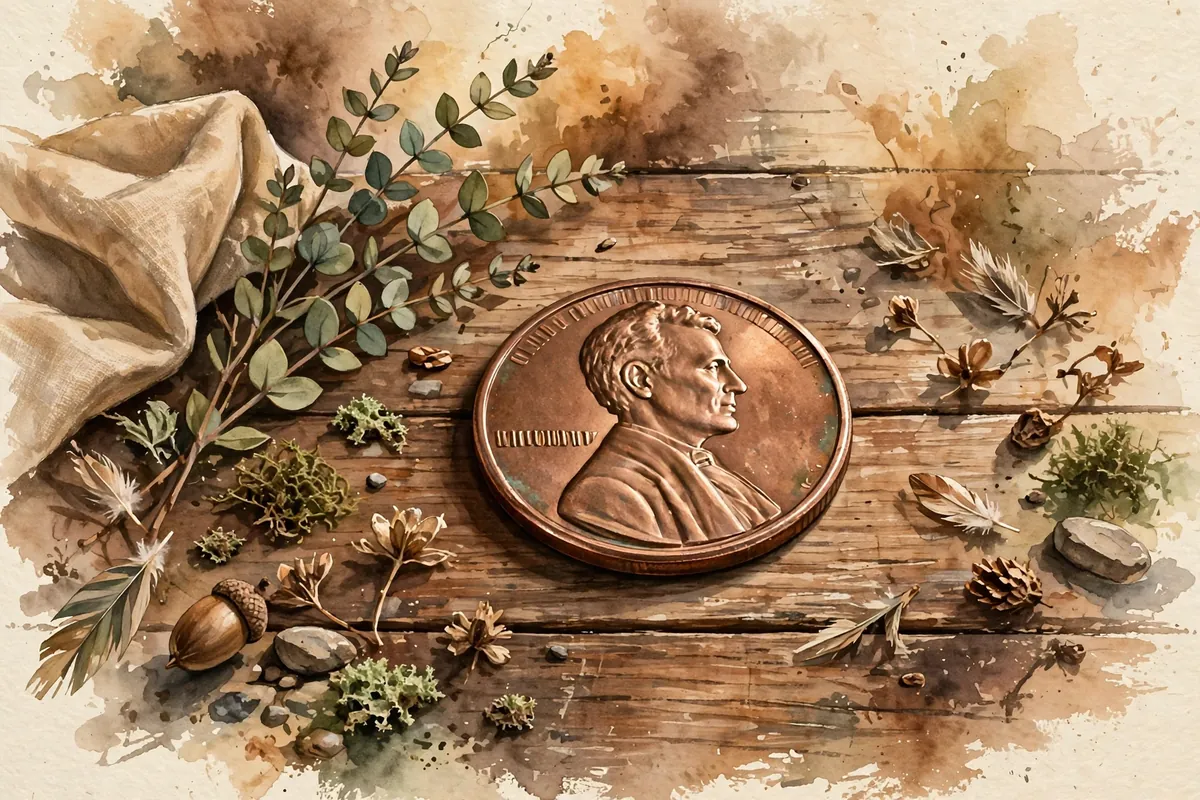
A friend is staring out the window, a million miles away. You nudge them gently and ask, "A penny for your thoughts?" It's a sweet, old-fashioned way of saying, I'd like to know what's on your mind. But it's also a little funny. Why offer a penny, of all things?
The phrase is very old. It appears in a famous collection of English proverbs published in 1546 by the writer John Heywood, in the form "A penny for your thought." Back then, an English penny was a silver coin with real buying power, so the offer wasn't quite as stingy as it sounds today. The idea was simple: your private thoughts are worth paying for.
The Man Who Collected Proverbs
John Heywood lived from around 1497 to around 1580. He was an English playwright, poet, and musician who served at the royal courts of Henry VIII, Edward VI, Mary I, and Elizabeth I. A devout Catholic, he still managed to serve both Catholic and Protestant rulers. Most of his plays needed four actors or fewer and barely any furniture, so they could be staged almost anywhere.
His 1546 book of proverbs had a wonderfully long title, beginning A Dialogue Containing the Number in Effect of All the Proverbs in the English Tongue. It's packed with sayings we still use. Many people are surprised to learn how many familiar phrases appear in it, nearly five centuries after it was first printed.
Other Sayings From the Same Book
Heywood's 1546 collection includes "haste maketh waste," "look ere ye leap," and "two heads are better than one." It also has "Rome was not built in one day," "better late than never," and "the more the merrier."
There's even "love me, love my dog" and "beggars should be no choosers." Later writings of his include an early version of a question we still ask about having it both ways: would you both eat your cake and have your cake?
In other words, when you ask for someone's thoughts with a penny, you're using the same kind of everyday wisdom people were trading in Tudor England.
When a Penny Was Silver
The English penny has a long history. It was introduced around the year 785 by King Offa of Mercia as a small coin of pure silver. Throughout the history of the Kingdom of England, the penny was made of silver, and it was worth one two-hundred-fortieth of a pound sterling.
Pennies even played a part in big events. Anglo-Saxon kings paid tens of millions of silver pennies to Viking raiders to persuade them to leave. More Anglo-Saxon pennies from around the year 1000 have been found in Denmark than in England.
The Penny Today
In America, the penny's story has taken a new turn. In November 2025, the U.S. Mint stopped making pennies for circulation, largely because of cost, while still producing pennies for collectors. In September 2026, Congress passed the Common Cents Act, which lets businesses round cash payments to the nearest five cents when exact change isn't available. The penny is still legal money, though.
So the coin may be fading from our pockets, but the phrase lives on. And asking someone what's on their mind is still one of the kindest offers you can make, whatever it's worth. Not bad for a saying first printed while Henry VIII was still on the throne.