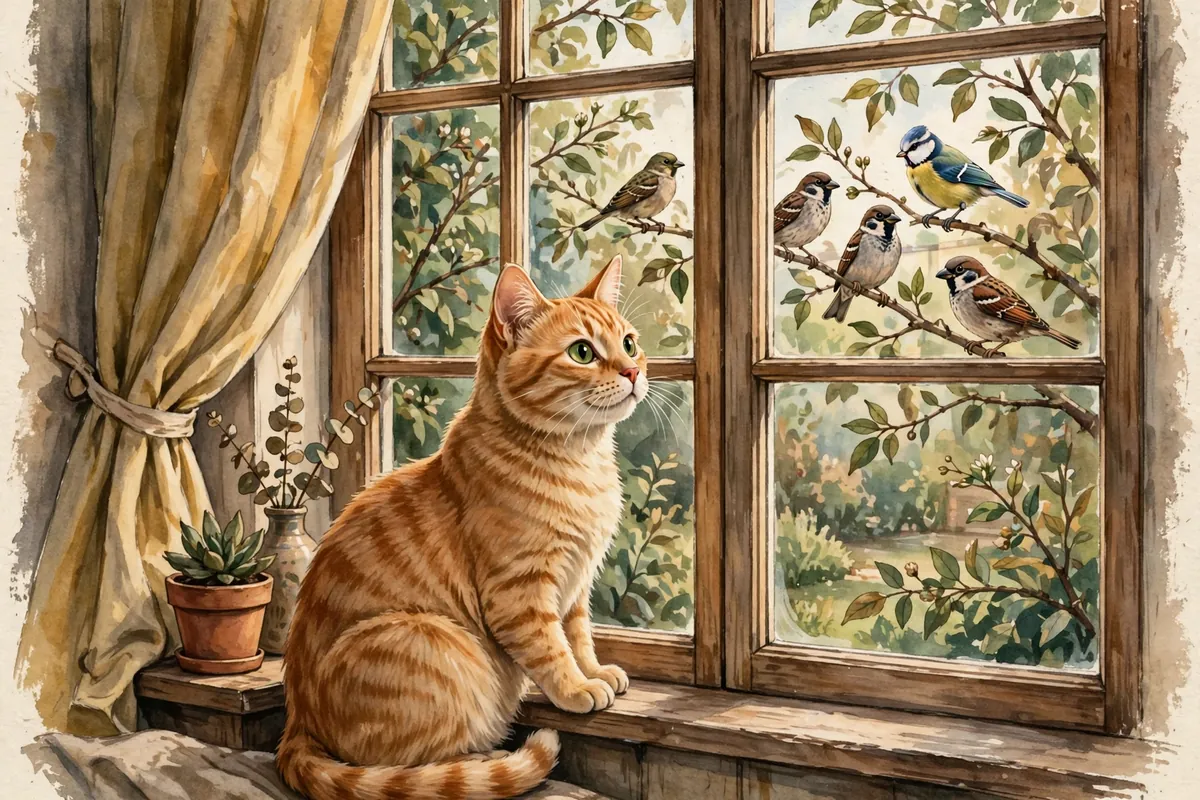
A sparrow lands on the porch railing. Your cat, who was napping a moment ago, is suddenly at the window, tail twitching and jaw quivering. Then comes the noise: a rapid clicking, chattering, almost birdlike chirp that sounds nothing like a meow.
Here's the short answer. Cats make these excited chirping and chattering sounds when they watch or stalk prey, so it's a hunting behavior. Exactly why they do it isn't settled, but one popular idea is that the sounds imitate birds and rodents as a way to lure them in.
What That Sound Actually Is
Researchers who study cat sounds group chattering and chirping with noises made while the mouth is held tensely open, the same family as growls, hisses, and spits. That fits the scene at the window. Your cat isn't relaxed. It's switched on.
The sounds vary a lot from cat to cat. They can range from quiet clicks to a loud, sustained chirping mixed with an occasional meow. Some cats barely make a peep, while others put on a full show every time a pigeon walks by.
The Imitation Theory
One explanation is that chattering and chirping mimic the prey itself, such as birds and rodents, as part of a hunting strategy. It's an appealing idea, and it isn't far-fetched in the cat family.
In South America, a small wild cat called the margay was observed copying the call of a baby pied tamarin, a type of small monkey, while hunting. It was the first time a predator in that part of the world had been seen using that kind of vocal trick. So at least one cat out there seems to have learned that sounding like dinner can help catch dinner.
Whether house cats are doing the same thing on purpose is still an open question. For now, it's fair to say the chatter happens when a cat is fired up by prey it can't quite reach.
Born to Hunt, Even on the Sofa
Even the most pampered pet keeps a hunter's toolkit. Cats hunt small prey, mostly birds and rodents. They either stalk actively or wait in ambush, and they tend to actively stalk birds. That's exactly the posture you see at the window: crouched, focused, and ready. Outdoors, that instinct is no joke, and domestic cats are major predators of wildlife in the United States.
Their senses are tuned for it too. A cat can hear an extremely wide range of sounds, including ultrasonic calls made by rodents. And cats love perching up high, which gives them a good lookout spot to watch for prey to pounce on.
A Whole Vocabulary of Sounds
The hunting chirp isn't the only chirpy sound cats make. There's also the friendly chirrup, or trill, which sounds like a meow rolled on the tongue. Mother cats use it to call their kittens, and kittens recognize their own mother's chirp but ignore other mothers.
Cats also use that trill to greet other cats and people. And here's a sweet bit: adult cats rarely meow to each other. Meowing at humans is likely an extension of the way kittens mew to get their mother's attention.
So when your cat chatters at the birds, enjoy the show. Somewhere under all that fluff is a tiny tiger running its ancient script, even if the only thing it will catch today is a sunbeam.