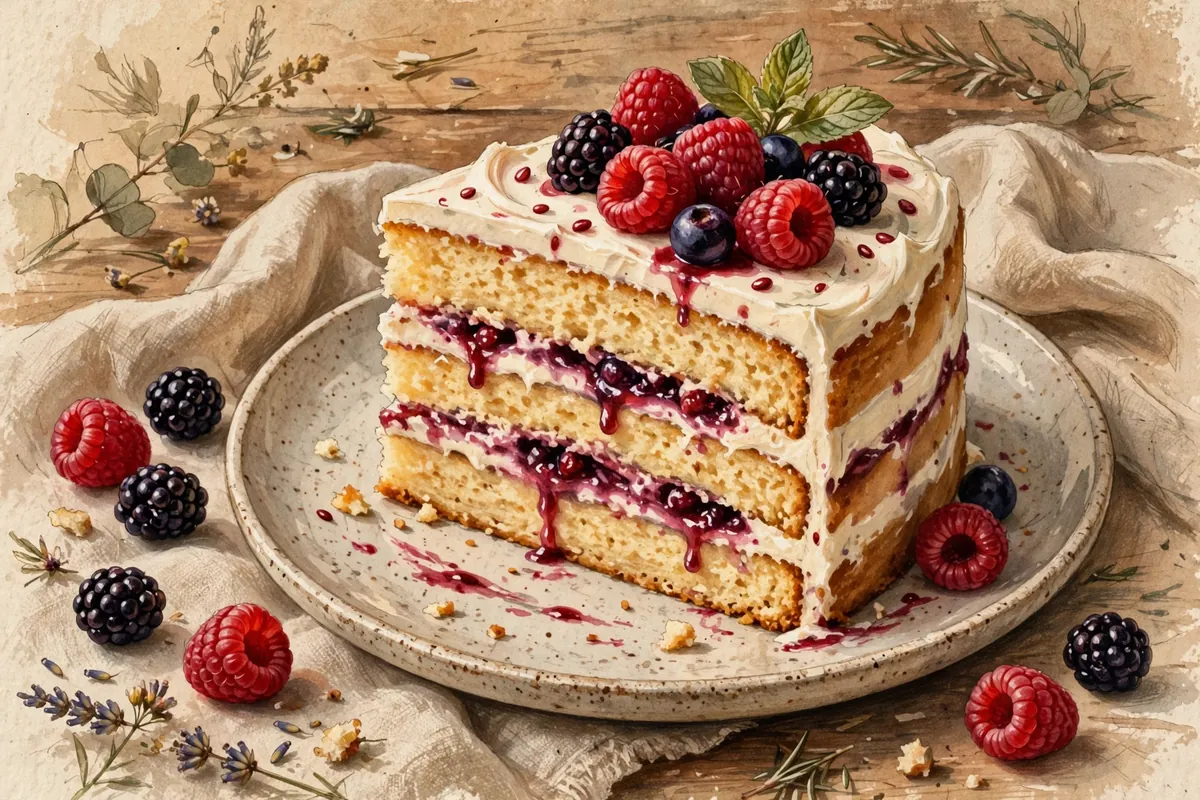
The test? A piece of cake. That repair job? Piece of cake. We use the phrase all the time for anything simple. But think about it for a second. Baking a cake takes measuring, mixing, timing, and frosting. So why would cake stand for something easy?
Here's the honest answer. Nobody knows the origin of 'piece of cake' for certain. One leading idea connects it to the cakewalk, a 19th-century dance contest in the American South where the prize was a cake. The phrases 'takes the cake' and 'cakewalk,' meaning something easy, come from that practice, and 'piece of cake' may come from it too. Another simple explanation is that eating a slice of cake is about as pleasant and effortless as things get.
The Dance With a Cake for a Prize
The cakewalk grew out of 'prize walks,' dance contests held in the mid-1800s at gatherings of African Americans on plantations in the South, both before and after emancipation. Couples performed a stately, comic processional dance, and the winners took home a cake.
The dance was full of high-stepping kicks, struts, and a proud, upright posture leaning backward. It was influenced in part by the ring shout, a religious dance tradition among enslaved people, and it's often described as a playful way of mocking the formal dances of slaveholders.
After the cakewalk was shown at the 1876 Centennial Exposition in Philadelphia, it spread to the stage and across the country. It even inspired famous composers. French composer Claude Debussy wrote 'Golliwogg's Cake-walk' for his Children's Corner piano suite, published in 1908.
From Dance Floor to Everyday Speech
The American term 'cakewalk' was used to mean something very easy as early as 1863. That might seem odd, since the dance itself could be tiring. But it was seen as a fun pastime, and some think the meaning may also come from a carnival game called a cakewalk, where winners got a cake for doing little more than walking in a circle.
The phrase 'takes the cake,' meaning to win or outdo everyone, also comes from those cake prizes. With so many cake expressions floating around, it's easy to see how 'piece of cake' could have joined the family.
Its Cousin, 'Easy as Pie'
'Piece of cake' has a close relative: 'as easy as pie.' The two are often used interchangeably. 'Easy as pie' was used by Western novelist Zane Grey in 1910 and in the Saturday Evening Post in 1913. It may have grown out of an older phrase, 'like eating pie,' recorded in 1886.
Notice the pattern? In both sayings, the easy part isn't making the dessert. It's eating it.
Cake Has Long Been a Teacher
Cake shows up in much older sayings too. The proverb 'you can't have your cake and eat it' dates back at least to 1538, when the Duke of Norfolk wrote in a letter that a man cannot have his cake and eat his cake. Interestingly, until the 1930s and 1940s, the more common version was 'you can't eat your cake and have it,' which makes the meaning a little clearer: once it's eaten, it's gone.
So the next time something turns out to be a piece of cake, you can smile at the little bit of history hiding in that phrase. It may carry echoes of a joyful dance, a hard-won prize, and the simple pleasure of a sweet slice at the end of the day.