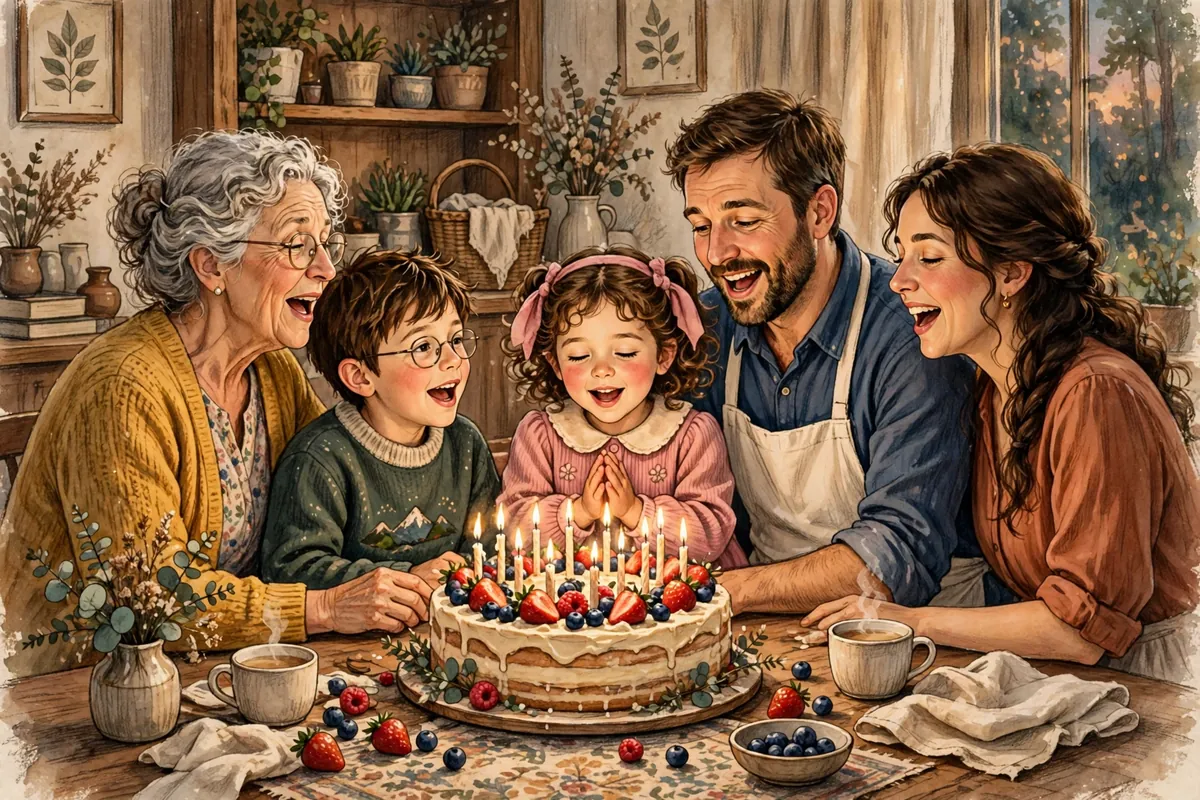
The lights go down, the candles flicker, and someone starts the first note. Within seconds, everyone in the room is singing. It might be the one song nearly every American knows by heart. But where did Happy Birthday to You come from, and how did it become the soundtrack of every birthday party?
Here's the short answer. The melody comes from a song called Good Morning to All, traditionally credited to two sisters from Kentucky, Patty and Mildred Hill, in 1893. It was written as an easy greeting for young children. Over the following years, people swapped in birthday words, and the new version spread through schoolbooks and songbooks until it became a tradition.
A Kindergarten Classroom in Kentucky
Patty Hill was a kindergarten principal in Louisville, Kentucky, who developed new teaching methods. Her sister Mildred was a pianist and composer. They wanted songs that very young children could sing easily, and Good Morning to All fit the bill. It appeared in their 1893 book, Song Stories for the Kindergarten.
Whether the sisters truly invented the tune is disputed. One writer has argued they likely borrowed from similar 19th-century songs with names like Happy Greetings to All. A law professor who studied the song disagreed, noting those earlier songs had quite different melodies.
From Good Morning to Happy Birthday
The birthday words showed up in print by 1901, as the last lines of a children's poem, with no mention of singing. The birthday lyrics and melody appeared together in print by 1912. In 1924, a songbook included Good Morning to All with the birthday words as a second verse.
From there it spread like wildfire. According to the 1998 Guinness World Records, it's the most recognized song in the English language, and its basic lyrics have been translated into at least 18 languages.
The Most Expensive Song in History
Here's the surprising twist. For decades, a music company claimed to own the copyright. In 1988, Warner/Chappell Music bought the company that held it for $25 million, with the song alone valued at about $5 million. By one estimate, it became the highest-earning single song ever.
Warner/Chappell earned around $2 million a year licensing it for films, TV, and other public uses. The makers of the 1994 documentary Hoop Dreams paid $5,000 just to use it safely. The company insisted that anyone performing it publicly for profit had to pay royalties.
Then a documentary filmmaker making a movie about the song sued. In 2015, a federal judge ruled the company's copyright claim was invalid, because it covered only a specific piano arrangement, not the melody or lyrics. In 2016, Warner/Chappell agreed to pay back $14 million, and the court declared the song to be in the public domain.
How We Sing It Today
Traditions vary a bit. Americans often add and many more at the end. At young children's parties, singers sometimes keep going with how old are you now and count up the years. In Britain, Australia, and much of the Commonwealth, someone usually leads three rounds of hip hip hooray.
Some performances became legends, like Marilyn Monroe's famous version for President John F. Kennedy in May 1962. So the next time you belt it out over a cake, remember you're singing a classroom greeting from the 1890s that once made millions. Feel free to sing it loud. It's free now.