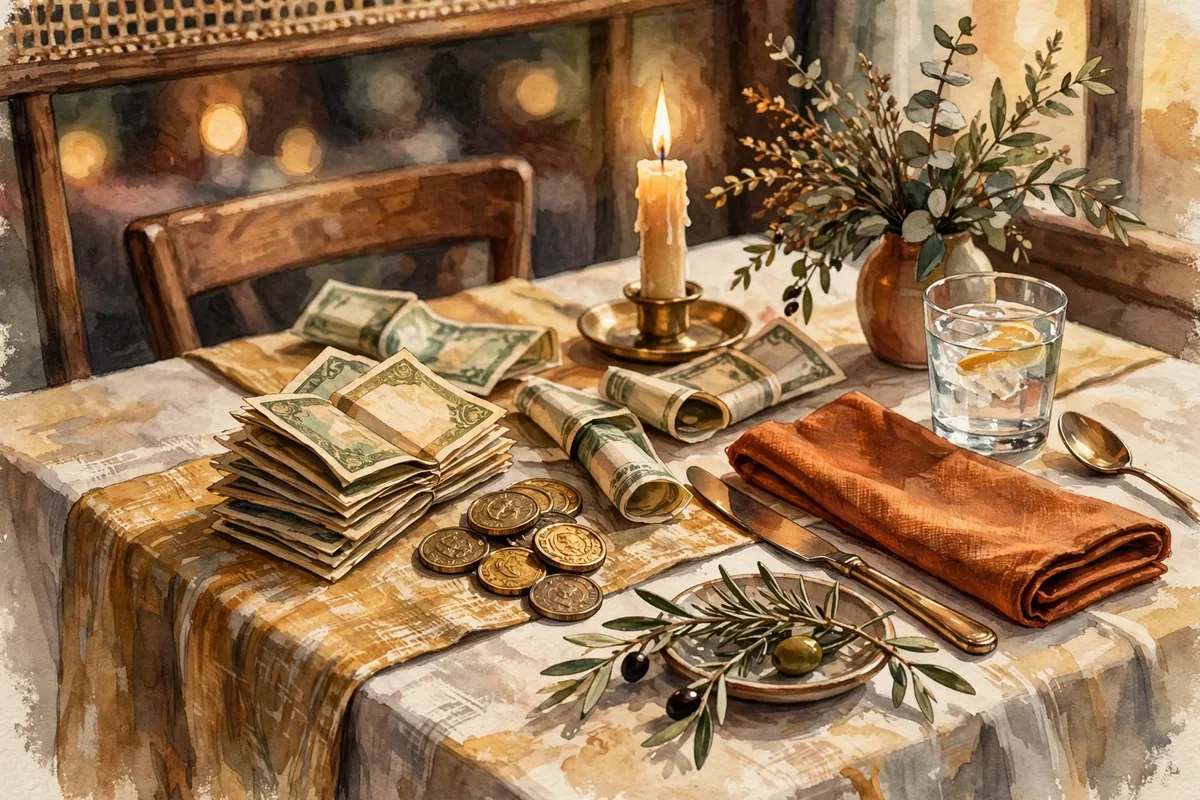
The meal is over, the check arrives, and out comes the mental math. Fifteen percent? Twenty? More? For Americans, tipping is such a routine part of eating out that it's hard to imagine a restaurant without it. Visitors from places where tipping is less common don't always follow the custom, which can cause friction.
Here's the short answer: tipping started in England and was brought to America in the 1850s and 1860s by Americans who wanted to seem aristocratic. Many people at first saw it as snobbish and undemocratic, and several states even outlawed it. Tipping became firmly established after Prohibition began in 1919, when restaurants lost their alcohol profits and welcomed tips as a way to help pay their workers.
From Tudor England to the New World
The practice of tipping goes back to Tudor England. In medieval times, a servant might receive extra money from a master for an especially good job. By the 1600s, overnight guests at private homes were expected to give money, called vails, to the host's servants. Before long, customers were tipping in London coffeehouses and other businesses too.
In the 1850s and 1860s, Americans who wanted to seem aristocratic brought the habit over from Europe. For them, leaving a tip was a way to show off a bit of Old World class.
When Tipping Was Against the Law
Not everyone was impressed. Until the early 20th century, many Americans saw tipping as clashing with the values of a democratic society where everyone was supposed to be equal. Tipping seemed like a way of putting someone in their place.
Six states passed laws making tipping illegal. The first was Washington, in 1909. These laws were hard to enforce, though, and the last one, in Mississippi, was repealed in 1926. Business owners had their own complaints, too. Some viewed a tip as a kind of bribe, like slipping a waiter money for an extra-large portion.
How Prohibition Changed Everything
Then came Prohibition in 1919. Hotels and restaurants suddenly lost the money they had made selling alcohol. Under that financial pressure, owners began welcoming tips as a way to supplement their employees' pay.
Interestingly, tipping didn't start because waiters were poorly paid. Being a waiter was actually a fairly well-paid job in the era when tipping became a fixture. Some critics have also argued that the habit of paying workers little and letting them live on tips has roots in the treatment of newly freed slaves after the Civil War.
Tipping Today
Today, federal rules allow employers to pay tipped workers as little as $2.13 an hour in direct wages, as long as tips bring their total up to the federal minimum wage. If they fall short, the employer is supposed to make up the difference. That's one big reason tips matter so much to servers.
Researchers have found that people tip for many reasons, including showing off, helping the server, hoping for better service next time, avoiding disapproval, and a simple sense of duty. Studies suggest the size of a tip is only weakly linked to the actual quality of service.
Customs vary around the world, and in some places tipping isn't expected or can even be considered insulting. So the next time you leave a little extra on the table, you're taking part in a tradition with a surprisingly rocky past. Your server will still appreciate it.