When a boss ignores an employee's long lunches, or a parent pretends not to see a cookie disappear, we say they're turning a blind eye. It means deliberately ignoring something you'd rather not deal with. But where did such a vivid expression come from?
The phrase is famously linked to British naval hero Horatio Nelson at the Battle of Copenhagen in 1801. Ordered by signal flag to stop fighting, Nelson raised his telescope to his blind eye and claimed he couldn't see the signal. The expression is actually a bit older, though. The Oxford English Dictionary records it as early as 1698. Nelson's story simply made it unforgettable.
How Nelson Lost His Sight
Nelson's blind eye was a battle wound. In July 1794, during the British siege of Calvi on the island of Corsica, an enemy shot struck sandbags near him and sprayed stones and sand into his right eye.
He had his wound bandaged and went right back to work. But the eye never fully recovered. Nelson said he could only tell light from dark with it, and see no objects.
It wasn't his only injury. In 1797, during an attack on Santa Cruz de Tenerife, a musket ball shattered his right arm, and most of it had to be amputated. Within half an hour, he was reportedly back to issuing orders.
I Really Do Not See the Signal
On April 2, 1801, Nelson was leading a British attack on the Danish fleet at Copenhagen. Britain feared the powerful Danish fleet would side with France. The fighting was fierce. His commander, Admiral Sir Hyde Parker, could barely see the battle through the gun smoke, but he noticed several British ships signaling trouble.
Parker decided to send the signal to withdraw. He reportedly reasoned that if Nelson could keep fighting, he would ignore it, and if he couldn't, the order would give him an excuse to retreat without blame.
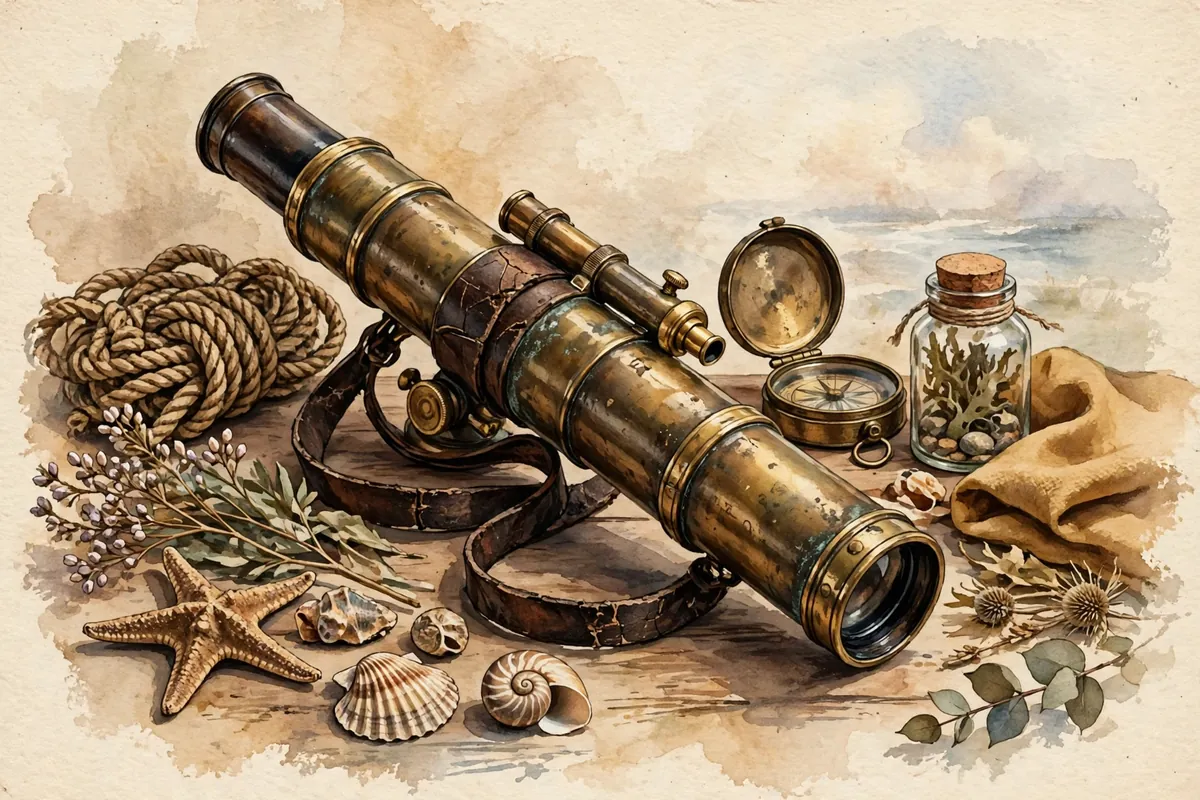
When the signal was pointed out to Nelson, he turned to his flag captain, Thomas Foley. According to the famous account, he said he had only one eye and had the right to be blind sometimes. Then he held his telescope up to his blind eye and declared that he really did not see the signal.
A Costly Choice and a Big Win
Most of Nelson's ships kept fighting, but not all. One captain, Edward Riou, couldn't see Nelson's flagship and followed Parker's order instead. As his ships pulled back, they came under heavy fire, and Riou was killed.
Historians note that the withdrawal signal wasn't optional. It was a general order to all the attacking ships, and Nelson himself admitted later that day that he had fought contrary to orders. Even so, Parker was recalled in disgrace, and Nelson was made commander-in-chief of the fleet. The victory also earned him a new title: Viscount Nelson of the Nile.
A Close Cousin in Japan
The idea of choosing not to see shows up elsewhere, too. The famous three wise monkeys, who see no evil, hear no evil, and speak no evil, were popularized by a 17th-century carving over a stable door at the Tōshō-gū shrine in Nikkō, Japan.
So the next time you let a small mischief slide, you're in historic company. Just maybe don't try Nelson's excuse with your boss.