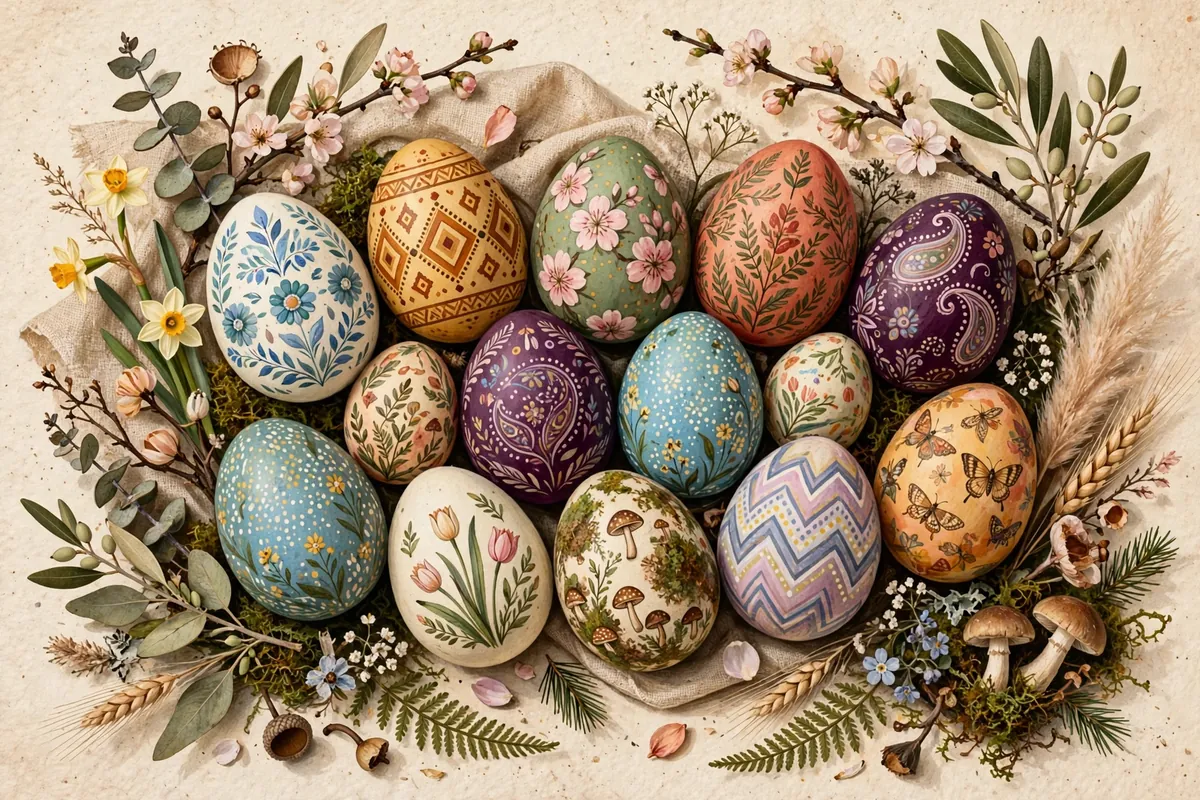
Every spring, kitchen tables across America turn into art studios. Cups of dye, wax crayons, and stickers come out, and plain white eggs become bright little works of art. Then they're hidden, hunted, and tucked into baskets. But why eggs, and why at Easter?
The short answer is a mix of symbolism and practicality. In Christianity, Easter eggs symbolize the empty tomb from which Jesus rose. Many historians also point to a very practical reason: eggs were traditionally forbidden during the 40 days of Lent. When Easter finally arrived, eggs were back on the menu, blessed, and celebrated.
Red Eggs and Early Christians
According to many sources, the custom goes back to early Christians in Mesopotamia. They dyed eggs red, in memory of the blood of Christ shed at the crucifixion. Some Christians also see the egg's shell, yolk, and white as a symbol of the Trinity, three parts making one whole.
From there, the custom spread into Russia and Siberia through the Orthodox churches, and later through Catholic and Protestant churches across Europe. A blessing for eggs appears among the Easter food blessings in the Roman Ritual, a church book first published in 1610 but containing much older texts.
The Lent Connection
Eggs were traditionally among the foods forbidden on fast days, including all of Lent. That rule is still followed in many Eastern Christian churches, though it has faded in Western churches. Some scholars think the link between eggs and Easter grew up in medieval western Europe for exactly this reason.
In medieval England, children went door to door begging for eggs on the Saturday before Lent began, and people handed them out as treats before the fast. Today's chocolate and candy-filled eggs follow the same idea. Many people give up sweets for Lent, so Easter is the day they finally get to enjoy them again.
What About the Spring Goddess?
You may have heard that Easter eggs come from a pagan spring goddess. In the 1800s, folklorist Jacob Grimm speculated that German Easter egg customs might come from festivals for a goddess possibly called Ostara. However, there's no evidence connecting eggs to such a goddess. Eggs have long been seen in general as a symbol of fertility and new life, but the specific Easter egg custom is better explained by Christian tradition and Lent.
Eggs as Art
Some decorated eggs are true masterpieces. In Ukraine, the pysanka, an egg decorated with wax and dye, is a national symbol. Many scholars think this wax-resist style may date back to before Christianity. Ukrainian Canadians even built a giant pysanka statue in Vegreville, Alberta.
Then there are the jeweled Easter eggs made by the Fabergé firm for the last two Russian tsars. Many hid surprises inside, like clockwork birds or tiny ships.
Eggs also became a game. Children in Britain, Germany, and elsewhere rolled eggs down hills at Easter, and settlers brought the custom to America. Washington's egg roll was first held on the grounds of the U.S. Capitol, until Congress banned it in the 1870s because it was wrecking the lawn. Young egg rollers went to the president instead. In 1878, President Rutherford B. Hayes invited children to roll eggs on the White House lawn, starting a tradition that continues today. Whether you dye them, roll them, or hunt for them, you're joining a very old celebration.