The dentist appointment, the tax paperwork, the difficult phone call. When there's something unpleasant we can't avoid, we take a breath and say we'll just bite the bullet. It's such a vivid phrase that it practically paints a picture.
The short answer: the most common explanation is that it comes from surgery done without anesthesia, when a patient clenched a bullet between their teeth to cope with the pain. That's plausible, but evidence that patients bit bullets rather than, say, a leather strap is sparse. The phrase's exact origin isn't settled.
What the Phrase Means
To bite the bullet is to accept a hardship you can't escape, or a point you can't argue with, and then endure the pain with courage. People use it about everything from household chores to big life decisions. It often pops up in debates, too, when someone grudgingly accepts an argument they can't easily refute, even if they don't like where it leads.
The Surgery Story
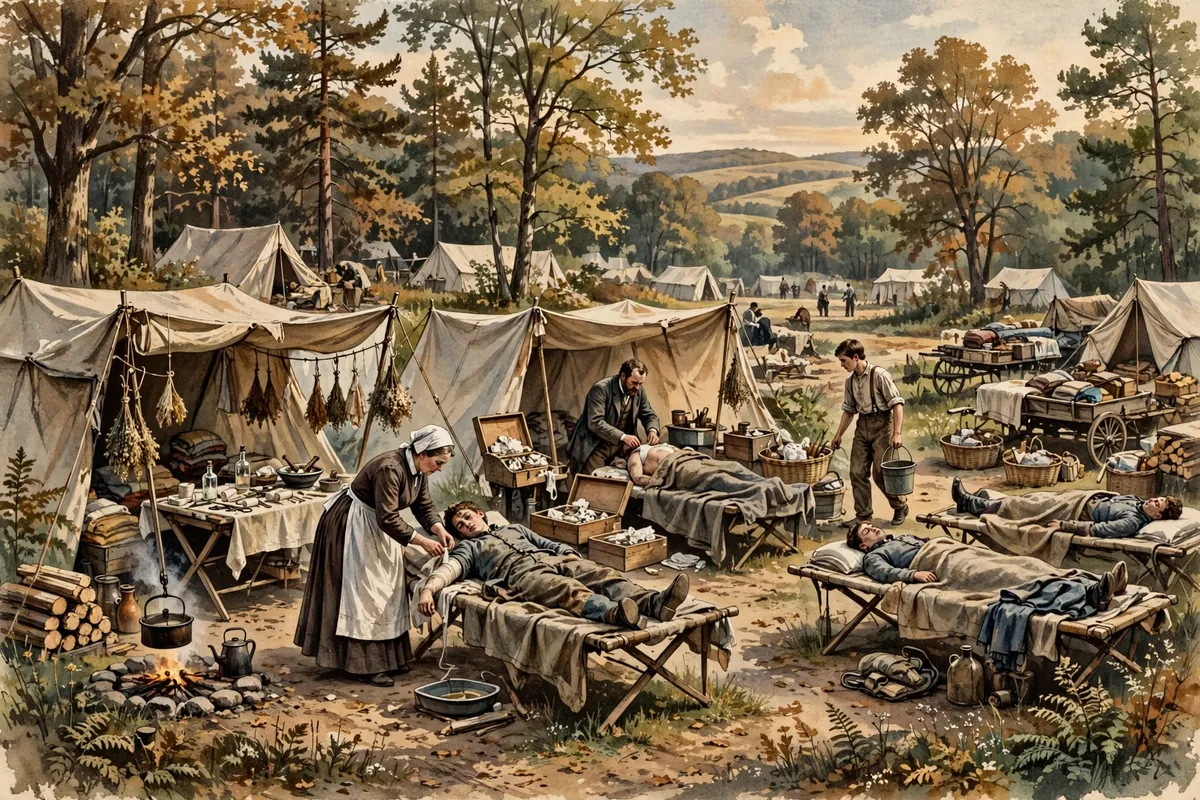
Before modern anesthesia, surgery was terrifying. The traditional tale says a patient would be handed a bullet to clench between the teeth while the surgeon worked, as a way to cope with the pain.
There are a few real accounts. The English dictionary maker Francis Grose described the practice in his slang dictionary in 1788. And Harriet Tubman, the famous abolitionist, recalled assisting with a Civil War amputation in which the patient was given a bullet to bite down on.
Tubman had her own brush with it. In the late 1890s, troubled by pain and a buzzing in her head from an old injury, she asked a doctor in Boston to operate. She reportedly had no anesthesia and bit down on a bullet, as she had seen Civil War soldiers do during amputations.
Other Possible Roots
Some people have suggested the phrase grew out of the British expression "to bite the cartridge." That one is linked to the Indian Rebellion of 1857. Soldiers loading certain rifles had to tear open greased paper cartridges, traditionally with their teeth.
In early 1857, rumors spread among Indian soldiers that the grease came from cow tallow and pig lard, which would offend Hindus and Muslims. Those rumors helped fuel the uprising. Modern historians stress that it was the belief in those rumors, more than proof of the fat itself, that inflamed tensions.
But the timing doesn't quite work as the only source. A similar phrase, "chew a bullet," with much the same meaning, dates back to at least 1796, decades before the rebellion.
From Battlefield to Big Screen
The phrase even became a movie title. In the 1975 film Bite the Bullet, it took on a literal twist. One character with a broken, aching tooth and no dentist covers the exposed nerve with a cut-down bullet casing.
Today, though, hardly anyone using the phrase is thinking about surgery or rifles. It simply means facing something hard head-on.
Words With a History
Many everyday expressions carry echoes of a rougher past, and this is one of the most memorable. Whether it started in a field hospital, a soldier's cartridge box, or somewhere else, the phrase captures a moment of grit that everyone recognizes.
So the next time you have to bite the bullet, take comfort. At least you don't need an actual bullet, and these days there's anesthesia when you need it.