The Library of Congress is one of the largest libraries on Earth, holding roughly 173 million items. Ask people how it began, and many will say it started with Thomas Jefferson's personal book collection. It's a great story. It's just not quite the right one.
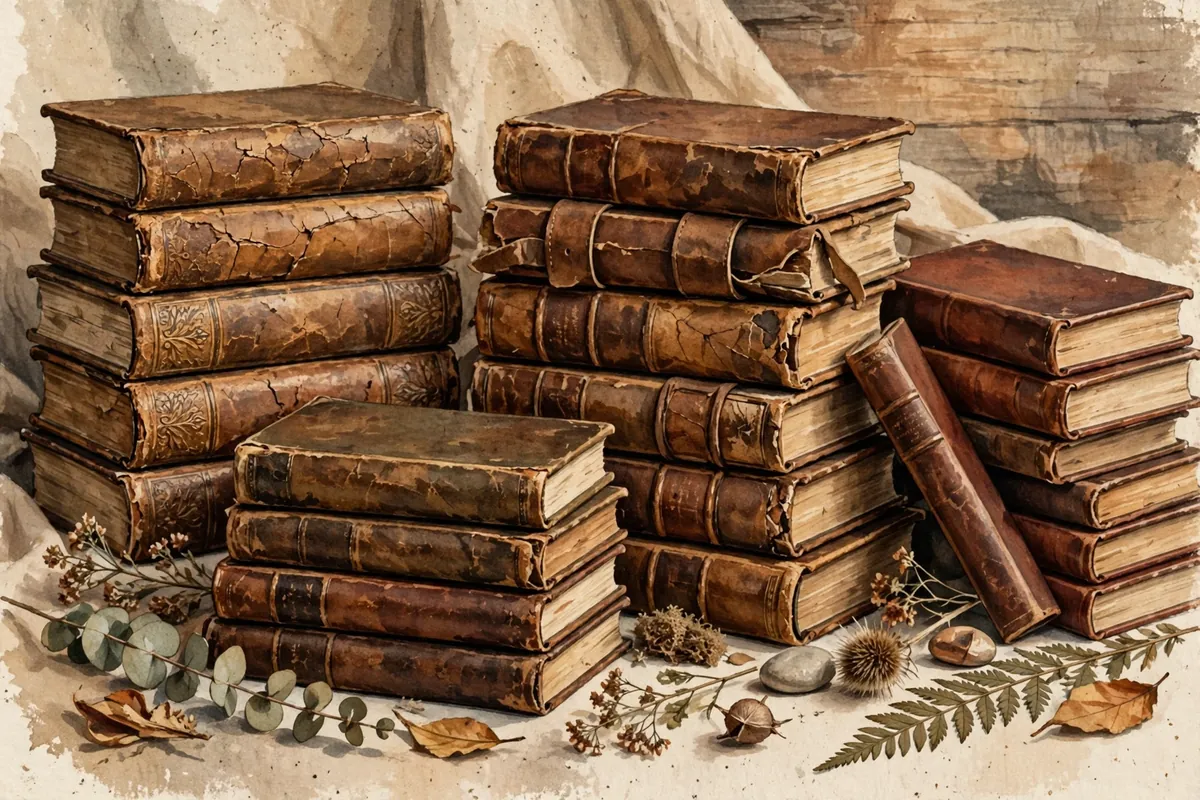
Here's the short answer. The Library of Congress was founded in 1800, under President John Adams, years before Jefferson's books arrived. But in 1814, British troops burned Washington and much of the original collection was lost. Jefferson then sold Congress his own library of 6,487 books, which restored and reshaped it. So Jefferson didn't start the library, but he did help save it.
A Modest Start Under John Adams
On April 24, 1800, President Adams signed an act of Congress that set aside $5,000 to buy books for Congress and fit up a room to hold them. Books were ordered from London. The first collection was just 740 books and three maps, kept in the new Capitol.
Jefferson was involved early, though. As president, he signed a law on January 26, 1802, that let the president appoint the librarian of Congress. That law also allowed the president and vice president to borrow books.
The Fire of 1814
During the War of 1812, British forces burned Washington in 1814. Much of the library's original collection was lost in the blaze. For a young country, it was a painful blow to lose the books lawmakers relied on.
Within a month, Jefferson, by then retired, offered to sell his large personal library as a replacement. Congress accepted in January 1815 and paid $23,950 for it. Not everyone was thrilled. Some members of the House, including Daniel Webster of New Hampshire, wanted to leave out books they considered irreligious or immoral.
Why Jefferson's Books Mattered So Much
Jefferson had gathered his collection over 50 years. It covered many subjects and languages, including topics you wouldn't expect in a library for lawmakers. He believed every subject had a place in the Library of Congress.
His books doubled the size of the library and changed its whole character, turning a specialist's collection into a general one. Jefferson even organized his books by Francis Bacon's system of knowledge, grouping them into Memory, Reason, and Imagination. The library used that scheme until the late 19th century.
Another Fire, and a Long Hunt
Sadly, the story has a second fire. On December 24, 1851, the largest fire in the library's history destroyed 35,000 books. That was two-thirds of the whole collection, and two-thirds of Jefferson's original books. In 1852, Congress set aside $168,700 to replace the lost books, but not to buy new ones.
Librarians never gave up on rebuilding his collection. By 2008, they had found replacements for all but 300 of the works documented in Jefferson's original sale.
The library bounced back in a big way. After the Civil War, librarian Ainsworth Rand Spofford built support for turning it into a true national library. By 1876 it held 300,000 volumes, tying the Boston Public Library as the largest in the country. When it moved out of the Capitol into its own headquarters in 1897, it had more than 840,000 volumes.
Today, the library's grand building from the 1890s carries his name: the Thomas Jefferson Building. It's a fitting tribute. Jefferson may not have been there at the very beginning, but when the library needed a second chance, his bookshelves gave it one.