Grandpa Took Up Painting in the Garden. His Lab Became the Art Critic.
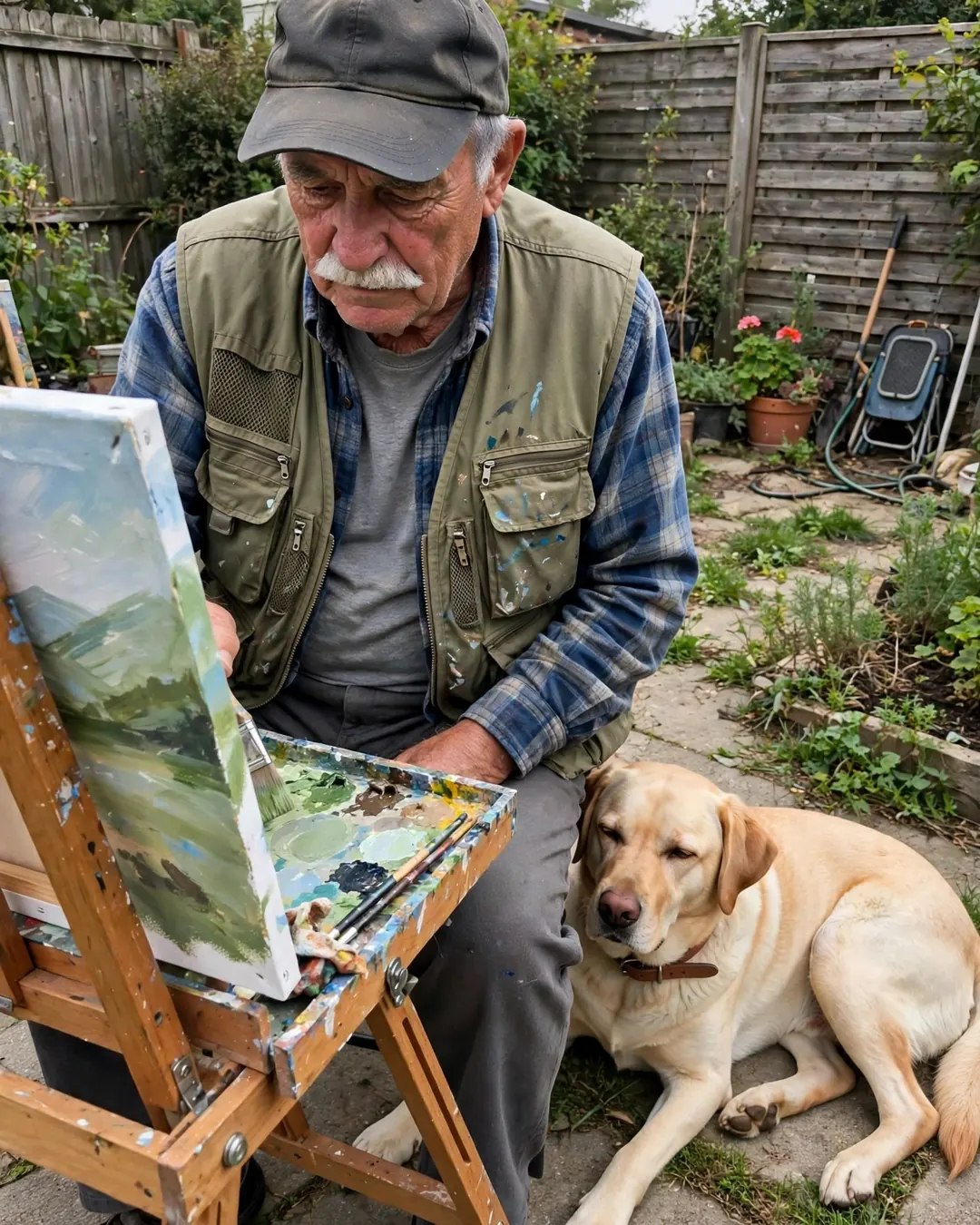
A wooden easel stands on the garden path, holding a canvas of soft green hills and pale sky. Grandpa Gus leans toward it from his stool, cap on, palette balanced in front of him, studying his brushwork with the frown of a man who is almost happy with it. Stretched out on the paving stones just beside the easel lies Sunny, the yellow Lab, completely relaxed and gazing at the camera as if she has seen many masterpieces made and is in no rush for this one. Raised beds, a potted geranium, a coiled hose, and a tall wooden fence surround the cozy little yard.
Creative hobbies like painting can be a real joy in retirement, offering focus, a sense of accomplishment, and an excuse to spend hours outdoors. A dog nearby only adds to the calm. If you paint around pets, though, keep supplies secure. Many artist paints, solvents, and thinners can be toxic if licked or swallowed, and rinse water full of pigment should be dumped where a thirsty dog cannot drink it. Brushes and tubes are also tempting chew toys for Labradors, who tend to investigate with their mouths. A simple routine of capping tubes, sealing jars, and storing supplies up high after each session can prevent accidents. If your dog does swallow paint or solvent, call your vet promptly.
The painting may not be finished today, but the scene behind it is already perfect: a garden, a quiet afternoon, and a loyal friend lying at the artist's feet.