Grandpa Hank Sat Down at the Old Piano. Someone Joined Him on the Bench.
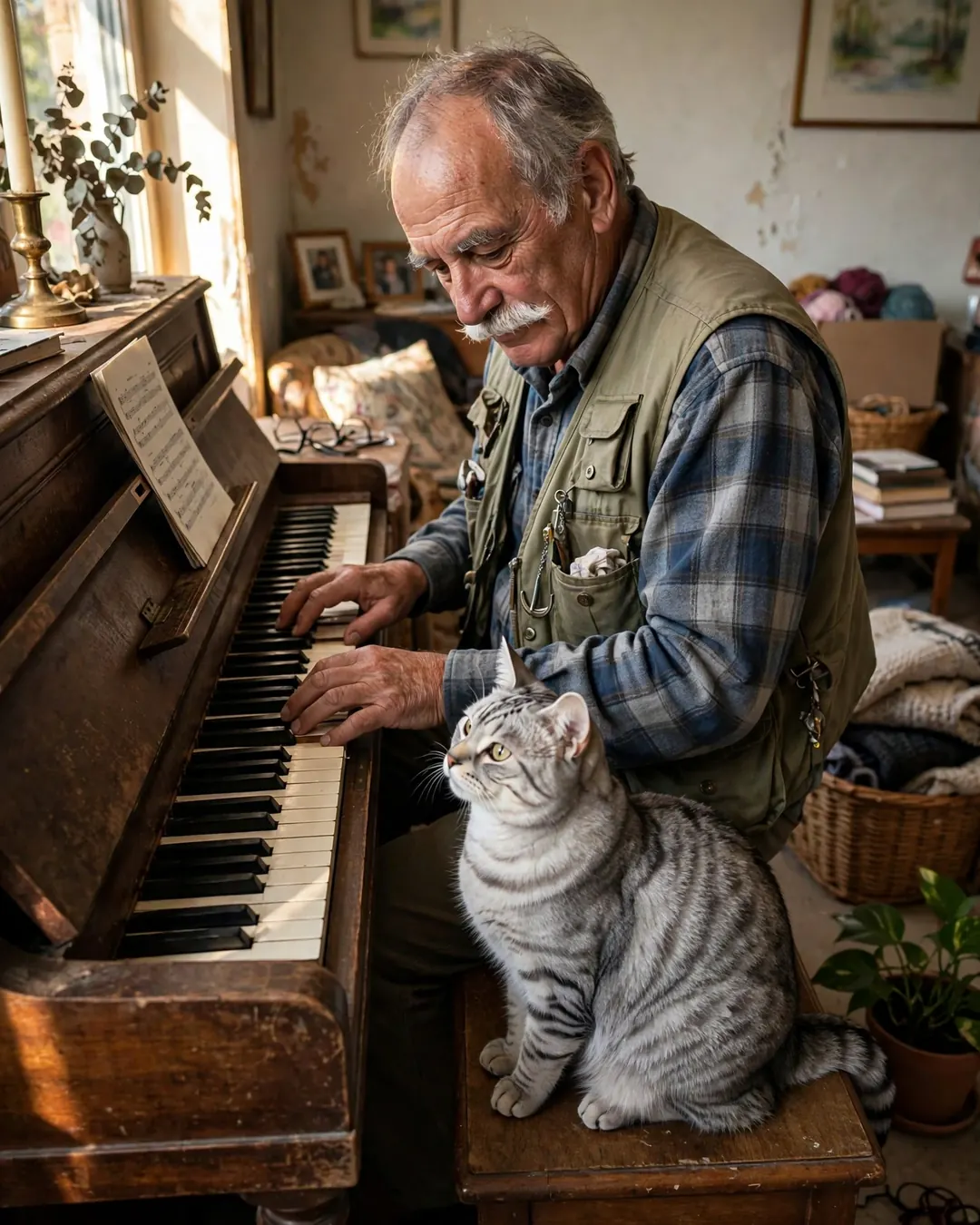
Late-afternoon light streams through the window and pools across the yellowed keys of an old upright piano. Grandpa Hank sits hunched over the keyboard in his plaid shirt and fishing vest, glasses low on his nose, his calloused fingers picking out a slow melody from a sheet of music propped on the stand. Beside him on the worn bench, Pewter sits tall and composed, front paws neatly together, gazing up at Hank with large golden eyes as if he has heard this song a hundred times and still loves it. A brass candlestick, framed family photos, a basket of yarn, and a potted plant fill the cozy room.
Cats have a much wider hearing range than people, especially in the high frequencies, which helps them detect the tiny squeaks of rodents. That sensitive hearing means loud or sudden sounds can startle them, but many cats seem perfectly comfortable around soft, gentle music. Some researchers have even explored music composed specifically for cats, using tempos and tones that resemble purring or suckling sounds, and some cats appear to respond to it. Every cat is different, so watch your own cat's reaction. A relaxed cat may stay nearby, knead, or even doze off, while a cat with flattened ears or a twitching tail is better off in a quieter room. Keeping the volume moderate and giving your cat the choice to leave is the kindest approach.
Pewter has clearly made his choice. He has the best seat in the house, right beside the musician, and he is not moving until the last note fades.