Earl Started Reading His Old Paperback Out Loud. One Listener Showed Up.
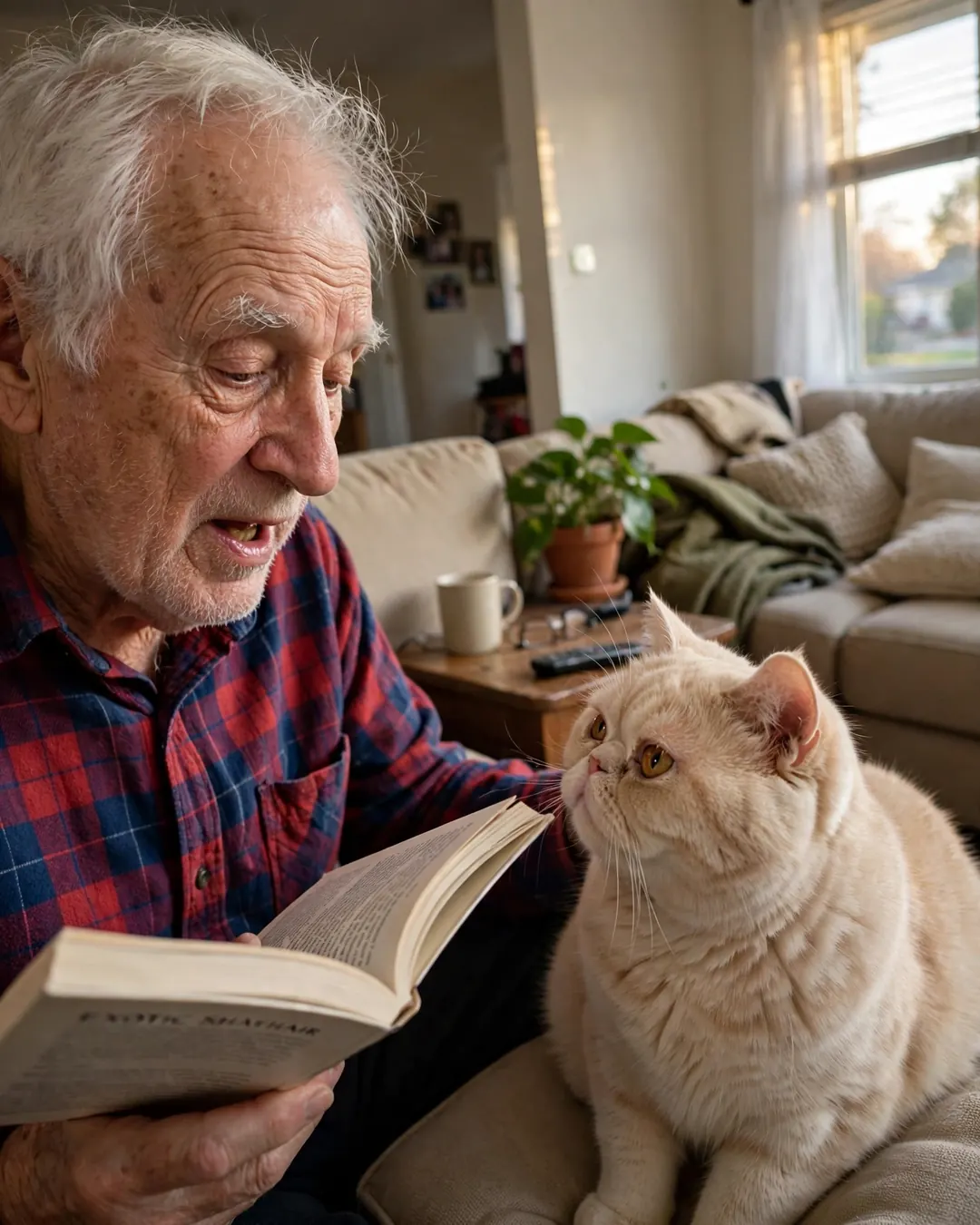
Mid-sentence and fully committed, Earl holds a well-thumbed paperback open and reads aloud with the expressive voice of a born storyteller. Custard sits right at his elbow, chin tilted up, copper eyes fixed on his face rather than the page, as though she is following every twist of the plot. Behind them, the living room is bright and calm, with a potted plant on the coffee table, a white mug, a remote, and soft pillows piled on the couch. Autumn light spills through the tall window and lands on the cat's plush fur.
Reading aloud to a pet is more than a cute habit. Cats tend to respond to a familiar, calm voice, and many will settle near someone who is speaking gently to them. For older adults, reading aloud can be a pleasant way to keep the voice and mind active, and having a furry listener can make it feel less like practice and more like company. Pets in general give a daily rhythm, a reason to talk, and a warm presence in the room, which many seniors say makes the house feel less empty. Some animal shelters even run programs where volunteers read to shy cats to help them grow comfortable around people.
Whether Custard cares how the story ends is anyone's guess. What she clearly cares about is the voice telling it, and that seems like a fine reason to turn another page.