A dog's lick is wet and sloppy. A cat's lick is something else entirely. It feels rough, almost scratchy, like a tiny piece of sandpaper dragged across your skin. If you've ever wondered what's going on, the answer is right there on the surface of that little pink tongue.
The short answer: a cat's tongue is covered in tiny, stiff, backward-facing spines called papillae. They're made firm by keratin, the same tough material found in our fingernails. These spines act like a hairbrush when a cat grooms, and they also help cats eat.
A Hairbrush on the Tongue
The spines that give a cat's tongue its rough feel are called filiform papillae. Each one is only about half a millimeter long, but there are lots of them, and they all point backward toward the throat.
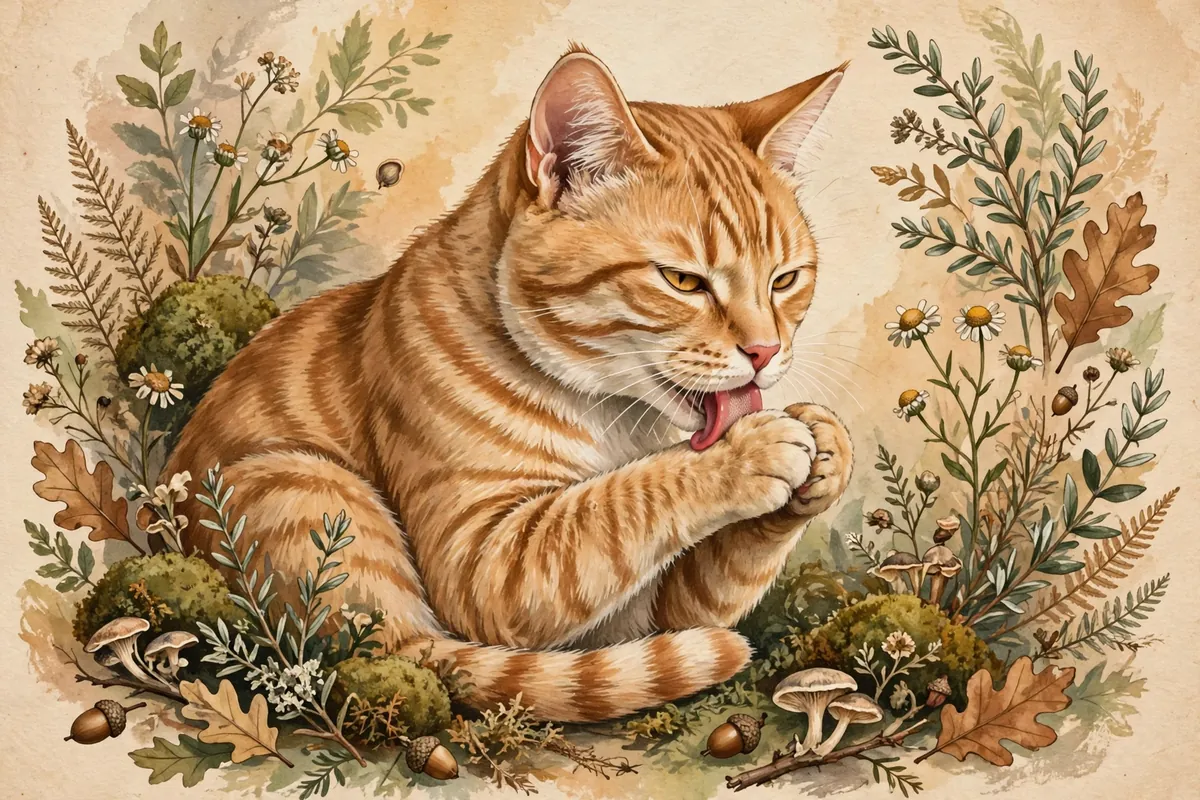
When a cat licks its fur, those spines comb through it the way a brush does. That's a big job, because cats spend a lot of time grooming. Studies of house cats show they spend about 8 percent of their resting time grooming themselves.
A cat's tongue actually has five types of papillae on its upper surface. Together, they help it groom and handle food.
More Than Just Looking Good
Grooming isn't only about vanity. It's an important way for cats to stay clean and to control pests on their skin. Fleas are the most common of these pests, and some studies offer indirect evidence that grooming helps cats remove them.
Cats don't rely on their tongues alone, though. Scratching can also help knock fleas loose from the head and neck, places a tongue can't easily reach.
The Hairball Problem
There's a downside to having a built-in brush. Because those backward spines catch loose fur, a grooming cat ends up swallowing a lot of hair. Cats can't digest it, so it builds up in the stomach.
Eventually the cat may cough up a hairball, often a sausage-shaped clump about an inch long. Long-haired cats are especially prone to them. Regular brushing with a comb or stiff brush helps, and there are also remedies that help hair pass through the gut. If your cat seems unwell, check with your veterinarian.
A Tongue Built for a Meat Eater
Along with sharp teeth, a cat's abrasive tongue helps it tear into meat, which makes up most of its natural diet. Cats aren't built for a lot of carbohydrates. Their saliva doesn't even contain amylase, an enzyme that helps break down starch.
Here's a surprising twist: cats have no sweet taste receptors on their tongues, so they can't taste sweet things at all. Instead, they're tuned to taste amino acids, the building blocks of protein. They mainly sniff out their food by smell.
That meat-focused design may matter for their health. Many commercial cat foods are high in carbohydrates, which a cat's digestive system doesn't handle efficiently, and this may be one reason some cats develop diabetes. Your vet can help you pick the right food.
The tongue does double duty at the water bowl too. Cats drink by lapping the surface, picking up a fraction of a teaspoon with each lap.
A Small Tool With a Big Job
So the next time your cat gives you a scratchy lick, you can take it as a compliment. You're getting a taste of the same tool it uses to keep itself clean, groomed, and well fed.