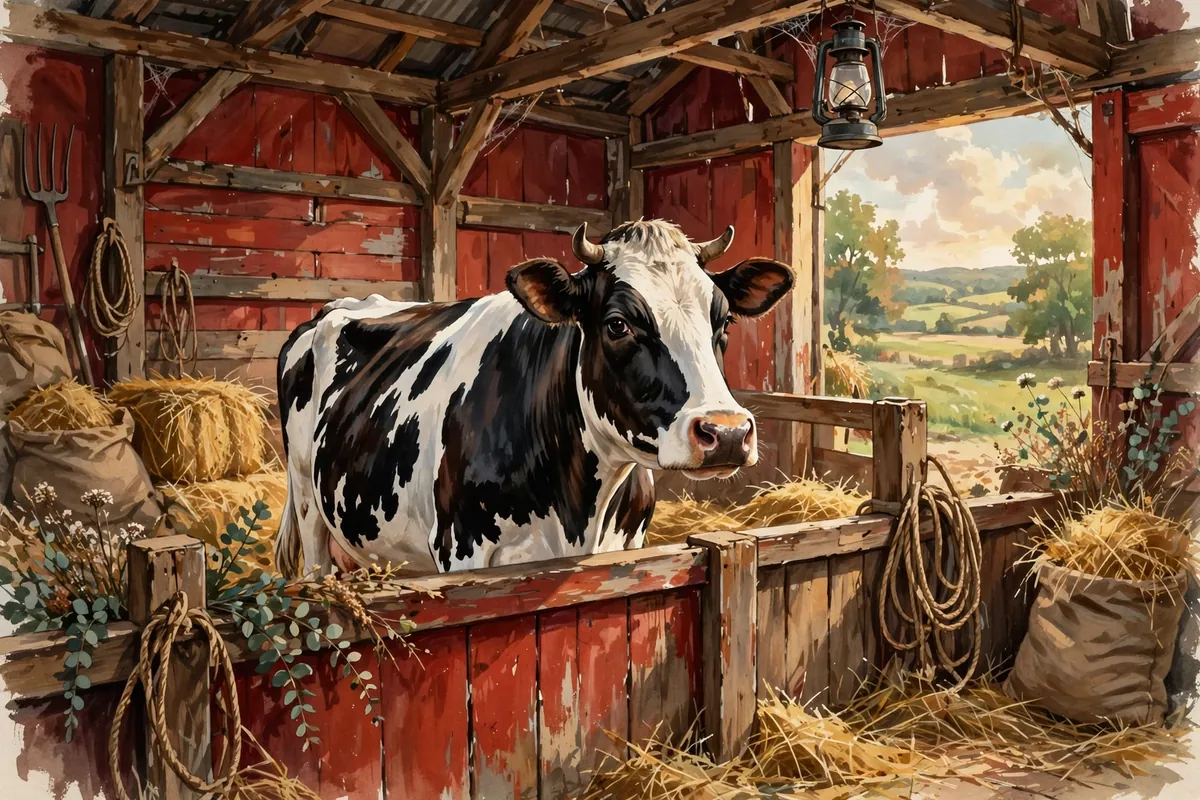
Pour a glass of milk and you probably don't think about the cow behind it. But that cow is a remarkable producer. A typical American dairy cow makes thousands of gallons of milk a year, far more than any calf could drink. How does one animal manage that?
The short answer is a mix of biology and breeding. Like all mammals, a cow makes milk after giving birth, and her lactation lasts around 10 months. On top of that, dairy breeds have been carefully selected for high milk production over generations. An average Holstein, the most common dairy breed, produces about 22,000 pounds of milk a year in the United States, roughly 2,650 gallons.
It Starts With a Calf
A cow doesn't produce milk all the time. Just like other mammals, she makes milk to feed her young after she gives birth. Dairy cows typically begin this cycle at around 13 to 14 months old, when they're first bred.
After a calf is born, the cow produces milk for about 10 months. Farmers usually breed her again during that time. About two months before her next calf is due, she gets a break called the dry period, which lets her udder tissue recover and her body restore nutrients. Then the cycle starts again.
The milk itself comes from the udder, which in cows is made up of four mammary glands, two pairs, each with its own teat. In nature, all that milk would go to the calf. On a dairy farm, it's collected instead.
Bred to Be Champions
Before the 1930s, most cattle were all-purpose animals, raised for milk, meat, and sometimes farm work. In the 20th century, farmers began to specialize, favoring breeds built for milk. The Holstein Friesian led the way, along with the Jersey, Brown Swiss, Guernsey, and Ayrshire.
Holsteins have one of the largest gene pools in the world, so improvements spread quickly. One famous bull, Round Oak Rag Apple Elevation, born in 1965, fathered more than 70,000 offspring through artificial insemination. His genes still show up in a large share of Holsteins worldwide.
Fewer Cows, More Milk
The results are striking. In 1950, the United States had 22 million dairy cows. By 2007, it had an estimated 9 million. Yet those 9 million cows produced about 185.7 billion pounds of milk, compared with 116.6 billion pounds in 1950.
Some cows go even further. The average dairy cow in Israel was reported to produce about 26,980 pounds of milk a year in 2009. Over her lifetime, a Holstein typically produces around 30,000 liters, or nearly 8,000 gallons.
Little Things That Help
Farmers have learned lots of small tricks to keep cows comfortable and productive. For cows giving milk, a lighting schedule of about 16 hours of light and 8 hours of darkness is recommended. Good udder care and hygiene help prevent infections that can lower milk output. Diet matters too, and supplements like vitamin E have been shown to support udder health.
Some farms keep cows mostly indoors with carefully measured feed, while others let them graze outdoors on pasture and bring them in for milking.
So the next time you pour milk on your cereal, give a little nod to the hardworking cow behind it. She's the product of nature's design and a century of careful breeding, and she's very good at her job.