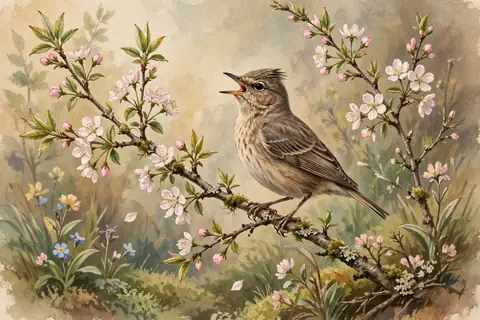
Picture a little reed warbler stuffing food into the gaping mouth of a chick that's already bigger than she is. She keeps at it from dawn to dusk. The chick isn't hers, and it isn't even her species. How does a bird end up raising a giant stranger?
The answer is the common cuckoo, a brood parasite. Instead of building a nest, the female lays her eggs in the nests of other birds, such as dunnocks, meadow pipits, and reed warblers. Through a chain of disguises and tricks, she gets the host parents to raise her chick as if it were their own.
Trick One: Looking Like a Hawk
Small birds guard their nests fiercely, so a cuckoo needs a way to get close. The common cuckoo's barred belly looks a lot like that of the Eurasian sparrowhawk, a predator of adult birds. That resemblance seems to make would-be hosts nervous.
In one study, reed warblers were shown mounted model cuckoos. When researchers covered up the hawk-like barring, the warblers became more aggressive toward the cuckoo. Scientists think the disguise buys the female time to lay her egg without being attacked.
Trick Two: The Matching Egg
A strange egg in the nest is a red flag, and many host birds will toss out eggs that look wrong. So cuckoos fight back with forgery. Female common cuckoos fall into groups that each favor one host species and lay eggs matching that host's eggs in color and pattern.
Cuckoo eggs are a bit larger than their hosts' eggs, but they still blend in. Their shells also tend to be thicker. One idea is that the extra thickness keeps a suspicious host from cracking the egg.
Timing matters, too. Cuckoos tend to lay on the day the host starts laying, or one day before. Research has shown the female can keep her egg inside her body for an extra 24 hours, so the embryo gets a head start. A single female may visit up to 50 nests in one breeding season.
Trick Three: Clearing the Nest
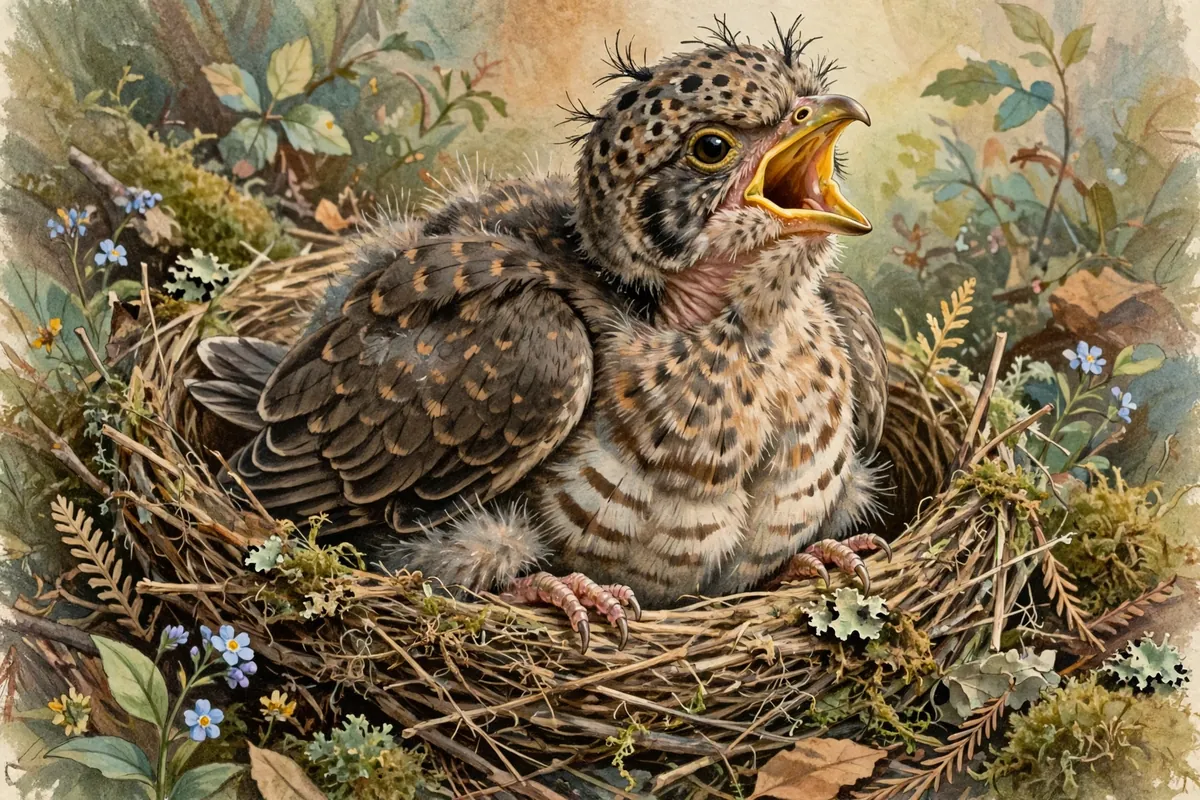
The cuckoo chick hatches after just 11 to 13 days, often before the host's own chicks. Then it does something ruthless. Though naked and blind, it methodically pushes the other eggs out of the nest, rolling them on its back over the edge. If the host chicks hatch first, it pushes them out too.
Now it has the parents all to itself, and it needs every bite. By 14 days old, a common cuckoo chick is about three times the size of an adult reed warbler.
Trick Four: Sounding Like a Crowd
A single chick, even a huge one, shows the parents only one open mouth. That might not be enough to trigger all-out feeding. So the cuckoo chick makes a rapid begging call that researchers say sounds remarkably like a whole brood of host chicks. In effect, it pretends to be a nest full of hungry babies.
Interestingly, host birds have evolved defenses against cuckoo eggs, but not against cuckoo chicks. Once the chick hatches, the con usually works. It even stays with its foster parents longer than their own chicks would, before and after leaving the nest.
Not every cuckoo plays this game, though. Many cuckoo species raise their own young and lay plain white eggs. But the common cuckoo has turned freeloading into an art form, and its foster parents never seem to catch on.