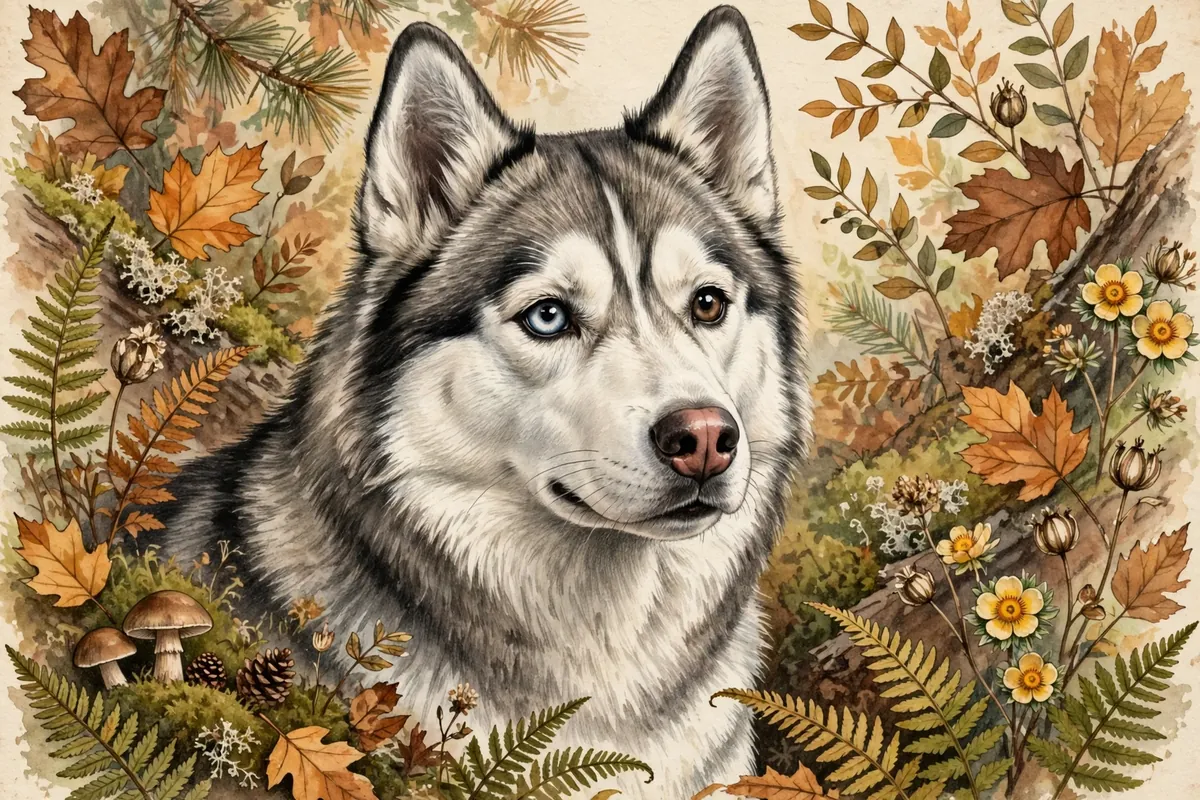
There's something unforgettable about a dog with pale blue eyes. Sometimes it's both eyes, and sometimes it's one blue and one brown, as if the dog couldn't decide. It's natural to wonder what's going on in there.
The short answer is that blue eyes in dogs usually come from a lack of pigment. Most often, that's tied to the genes that control coat color, especially merle patterns and lots of white fur on the face. Siberian Huskies are the odd ones out. Their blue eyes aren't known to be linked to coat color at all.
Blue Without Any Blue
Here's a surprise. Blue eyes don't contain blue pigment. In people, brown eyes get their color from melanin, the same pigment that colors skin and hair. When there's little melanin in the front layer of the iris, light scatters in a way similar to how sunlight scatters to make the sky look blue.
In other words, blue eyes are a trick of light rather than a dye. That's one reason so many young mammals, puppies and kittens included, start out with bluish eyes that darken as they grow. Whatever color shows up later depends on how much pigment the eye ends up making.
The Coat Color Connection
In dogs, the genes that decide coat color also affect other things that depend on melanin, including skin color, eye color, eyesight and even hearing. Blue eyes are often related to pigment loss in the coat.
Merle is a great example. That's the marbled, patchy coat pattern seen in many herding dogs. The merle gene also affects the skin, eyes and inner ear, and blue or part-blue eyes are common in merle dogs. A dog with lots of white fur on its face can end up with blue eyes too, since white areas can't make pigment and the eye may lose its pigment along with them.
Why Huskies Are Different
Siberian Huskies are famous for blue eyes, but in their case, the blue eyes aren't known to be tied to coat color. The American Kennel Club's breed standard allows Husky eyes to be brown, blue or black, one of each, or even a mix of colors in a single eye.
That mixed look doesn't affect the dog's vision. In fact, in dog coat genetics, each eye can develop independently, so a merle dog with one blue eye may see just as well, or even better, out of its blue eye than its brown one.
One Blue, One Brown
When a dog has two different colored eyes, it's called heterochromia. Complete heterochromia, meaning one whole eye is a different color from the other, shows up often in Siberian Huskies and in a few other breeds, usually the Australian Shepherd and the Catahoula Leopard Dog.
There's also sectoral heterochromia, where only a slice of one eye is a different color. It's often seen in breeds with merle coats, such as the Border Collie, Shetland Sheepdog, Welsh Corgi, Great Dane, Dachshund and Chihuahua. Heterochromia is far more common in some breeds of dogs, cats and horses than it is in people.
Because pigment genes also touch eyesight and hearing, it's smart to ask your vet about any concerns with a blue-eyed pup. Most of the time, though, those blue eyes are simply a beautiful genetic quirk, and a great excuse to stare a little longer.