These days we take it for granted that we can get cash any time of the day or night. Before the 1960s, though, if the bank was closed, you were out of luck until Monday morning. Then one June day in 1967, a machine in a London suburb changed everything.
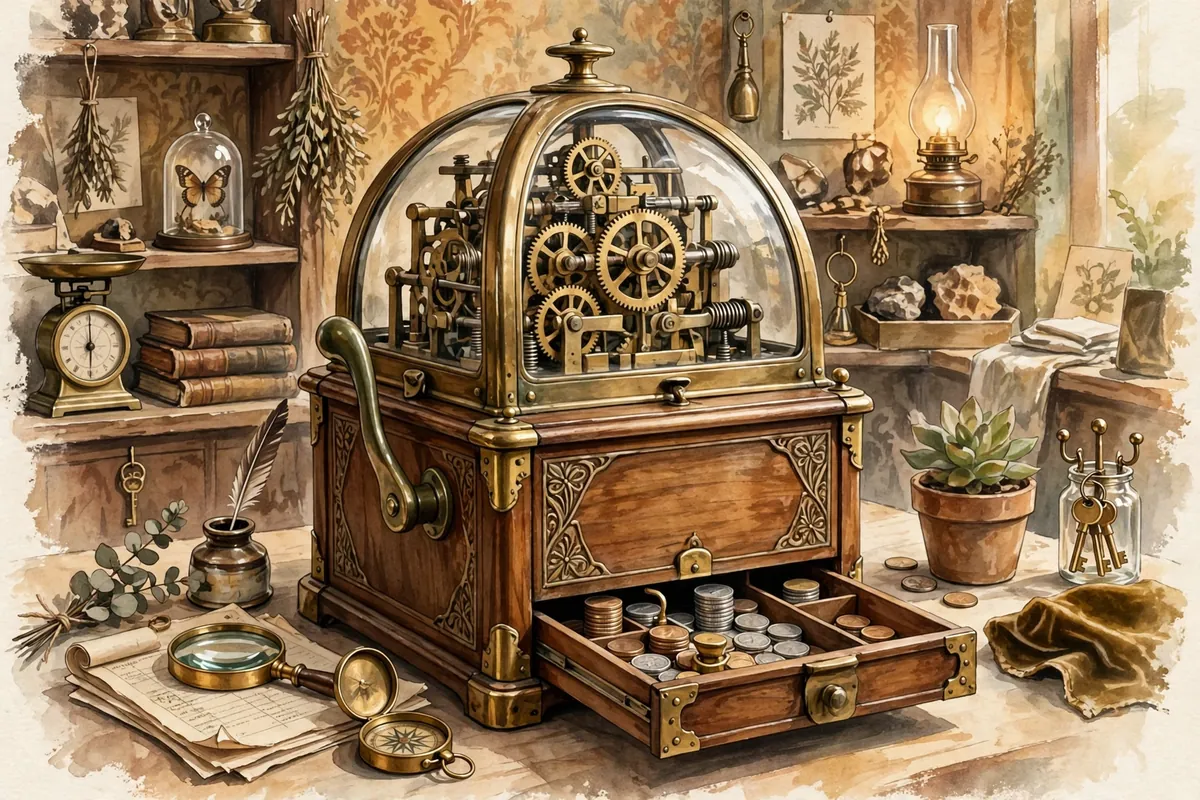
On June 27, 1967, a cash machine was installed at a Barclays Bank branch in Enfield, north London. It's generally considered the world's first ATM. The invention is credited to an engineering team led by John Shepherd-Barron of the printing firm De La Rue, and the machine was opened by English actor Reg Varney as a publicity event.
Inspired by a Candy Machine
Shepherd-Barron later explained where the idea came from. He wanted a way to get his own money anywhere, anytime. He said he hit upon the idea of a chocolate bar dispenser, but with cash instead of chocolate.
It was a simple idea, but it took some clever engineering to make it work safely. After all, a machine that hands out money needs a reliable way to tell who you are. The first machines carried the name Barclaycash.
No Plastic Cards Yet
The first machines didn't use bank cards at all. Customers got special paper vouchers, a lot like checks, from a bank teller. These vouchers were treated with a tiny amount of carbon-14, a radioactive form of carbon, which the machine could detect.
Inside the machine, each voucher was trimmed to the size of a normal check. The carbon-14 gave off a very weak, short-range signal that was easy to detect, a clever bit of security long before magnetic stripes and chips.
That might sound alarming, but Shepherd-Barron judged the risk acceptable. He joked that you'd have to eat 136,000 of the vouchers for them to have any effect on you. The machine matched the voucher with a personal identification number typed on a keypad.
There was a limit on fun, too. Withdrawals from the first machines were capped at £10, which Shepherd-Barron said was "quite enough for a wild weekend."
Why Your PIN Has Four Digits
Here's a story worth telling at the next family dinner. Shepherd-Barron originally planned for six-digit PINs. He tested the idea on his wife, Caroline, and found that the longest string of numbers she could comfortably remember was four.
So four digits it was. As ATMs spread around the world, the four-digit PIN became the global standard. Shepherd-Barron was later honored with an OBE in 2005.
Rivals and Earlier Attempts
London's machine wasn't the only early attempt. In 1960, American inventor Luther Simjian created a machine that took deposits but couldn't hand out cash. A test version installed in New York City in 1961 was removed after six months because customers didn't take to it.
In Japan, a 1966 device called the Computer Loan Machine gave out cash as a short-term loan when a credit card was inserted, though little is known about it. And Scottish inventor James Goodfellow, working with Anthony Davies, patented a system that stored a PIN on a reusable card. Big companies like IBM and NCR later licensed his idea.
So the next time you tap in your four-digit code and grab a few bills, you can thank a candy machine, a London bank, and one woman's very practical memory.